Posts tagged DIGITAL
The post-Spiderverse boom: New developmental styles in the Hollywood computer-animated film - Part 3

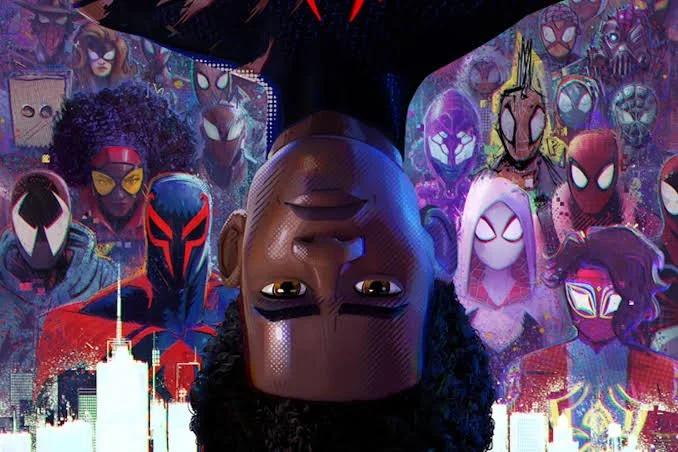
As discussed in our two most recent blog posts, Hollywood mainstream studio computer-animation post-Spider-Verse has shifted from Pixar’s photorealistic aesthetic towards a more developmental style. Sam Summers argues that Sony’s franchise adapted the comic-book language itself (2019, 190), creating an aesthetic including Ben-Day dots and visible ink lines. The franchise transformed the genre’s “visual currencies” (Holliday 2018, 1) which Spider Man: Across the Spider-Verse (Joaquim Dos Santos, Kemp Powers & Justin K. Thompson, 2023) has only pushed further. Each world has a unique style: Miguel’s futurism, Spot’s minimalism, Gwen’s painterly, Spider-Punk’s collage, and Prabhakar’s is inspired by Indrajal Comics.

Read More

The post-Spiderverse boom: New developmental styles in the Hollywood computer-animated film - Part 2

This is the second blog post of three discussing the emergence of a new developmental computer-animated style in mainstream studio animation. This week will leave Pixar behind, focusing on the DreamWorks studio as we analyse Puss in Boots: The Last Wish (Joel Crawford 2022), the most recent instalment in the Shrek (2001-) franchise, and the second standalone film featuring the character of Puss in Boots. Prior to this film, DreamWorks had primarily produced 3D hyperrealism films; The Last Wish diverges from the studio's usual formula and instead takes on more stylized, “painterly” visuals (Fig.1). While the animation remains computer-generated, the style is distinct from previous films as it was intended to emulate the look and texture of a storybook, using “painterly” rendering to blend softer brush-like textures with expressive, frame-conscious movement (Basset et al. 2013, 156). This shift in style stemmed from the influence of Spider-Man: Into the Spider-Verse, with director Joel Crawford noting that although earlier films like Shrek were celebrated for their technical realism, post Spider-Verse audiences expected greater stylistic innovation (Weiss 2024). 

Read More
The post-Spiderverse boom: New developmental styles in the Hollywood computer-animated film - Part 1

For many decades, mainstream animation has maintained a relatively uniform visual identity. Following the release of Pixar’s 1995 debut film Toy Story (John Lasseter, 1995), a dominant visual style emerged within computer-generated filmmaking, as major animation studios began to adopt a shared set of stylistic conventions, resulting in films that appeared similar (Holliday 2018, 1). However, in 2018, mainstream animation experienced a notable shift in both its aesthetic and industrial priorities following the release of Sony’s Spider-Man: Into the Spider-Verse (Bob Persichetti, Peter Ramsey & Rodney Rothman, 2018). The film achieved both critical acclaim and box office success, being widely praised for its distinct visual style and its use of animation as a medium to enhance storytelling. Traditionally, mainstream animated films have followed an orthodox form, which is a mode that, despite depicting fantastical or exaggerated events, adheres to conventional narrative structures and realist frameworks (Wells 1998, 51). 

Read More
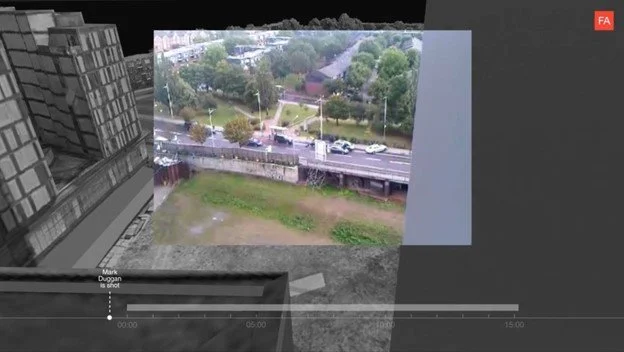
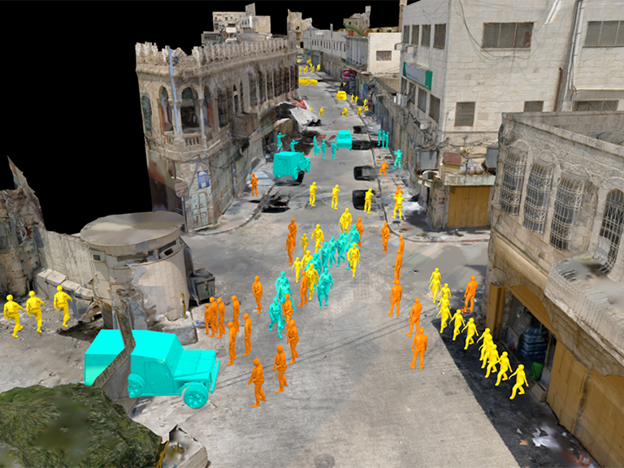
Digital Vérité, Part 2: Forensic Architecture and Animating the Killing of Mark Duggan

In Part 1, I introduced Digital Vérité — a framing of documentary image-making practices that assert their truth claims specifically through the use and application of digital tools. I argued that this rhymes with cinema vérité's earlier technological truth claim, and that the same scepticism should be attached to it. This second part works through that scepticism via a case study.

Read More
Digital Vérité, Part 1: What the Future of Documentary's Truth Claims Looks Like

In 1960, a small film crew followed John F. Kennedy through hotel corridors and union halls during the Wisconsin Democratic primary. Primary (1960) might not appear to be pushing technological boundaries to modern viewers but, at the time, its apparatus of handheld cameras, synchronised sound, and, crucially, minimal narration over intimate scenes was a small revolution. The filmmakers (Robert Drew, Richard Leacock, D.A. Pennebaker, Albert Maysles) took advantage of these advancements to claim that what their cameras could now do bordered on the metaphysical. They could "be part of the woodwork." They could capture reality "as it really happens."

Read More
Review: Hoppers (Daniel Chong, 2026)

Hoppers (Daniel Chong, 2026) is a true return to form for Pixar, albeit in more of a “shitpost” example of Pixar just having fun. The marketing leads you into thinking Hoppers is going to be an Avatar-esque film about environmentalism and yes, it is that but it slowly turns into a roller coaster ride of unpredictability and surrealism, somewhat akin to Monty Python and the Flying Circus (1969-1974) or a late 90s-era “gag” anime like Excel Saga (Shinichi Watanabe, 1999-2000). If that sort of millennials to early-boomer-humour is your style, then Hoppers will be for you (and if you’re like me and literally grew up alongside Andy in the Toy Story [1995-] movies, then Hoppers aligns up with your sense of humour, developed in the mid-2000s to early 2010s).

Read More
Animating the Metaverse: How Artists Are Creating Worlds in Real Time

Long ago it may have seemed a distant sci-fi dream, but now the Metaverse stands for a growing digital universe where users interact, create, and experience content in real time. The beauty at the very core of it is a creative revolution – one where artists are building entire virtual worlds as interactive canvases rather than one being powered purely by machines.

Read More
Between Humans and Machine: The Iron Giant's Reflection of AI

Popular media has often portrayed technology as a looming threat to society and human livelihood. However, animation as a medium has provided a unique lens through which to explore the nuances of humanity's interaction with technological forces. Brad Bird's feature The Iron Giant (1999) stands as a poignant example of this exploration. By analyzing the use of hybrid animation techniques and storytelling in the film, I aim to unravel a metaphorical narrative that delves into humanity's relationship with technology, as well as its modern-day resonance with perceptions of artificial intelligence (AI) and assumptions on the threat of machine learning to humanity.

Read More
The Role of Animation in Creating New Visions for the Future

In the libraries of history and literature, there’s a recurring theme: it’s not enough to have knowledge, you have to be able to navigate it, accessing and linking relevant pieces of information that often seem disparate. The goal of the Library of Alexandria in Ancient Egypt was to amass all the knowledge in the world in one place, and the world’s first known index system, called the pinakes, was developed to organise the expanding collection as it became more and more unwieldy.

Read More
Empowering Inclusion through Animation: Pioneering Digital Resources for Cultural Competency at King’s College London

The story began with discussions with colleagues about cultural competence content to train staff and students. I appreciated the unique insights I had on these perspectives, both as an outsider (experiences I had as a non-native) and as an insider (working as an academic in the UK for the past 17 years). Driven by a desire to address this issue, I began exploring the less overt forms of bias, i.e., microaggressions. While explicit biases are widely acknowledged for their impact, implicit biases are subtler and vary significantly based on individual backgrounds, education, and conditioning.

Read More
Another Kind of Magic: Méliès, Mercury, and Machine Learning

The music video for Queen’s “Heaven for Everyone” from their then-final record Made in Heaven (1995) - and a song that originally appeared on Shove It (1991), an album by drummer Roger Taylor’s side project The Cross (and featuring Freddie Mercury as a guest vocalist) - includes somewhat surprisingly footage from Georges Méliès’ early ‘trick’ films A Trip to the Moon (1902) and The Impossible Voyage (1904).

Read More
Hollywood’s Big Little Lie: why are digital VFX still cinema’s bad objects?

Judging from both the pre-release marketing materials and industry narratives that have surrounded both Mission: Impossible – Dead Reckoning Part One (Christopher McQuarrie, 2023) and Oppenheimer (Christopher Nolan, 2023), one would be forgiven for thinking that Hollywood still retains something of an aversion to digital VFX.

Read More
Review: BAFTSS Animation SIG Posthumous & Posthuman Animation Online Seminar

Last week the BAFTSS Animation SIG presented another stellar online event. This time the SIG offered to explore the uncanny territories of posthumous and posthuman animation. Organized by Dr. Sam Summers (Middlesex University) and featuring works-in-progress by a doctoral student Alice Giuliani (University of West London) and Dr. Christopher Holliday (King’s College London), the Posthumous & Posthuman Animation seminar took place on Zoom on May 10th 2023.

Read More
On Tom Cruise's Animated Face

Mission: Impossible II (John Woo, 2000) - the second feature in the evergreen Hollywood blockbuster franchise - is a film fascinated by the creative possibilities of Tom Cruise’s face. The film’s extended opening sequence (comprising ostensibly of two action set-pieces, see left) is structured from the start by the drama and jeopardy engendered by the star’s recognisable physiognomy.

Read More
Review: The Wheel of Time (Rafe Judkins, 2021-)

The Wheel of Time (Rafe Judkins, 2021) is a highly anticipated Amazon Prime TV series based on Robert Jordan’s book series under the same title. The first season comprises eight episodes and recounts the events from The Eye of the World (1990), the first volume of Jordan’s epic saga, introducing its main characters in a familiar Tolkienian fashion.

Read More
Looking at Pixar’s Soul

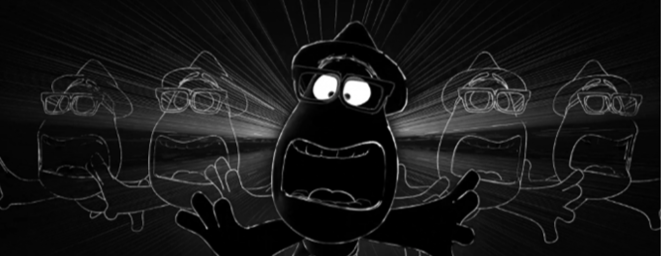
Pixar’s much-delayed computer-animated fantasy film, Soul (Pete Docter, 2020), was originally scheduled for theatrical release in the U.S. on June 19, 2020, yet was finally released on the Disney+ platform almost a year ago in December 2020. The story follows the life of a middle school music teacher named Joe Gardner (Jamie Foxx) who falls down a manhole on the streets of New York City into another world, a world in which his soul is separated from his body.

Read More
Pixar’s Loop (Erica Milsom, 2020) – Celebrating Difference

Pixar’s Loop (Erica Milsom, 2020) is an animated short film from Pixar Animation Studios, and part of the “SparkShorts” program that was designed to discover new storytellers and artists by producing short films on a smaller time frame and budget, giving directors freedom to explore new stories, techniques and workflows.

Read More