Posts tagged AESTHETICS
The post-Spiderverse boom: New developmental styles in the Hollywood computer-animated film - Part 3

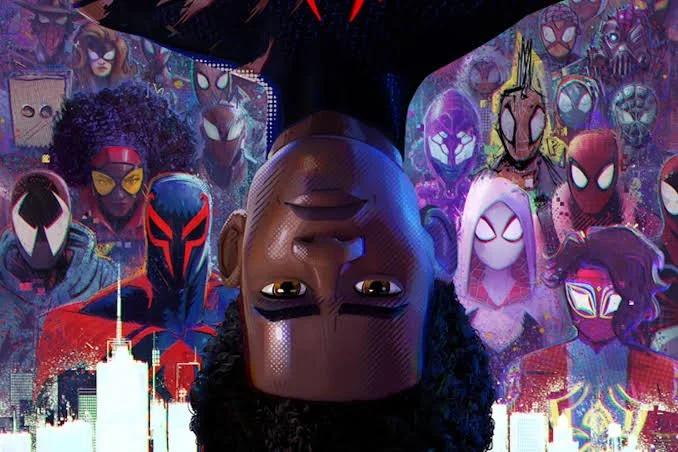
As discussed in our two most recent blog posts, Hollywood mainstream studio computer-animation post-Spider-Verse has shifted from Pixar’s photorealistic aesthetic towards a more developmental style. Sam Summers argues that Sony’s franchise adapted the comic-book language itself (2019, 190), creating an aesthetic including Ben-Day dots and visible ink lines. The franchise transformed the genre’s “visual currencies” (Holliday 2018, 1) which Spider Man: Across the Spider-Verse (Joaquim Dos Santos, Kemp Powers & Justin K. Thompson, 2023) has only pushed further. Each world has a unique style: Miguel’s futurism, Spot’s minimalism, Gwen’s painterly, Spider-Punk’s collage, and Prabhakar’s is inspired by Indrajal Comics.

Read More

The post-Spiderverse boom: New developmental styles in the Hollywood computer-animated film - Part 2

This is the second blog post of three discussing the emergence of a new developmental computer-animated style in mainstream studio animation. This week will leave Pixar behind, focusing on the DreamWorks studio as we analyse Puss in Boots: The Last Wish (Joel Crawford 2022), the most recent instalment in the Shrek (2001-) franchise, and the second standalone film featuring the character of Puss in Boots. Prior to this film, DreamWorks had primarily produced 3D hyperrealism films; The Last Wish diverges from the studio's usual formula and instead takes on more stylized, “painterly” visuals (Fig.1). While the animation remains computer-generated, the style is distinct from previous films as it was intended to emulate the look and texture of a storybook, using “painterly” rendering to blend softer brush-like textures with expressive, frame-conscious movement (Basset et al. 2013, 156). This shift in style stemmed from the influence of Spider-Man: Into the Spider-Verse, with director Joel Crawford noting that although earlier films like Shrek were celebrated for their technical realism, post Spider-Verse audiences expected greater stylistic innovation (Weiss 2024). 

Read More
The post-Spiderverse boom: New developmental styles in the Hollywood computer-animated film - Part 1

For many decades, mainstream animation has maintained a relatively uniform visual identity. Following the release of Pixar’s 1995 debut film Toy Story (John Lasseter, 1995), a dominant visual style emerged within computer-generated filmmaking, as major animation studios began to adopt a shared set of stylistic conventions, resulting in films that appeared similar (Holliday 2018, 1). However, in 2018, mainstream animation experienced a notable shift in both its aesthetic and industrial priorities following the release of Sony’s Spider-Man: Into the Spider-Verse (Bob Persichetti, Peter Ramsey & Rodney Rothman, 2018). The film achieved both critical acclaim and box office success, being widely praised for its distinct visual style and its use of animation as a medium to enhance storytelling. Traditionally, mainstream animated films have followed an orthodox form, which is a mode that, despite depicting fantastical or exaggerated events, adheres to conventional narrative structures and realist frameworks (Wells 1998, 51). 

Read More
Animating Ambivalence: Quebec Contemporary Animation and Death Does Not Exist at the Ottawa International Animation Festival 2025

Over the last twenty years, the province of Quebec in Canada has built an internationally recognized cultural and digital ecosystem, particularly in the visual effects (VFX) (Mikros Animation, Rodeo FX) and animation (Cinesite, National Film Board) sectors. In 2023, these production studios and facilities represented more than $1.4 billion in revenue and thousands of jobs in Quebec, thanks largely to heavy involvement in successful foreign productions and fiscal benefits. However, in recent years, this business model has shown its weaknesses: the workers strike from the American entertainment union SAG-AFTRA in summer 2023, followed by the Quebec government's decision in May 2024 to cap tax credits for foreign entertainment companies employing in Quebec – reducing the credit rebate from 100% to 65% (Bongiorno 2024) – highlighted the structural precariousness of the local workforce (Arsenault, 2024).

Read More
An Analysis of George Dunning’s Yellow Submarine

Based on the music of the British pop band The Beatles, Yellow Submarine (George Dunning, 1968) is a film that perhaps best resembles the tradition of the jukebox musical. It tells the story of Pepperland, a music-loving utopia falling under siege by the music-hating Blue Meanies. By command of the Mayor, Captain Fred boards the titular yellow submarine to seek help. He discovers The Beatles and urges their help given their musical talents and their resemblance to Pepperland’s favourite musical group: Sgt. Pepper’s Lonely Hearts Club Band. The Beatles join Old Fred (Fig. 1) on a journey back to Pepperland, and rally Pepperland’s citizens to rebel against the Blue Meanies. Harnessing the groovy power of psychedelic pop, they sing their way to freedom.

Read More
Interview with Mikkel Mainz (SKJALD Animation)

In this week’s blog, Fantasy/Animation sat down with Mikkel Mainz of SKJALD Animation studio, a full-pipeline creative house and animation studio located in Denmark, to discuss its experience working on successful web series and feature films, the interpretation of music through animated style, and SKJALD’s future animated projects.

Read More
Exploitation or Empowerment: Sexual Violence in Belladonna of Sadness (1973)

Notable for its erotic tone and psychedelic imagery, Eiichi Yamamoto’s adult art film Belladonna of Sadness (1973) interrogates the depiction of sexual violence against its female protagonist. The film, set against the backdrop of feudal France, follows newlywed villager Jeanne after being raped by the town’s baron on her wedding night.

Read More
Poetic Fantasies of Time and Space: From the Eyes of an Old Dog

In Sylvain Chomet’s first animated feature film, The Triplets of Belleville (2003) there is a key scene in which the main event simply concerns the barking of a dog out of the window at a passing train. This scene, which is going to be explored here in this sequence analysis, connects the childhood of Champion, the film’s main character, to the present time (of the film’s narrative, which takes place around 1950s), when we meet him as a young cycling athlete training for Tour du France, accompanied by his ever present, loving and supportive grandmother Madame Souza.

Read More
Super-Psych: Into the Discourse Verse

Released in 2018, Spider-Man: Into the Spider-Verse (Bob Persichetti, Peter Ramsey & Rodney Rothman, 2018) explored the visual storytelling possibilities of animation. A computer-animated superhero feature film that retells the story of Miles Morales, a boy bitten by a radio-active spider giving him similar powers to those of Spider-Man, Spider-Man: Into the Spider-Verse bucks many of the traditional techniques of animation, and the production team used novel techniques to depict motion, depth of field, and emotion. Particularly notable is the combination of comic book elements within an animated feature. How do these novel techniques, alongside the combination of comic book mythology and animated storytelling, impact viewers’ comprehension of and experience of the story?

Read More