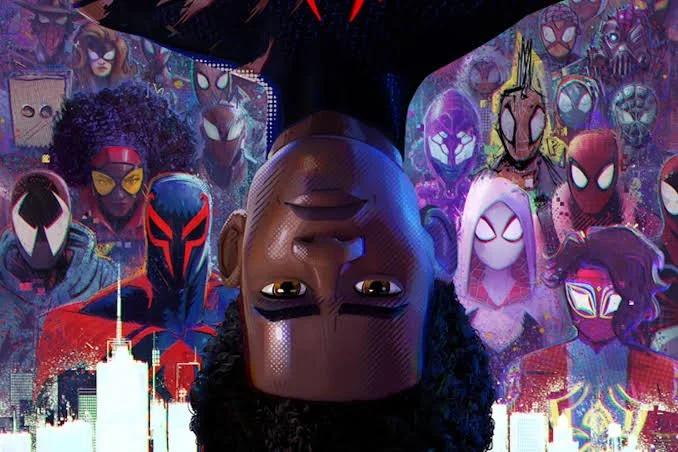
As discussed in our two most recent blog posts, Hollywood mainstream studio computer-animation post-Spider-Verse has shifted from Pixar’s photorealistic aesthetic towards a more developmental style. Sam Summers argues that Sony’s franchise adapted the comic-book language itself (2019, 190), creating an aesthetic including Ben-Day dots and visible ink lines. The franchise transformed the genre’s “visual currencies” (Holliday 2018, 1) which Spider Man: Across the Spider-Verse (Joaquim Dos Santos, Kemp Powers & Justin K. Thompson, 2023) has only pushed further. Each world has a unique style: Miguel’s futurism, Spot’s minimalism, Gwen’s painterly, Spider-Punk’s collage, and Prabhakar’s is inspired by Indrajal Comics.
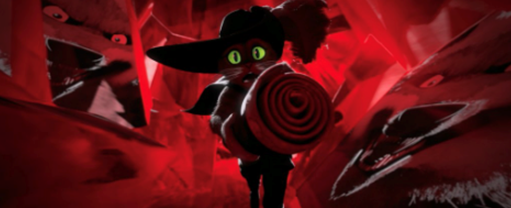
Read MoreThis is the second blog post of three discussing the emergence of a new developmental computer-animated style in mainstream studio animation. This week will leave Pixar behind, focusing on the DreamWorks studio as we analyse Puss in Boots: The Last Wish (Joel Crawford 2022), the most recent instalment in the Shrek (2001-) franchise, and the second standalone film featuring the character of Puss in Boots. Prior to this film, DreamWorks had primarily produced 3D hyperrealism films; The Last Wish diverges from the studio's usual formula and instead takes on more stylized, “painterly” visuals (Fig.1). While the animation remains computer-generated, the style is distinct from previous films as it was intended to emulate the look and texture of a storybook, using “painterly” rendering to blend softer brush-like textures with expressive, frame-conscious movement (Basset et al. 2013, 156). This shift in style stemmed from the influence of Spider-Man: Into the Spider-Verse, with director Joel Crawford noting that although earlier films like Shrek were celebrated for their technical realism, post Spider-Verse audiences expected greater stylistic innovation (Weiss 2024).
Read MoreFor many decades, mainstream animation has maintained a relatively uniform visual identity. Following the release of Pixar’s 1995 debut film Toy Story (John Lasseter, 1995), a dominant visual style emerged within computer-generated filmmaking, as major animation studios began to adopt a shared set of stylistic conventions, resulting in films that appeared similar (Holliday 2018, 1). However, in 2018, mainstream animation experienced a notable shift in both its aesthetic and industrial priorities following the release of Sony’s Spider-Man: Into the Spider-Verse (Bob Persichetti, Peter Ramsey & Rodney Rothman, 2018). The film achieved both critical acclaim and box office success, being widely praised for its distinct visual style and its use of animation as a medium to enhance storytelling. Traditionally, mainstream animated films have followed an orthodox form, which is a mode that, despite depicting fantastical or exaggerated events, adheres to conventional narrative structures and realist frameworks (Wells 1998, 51).
Read MoreWhen we watch a movie, what exactly do we feel? The answer to this question is different from person to person. It is very obvious to someone who has studied sociology to analyse the movie using their own thoughts and embodied knowledge. Similarly, as a student in the Department of Theatre and Performance Studies, when I watch a movie, I always try to interpret it through a theatrical lens and to understand the method followed by the characters. Animated movies are no exception in this case.
Read MoreHoppers (Daniel Chong, 2026) is a true return to form for Pixar, albeit in more of a “shitpost” example of Pixar just having fun. The marketing leads you into thinking Hoppers is going to be an Avatar-esque film about environmentalism and yes, it is that but it slowly turns into a roller coaster ride of unpredictability and surrealism, somewhat akin to Monty Python and the Flying Circus (1969-1974) or a late 90s-era “gag” anime like Excel Saga (Shinichi Watanabe, 1999-2000). If that sort of millennials to early-boomer-humour is your style, then Hoppers will be for you (and if you’re like me and literally grew up alongside Andy in the Toy Story [1995-] movies, then Hoppers aligns up with your sense of humour, developed in the mid-2000s to early 2010s).
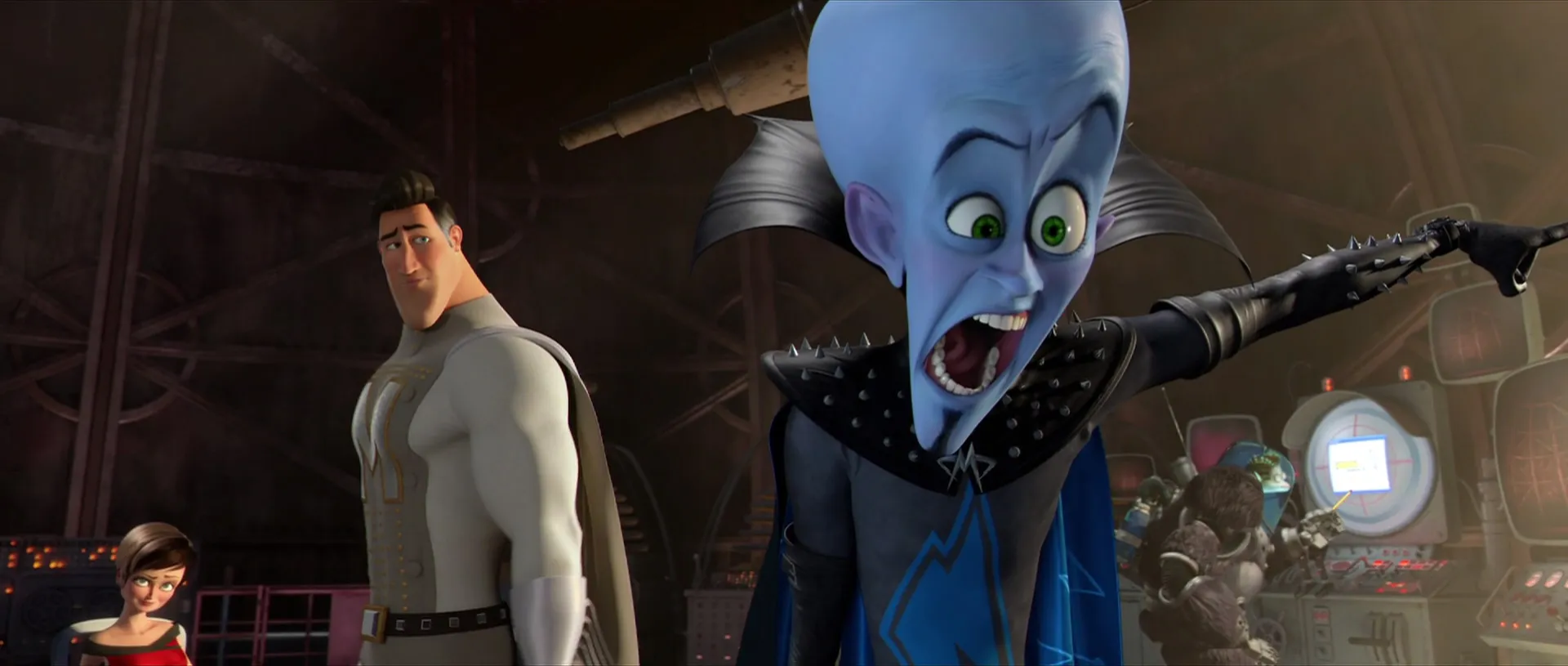
Read MoreSuperheroes are a staple of American culture, following the adventures of men and women in tights who use their superhuman gifts to defeat villains that terrorize their hometown. However, one question has been commonly wondered by readers and viewers alike: What happens when the hero loses and the bad guy wins? The 2010 animated film Megamind, directed by Tom McGrath, may just have the most disruptive yet meaningful answer to this hypothetical. As the titular supervillain wins a battle against Metro City’s caped saviour after decades of failed attempts, everything else about the city seems to fall apart on its own after its core narrative event has been rewritten, and DreamWorks retorts with an even deeper question: what if the bad guy was never the bad guy at all?
Read MoreThreshold Animation Studios’ 2012 animated feature film Foodfight! (Lawrence Kasanoff, 2012) is considered by critics and the audience as one of the worst animated productions of all time. But while Foodfight! performed poorly at the box office, in home video sales, and in critic and audience reviews, the film is often overlooked as a perfect example within the animation industry of everything that can go wrong when making an animated film. To understand its colossal failure, context in how, why, and when it was created is essential.
Read MoreDirected by Bibo Bergeron, the computer-animated film A Monster in Paris (2011) follows the story of Francoeur, a chemically mutated flea, as he explores the city of Paris, befriends Lucille and her two friends, and hides from the danger that is the fear of those who do not understand him. Set during the flooding of the Seine River (1910), Bergeron’s film carries various themes of love and friendship, though darker messages hide beneath the surface of this captivating Europe-set narrative.
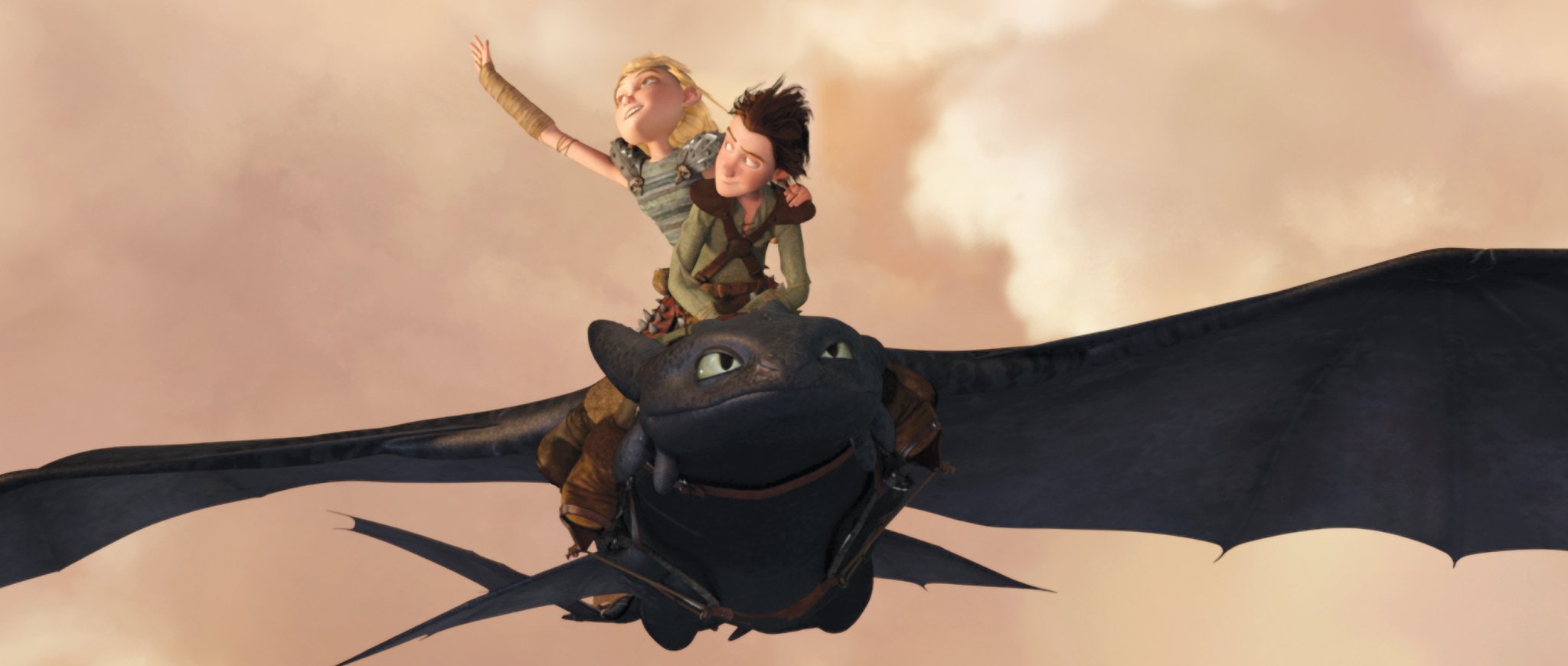
Read MoreBased on a book of the same name by Cressida Cowell, How to Train Your Dragon (Dean DeBlois, 2010) was influential on family audiences, and especially children, when it was released in March 2010, with a unique story about a misfit teenage Viking named Hiccup, discovering his sense of self as he ascends to adulthood. We follow Hiccup on his journey of self-discovery and self-acceptance, and, in the end, he gains the trust and admiration of his peers and the surrounding society.
Read MoreWreck-It Ralph (Rich Moore, 2012) follows the antagonist of a fictional arcade game known as Fix-It Felix. After escaping his 8-bit pixelated world and joining fellow outcast Vanellope von Schweetz in the brightly tinted world of Sugar Rush, the eponymous Ralph learns that their quest for redemption could lead to a massive shutdown of the arcade. Through its visual style and videogame narrative, Wreck-It Ralph felt as if it was calling me and my sector of young gamers, and the animation team at Disney managed to successfully bring in elements of popular gaming tropes and familiar characters to build the many worlds connecting through Game Central Station.
Read MoreUndeniably, Toy Story (John Lasseter, 1995) changed the global animation industry forever, properly introducing the world to Woody, Buzz and a studio that would come to define the childhoods of millions of people. Following an unprecedented streak of beloved crowd-pleasing computer-animated films, Pixar Animation Studios made a name for itself with a brand built on a gold standard of quality, a reputation that has since become both a blessing and a curse. Ever since the start of the 2010s, and tied to the lacklustre reception of Cars 2 (John Lasseter, 2011), the common refrain that the latest Pixar release is missing that “old Pixar magic” has become a staple of most new releases from the studio.
Read MoreHot on the heels of the return of CEO Bob Iger in November 2022 to replace Bob Chapek, the last 12-18 months have certainly seen some important milestones within the industrial, cultural, and technological history of the Walt Disney Company.
Read MorePuss in Boots the Last Wish (2022), directed by Joel Crawford, boasts a sizable cast of characters all racing for the Wishing Star’s one wish to grant. The eponymous protagonist, Puss in Boots, is met with resistance from three antagonistic forces: Goldilocks & The Three Bears, Jack Horner, and Death, each of which in turn plays the role of a villain, albeit in ways entirely unique to one another.
Read MoreA Monster in Paris, a French CG animated feature film directed by Bibo Bergeron in 2011, pays tribute to both the popular tale of “Beauty and the Beast” and the musical “The Phantom of the Opera,” but perhaps not in the way that you would expect. One night, cabaret singer Lucille finds herself face-to-face with the "Monster of Paris," a giant singing flea brought into creation through the mishap of the movie's comedic relief, Raoul, who creates the enlarged insect by accident thanks to mixing magical potions at the Botanical Gardens. Lucille takes the monstrous creature into her care after finding herself no longer frightened but touched, having overheard a song he sings about his heartache in this strange world.
Read MoreDisney’s Encanto (Jared Bush & Byron Howard, 2021) focuses on the Madrigal family and their life in their magical house, or Casita. Every member is given a unique power or “gift” from Casita, as referred to in the film, once they hit a certain age, except for protagonist Mirabel. One night she sees cracks start to form around Casita and realizes that the magic and her family are breaking apart and that she is the only one who can save them. Throughout the film, several characters, including Mirabel’s sisters Isabella and Luisa, exhibit tension and unhappiness in the family that is later revealed to come from matriarch Abuela’s generational trauma (as discussed in an earlier blog).
Read MoreLike parody and nonsense, fantasy questions the basis of a known reality. Fantasy is a “flirtation with limits of sense-making” and – with a friendly wink to Alice in Wonderland – “the mirror that sucks the body in” (Shires 1988, 267-268). The effect produced by fantasy has also been described as a “wildly abandoning experience of viewing oneself in a distorting mirror at the circus funhouse for the first time” or, in other words, as ecstasis in sense of the Greek meaning of the term: as “standing outside oneself” (Shires 1988, 268).
Read MoreRecently returned Disney CEO Bob Iger – reappointed to the company following the abrupt dismissal of his successor, Bob Chapek in November 2022 – confirmed late last week that the celebrated animation studio would be producing a slate of sequels to three of its blockbuster films. News of Zootopia 2 within Disney’s upcoming roster of features was a welcome, if not entirely unexpected, surprise given both the box office success of the 2016 original (the film took $1.02 billion and won the Oscar for Best Animated Feature) and the recent arrival of spin-off web television series Zootopia+ (Trent Correy & Josie Trinidad 2022), which premiered on Disney+ the same month as Chapek’s acrimonious exit.
Read MoreAt the beginning of 2022, the film industry news reported that writer-director Robert Zemeckis was already preparing a follow up to his then-upcoming Pinocchio (2022) with another fantasy movie, albeit one that might be described as a little more ‘sombre’ in tone, being an adaptation of the graphic novel Here by Richard McGuire.
Read MoreNoel Brown provides an engaging and well-researched account of contemporary Hollywood feature animation, here defined as from the 1990s onwards. Noting the recent significance of animation to both the Hollywood studios, their parent conglomerates, and popular culture more broadly, he aims to outline the “form and poetics of the mainstream animated feature” (Brown 2020, 2), with chapters devoted to their narrative and thematic focus on family and friendship, aesthetic shifts, and changes around their representations of identity.
Read MoreEncanto (Byron Howard & Jared Bush, 2021), Disney’s 60th animated film inspired by Latin-American culture tells the story of a magical family, the family Madrigal. The narrative follows the dynamics of the Madrigal family tree across generations in the town of Encanto, ultimately spearheaded by 15-year-old Mirabel, the only member of the family without magical powers.
Read More