Animating Ambivalence: Quebec Contemporary Animation and Death Does Not Exist at the Ottawa International Animation Festival 2025
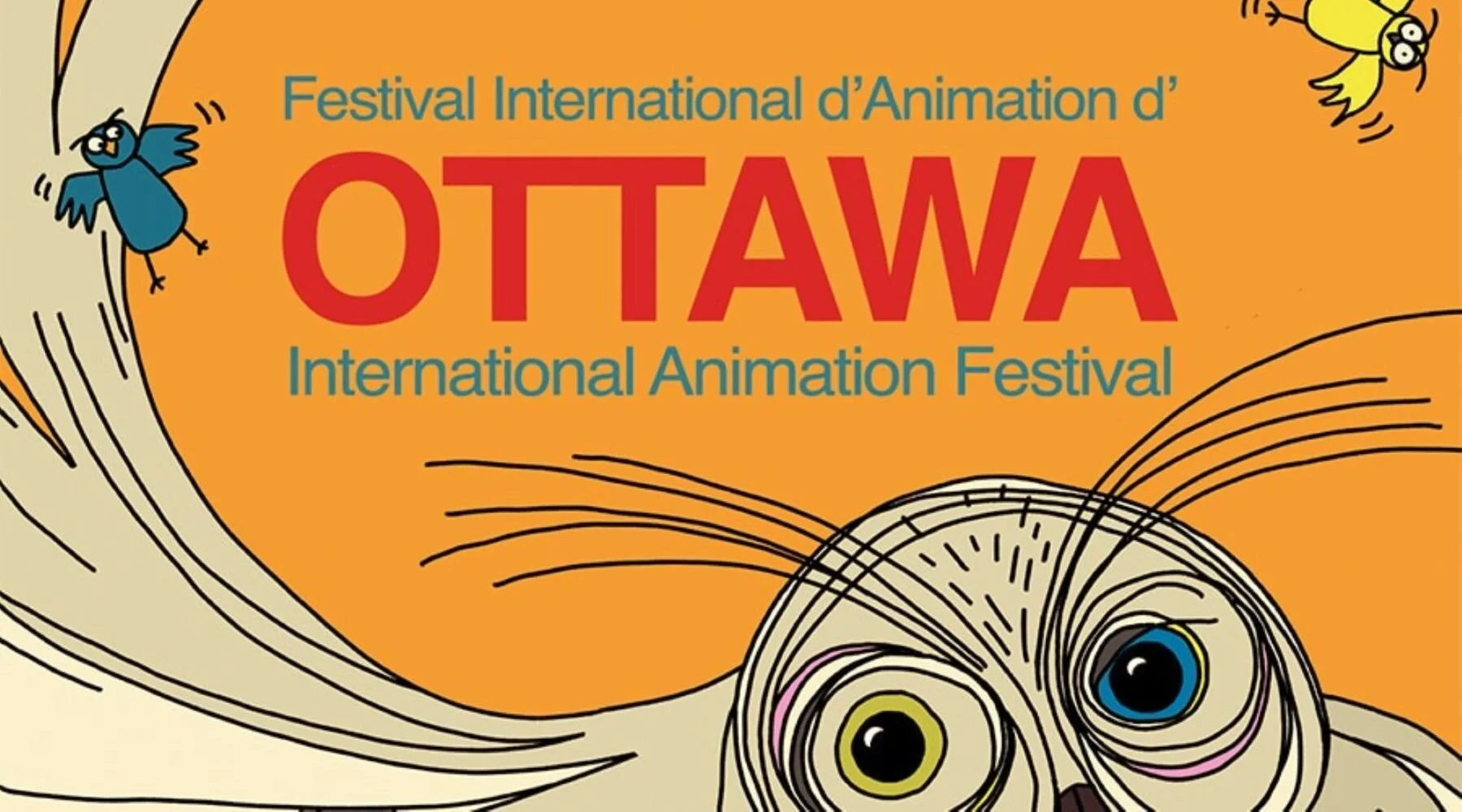
Fig. 1 - Ottawa International Animation Festival 2025.
Over the last twenty years, the province of Quebec in Canada has built an internationally recognized cultural and digital ecosystem, particularly in the visual effects (VFX) (Mikros Animation, Rodeo FX) and animation (Cinesite, National Film Board) sectors. In 2023, these production studios and facilities represented more than $1.4 billion in revenue and thousands of jobs in Quebec, thanks largely to heavy involvement in successful foreign productions and fiscal benefits. However, in recent years, this business model has shown its weaknesses: the workers strike from the American entertainment union SAG-AFTRA in summer 2023, followed by the Quebec government’s decision in May 2024 to cap tax credits for foreign entertainment companies employing in Quebec–reducing the credit rebate from 100% to 65% (Bongiorno 2024)–highlighted the structural precariousness of the local workforce (Arsenault, 2024). The Quebec Film and Television Office (BCTQ) reported that 50% of the 8,000 full-time employees in the VFX sector were unemployed in the spring of 2024 (Amidi, 2024), and leading Quebec studios such as Laughing Dragon (2002-2025) and On Animation (2012-2025) have recently closed, blaming government decisions (Amidi, 2025).
This is a necessary context to understand the uniqueness of a Quebec animation film like La mort n’existe pas (Death Does Not Exist) by Félix Dufour-Laperrière, winner of the Grand Prize for Feature Animation at the 2025 Ottawa International Animation Festival and part of the official selection of Cannes’ 2025 Directors' Fortnight, Annecy Festival, and Fantasia. Co-produced by Embuscade Films–Félix and Nicolas Dufour-Laperrière’s own Montreal-based studio founded in 2013–Miyu Productions (France), and Doghouse Films (Luxembourg), La mort n’existe pas draws the contours of a contemporary Quebec’s auteur animation cinema made thanks to public fundings (SODEC, Téléfilm Canada, for example), not unlike fellow Quebecois Adam change lentement (When Adam Changes Slowly) by Joël Vaudreuil (2023) that itself received the Ottawa’s Grand Prize two years prior in 2023.
La mort n’existe pas was shown among other Quebecois films in various categories during the 2025 festival: The Girl Who Cried Pearls by Chris Lavis and Maciek Szczerbowski, Bread Will Walk by Alex Boya, Hypersensible by Martine Frossard, What We Leave Behind by Alexandra Myotte and Jean-Sébastien Hamel, Avec pas d’casque ‘Cardinal’ by Joël Vaudreuil, CNESST ‘Qu’à un fil’ (CNESST ‘Hanging By A Thread’) by Dale Hayward, Nap Eyes ‘Dark Mystery Enigma Bird’ by Jordan Minkoff,
The Best Canadian Student Animation also counted no less than 10 films from Concordia University’s Film Animation Program, including Lullaby for a Deathdream by Charlie Galea-McClure who won the Best Canadian Student Animation award.
Other winners include Il burattino e la balena by Roberto Catani (Grand Prize for Short Animation), Rakugaki (The Graffiti) by Ryo Orikasa (Best Narrative Short), Green Lung by Simon Hamlyn (Best Non-Narrative Short), Desi Oon by Suresh Eriyat (Best Commissioned Animation), and Poppy Flowers by Evridiki Papaiakovou (Best Student Animation).
Beautifully directed, La mort n’existe pas follows Hélène, a political activist who abandons her companions following a failed attack on wealthy landowners she helped orchestrate. Haunted by her friend Manon who died during the attack, she is confronted with her choices and what her future could look like whether or not she decides to leave them all behind. Drawing on the visual language of political struggle and militant organizing, the film evokes a climate of dissent, although without anchoring itself to a clearly identified historical movement. For viewers familiar with Quebec’s political history, its tonal register may recall the (enough) recent 2012 Quebec student protests, whose mass student mobilizations in protest to tuition hikes and corruption in the Jean Charest government resulted in police violence that left a lasting imprint of the province’s millennial population’s imagination. Hélène’s philosophical inner debates over pursuing or not her activism after taking part in a political action could be understood as a Quebec generation’s own negotiations with political commitment: when transformative aspirations meet fatigue and uncertainty, we are left to ask what remains after the moment of mobilization has passed?
Yet the film stops short of naming references explicitly, leaving viewers to imagine which actions Hélène and her friends might have participated in beyond a targeted assassination and what motivated their reasons. The enemy is unnamed and never fully identified, making the threat rather diffuse. The assumed battle faced by Hélène, Manon, and others that is framed as between revolutionary and capitalism never materializes, relying instead on poetic metaphors and nature symbolism throughout the film.
It is possible that this absence threatens the film’s political message. Rather than staging the material realities of political action, La mort n’existe pas turns inward, privileging the psychological terrain of its protagonist and constructing a poetic imagined space for Manon’s ghost and Hélène to converse and where emotions take precedence over concrete ideological confrontation. Interestingly enough, a somewhat similar dynamic could be observed within the Ottawa International Animation Festival itself, where the film received the Grand Prize. During the 2025 festival, multiple animated shorts from the global solidarity project To Gaza with Love, an initiative supported by the Animation Community for Palestine (ac4pal), were shown during the festival’s opening night, with the aim to raise awareness about Gaza and Palestine in the ongoing genocide committed by the State of Israel. However, this was curiously done without offering contextualization about the project itself. As with Dufour-Laperrière’s film, there was an odd absence of a political referent. Drawing this parallel is not to diminish the importance of making and presenting politically inflected works in festivals, but I propose they both create a space to question what it means (in our current moment) to not clearly articulate political realities. In both the film and the festival’s framework, politics emerge less as an explicitly and assumed narrated structure held high by an author rather than as something that is left to be assembled by the spectator. This is all said with the understanding that the question is making experimental animation enough? when posed in relation to current world events is always ungenerous and is rather best accompanied by another: what would be?
Ultimately, the winner of the Ottawa’s Grand Prize 2026 La mort n’existe pas is a visually stunning and philosophical text about political apathy that will remain an essential viewing in understanding both contemporary and future Quebec animation cinema. The film’s quiet activism mirrors the ambivalence its main character Hélène herself expresses as she navigates a devastating aftermath. It is thus perhaps simpler to use the film as a methodological tool and to let it asks us back the question: how are we ourselves responding to this moment?
**Article published: February 27, 2026**
References
Amidi, Amid. 2025. “Montreal’s On Animation Studios Shuts Down.” Cartoon Brew, February 24, 2025. https://www.cartoonbrew.com/business/montreals-on-animation-studios-shuts-down-246041.html.
Amidi, Amid. 2024. “Quebec’s Animation And VFX Industries Are Collapsing, Over 50% Of All Jobs Lost In 20 Months.” Cartoon Brew, September 3, 2024. https://www.cartoonbrew.com/business/quebecs-animation-and-vfx-industries-are-collapsing-over-50-of-all-jobs-lost-in-20-months-242823.html.
Arsenault, Julien. 2024. “Du jamais vu chez les studios québécois : l’industrie des effets visuels au ralenti.” La Presse, July 22, 2024. https://www.lapresse.ca/affaires/2024-07-22/l-industrie-des-effets-visuels-au-ralenti/du-jamais-vu-chez-les-studios-quebecois.php.
Bongiorno, Joe. 2024. “Les studios d’effets visuels et d’animation en difficulté interpellent Québec.” La Presse, September 26, 2024. https://www.lapresse.ca/affaires/entreprises/2024-09-26/les-studios-d-effets-visuels-et-d-animation-en-difficulte-interpellent-quebec.php
Biography
Aurélie Petit is a Postdoctoral Researcher at the Quebec Research Chair on French-Language Artificial Intelligence and Digital Technologies (IANF, INRS) where she works on the (Re)Generative AI for Culture project. She holds a PhD in Film Studies from Concordia University, Montréal. She is an interdisciplinary social and visual researcher of animation and technology. During the last years, she has held research positions on the topic of AI, adult content, and online governance with the Canada Research Chair in Digital Regulation at Work and in Life, the AI + Society Initiative, and the Social Media Collective at Microsoft Research. She is the Guest Editor for the Porn Studies journal’s special issue on “Artificial Intelligence, Pornography, and Sex Work.”