
Digital Vérité, Part 1: What the Future of Documentary's Truth Claims Looks Like
In 1960, a small film crew followed John F. Kennedy through hotel corridors and union halls during the Wisconsin Democratic primary. Primary (1960) might not appear to be pushing technological boundaries to modern viewers but, at the time, its apparatus of handheld cameras, synchronised sound, and, crucially, minimal narration over intimate scenes was a small revolution. The filmmakers (Robert Drew, Richard Leacock, D.A. Pennebaker, Albert Maysles) took advantage of these advancements to claim that what their cameras could now do bordered on the metaphysical. They could “be part of the woodwork.” They could capture reality “as it really happens.”
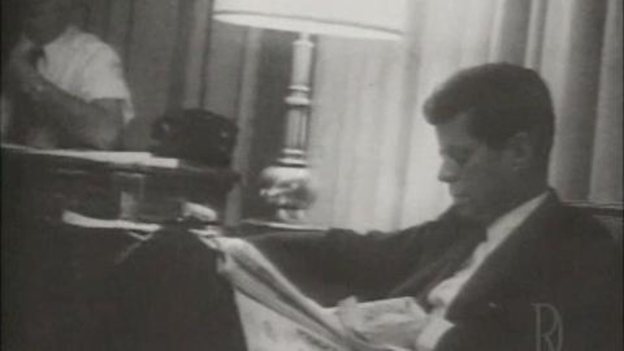
Fig. 1 - Primary (1960).
This was the emergence of cinema vérité in practice, and its truth claim was rooted in the technological. The claim wasn’t that these filmmakers were more honest than their predecessors, or that their access facilitated the documentation of more important subjects (Fig. 1). The claim was that the equipment had crossed a threshold where the apparatus no longer needed to dictate to reality. Reality could now dictate to the apparatus. The technology had caught up to truth.
This claim was the inheritance of a long-running philosophical fantasy about the photographic image. André Bazin had laid the groundwork two decades earlier in “The Ontology of the Photographic Image,” arguing that photography, alone among the arts, achieves representation “automatically, without the creative intervention of man” (1986, 7). Where painting depends entirely on the painter, the camera derives “an advantage from his absence” (Bazin 1986, 7). The apparatus does the seeing; the human's role is reduced to selecting what to point it at. Cinema vérité effectively extended this Bazinian fantasy from the still image to the moving one. Lightweight cameras and sync sound, the argument went, finally allowed documentary film to fulfil photography’s original promise — to capture the world without the distorting intervention of an editorial human hand. The Bazinian unconscious of the cinema vérité moment is worth keeping in mind, because it has not gone away. It has simply become entangled and attached to an alternate host of technological innovation.
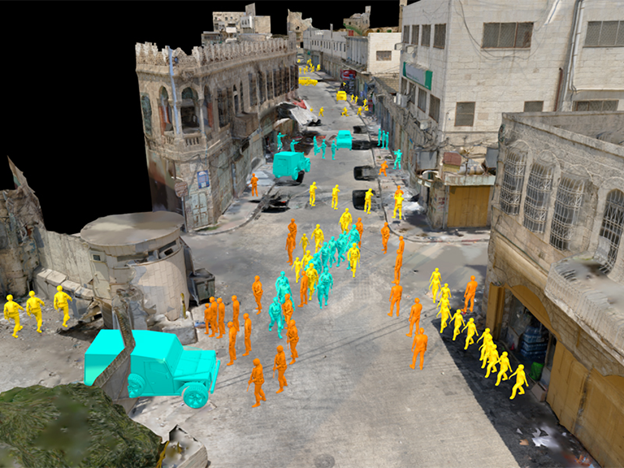
Fig. 2 - The Beating of Faisal al-Natsheh, Occupied Hebron, Palestine (2020)
That claim immediately came up against contention. Critics pointed out that lightweight cameras still had to be pointed at something, that editors still had to choose between takes, that the very presence of a filmmaker, no matter their assimilation into said woodwork, changes what unfolds in front of it. This observer effect is put most bluntly by Georges Franju: “There isn't any cinema-vérité. It's necessarily a lie, from the moment the director intervenes — or it isn't cinema at all.” The technology doesn’t dissolve the gap between image and reality; it just shifts its cosmetic presentation.
I think we’re now in a moment that rhymes with that one. Documentary practice is once again making truth claims that rest specifically on arguments and rhetorics of technological affordances. The photographic apparatus is no longer the focus — its ubiquity renders notions of access and revelation null. What's new(er) is the morphing digital infrastructure that surrounds the image, such as but by no means limited to: forensic reconstruction software, machine-learning analysis, satellite imagery archives, geolocation tools, photogrammetry, and animated 3D modelling (Fig. 2). These tools, their proponents’ rhetoric goes, allow documentary to do what the camera lens fails to achieve alone — to reconstruct the events (often but not exclusively concerned with human rights crises and state violence) which elude photographic capture, to verify the claims of that reconstruction through metadata, and to render the structural patterns hidden beneath isolated incidents. This is what I will call digital vérité: a framework for reading documentary image-making practices that assert their truth claims specifically through the use and application of digital tools.
A few conceptual framings are useful for developing this framework. Bruno Latour, writing about scientific visualisation in the 1980s, described “inscription devices” — visualisations that gain epistemic force not through accuracy alone but through being “mobile but also immutable, presentable, readable and combinable with one another” (1986, 7). An animated 3D model of an event, such as the one above, can be malleably rotated, annotated, overlaid with new data, brought into legal forums, and distributed online. A photograph, however vivid, cannot do these things. It is locked in a single perspective and a single resolution. Latour’s framing helps us see that part of what digital vérité reveals is the production of images whose authority lies in their movement and combinability, not in their indexical correspondence to a real event. The model has been liberated from the photograph's constraints in much the same way that Drew's cameras were liberated from their weighty sandbags of static apparatus — and this liberation is the texture of contemporary truth claims.
Another productive conceptual framing comes from Annabelle Honess Roe's work on animated documentary. She argues that visibly constructed images don't undermine the documentary contract, but extend it. The declaration of artifice, she writes, can produce “an expressive potential to communicate something beyond that which is conveyed in live action” (2017, 284). Where animated documentary renders the unseen interior — intangibles such as memory, affect, and experiential textures beyond photographic capture — computational documentary renders a different kind of unseen: structural violence, distributed events, scenes no camera witnessed. Both work by declaring their artifice rather than concealing it.
To clarify my own position on this, I don’t think digital tools get us closer to truth, or that there is in fact any distance or proximity of veracity that can be traversed through visual knowledge production. I think digital tools of visualisation bring us closer to a particular kind of image — which looks rigorous or computational in its scientific visual rhetoric — and the question of whether this image bears any more reliable relationship to reality than a Pennebaker handheld shot in 1960 is entirely open to interpretation, and in my opinion, beside the point. The same scepticism that greeted cinema vérité’s truth claims should greet digital vérité, and adapt to its contemporary specificity by carefully considering its tools’ capacity for opacity, synthetic manipulation, and the potential reification of modes of surveillance.
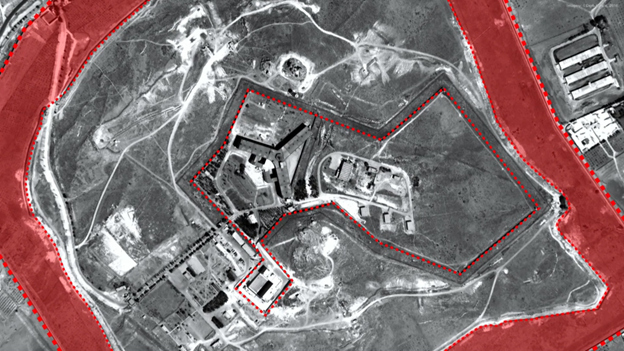
Fig. 3 - Torture in Saydnaya Prison (2016).
More pressing than the veracity of the digital image is what the digital image says about the distributions of power, visibility, and opacity specific to our contemporary moment. Documentation is a ubiquitous condition: people carry a camera at all times, smartphone footage of state violence circulates within minutes of the events themselves, satellite imagery is commercially available, and leaked data can spread across the internet before any institutional response can be mounted. By any measure of raw documentation, we have more material (or ‘content’ — insert whatever term of ‘thingness’ best applies) on what is happening in the world than can be comprehended. And yet the relationship between this abundance of documentation and our capacity to settle factual questions about the world has, if anything, receded. More is recorded; less is resolved. Knowledge availability and knowledge contestation are growing in unison.
Digital vérité positions itself as a response to this condition — a way of understanding the use of computational tools to convert the surplus of unsettled documentation into something firmer. But the same digital infrastructures that allow activist research agencies to reconstruct a police shooting can also allow defence ministries to model airstrikes, state intelligence to assemble citizen behavioural dossiers, and platforms to algorithmically prioritise the images users are shown (Fig. 3).
In next week’s Part 2, I turn to Forensic Architecture's investigation into the killing of Mark Duggan, and what their use of 3D reconstruction reveals about the limits of digital forensics as a truth claim.
**Article published: June 12, 2026**
Bibliography:
Bazin, André, and Hugh Gray. 1960. “The Ontology of the Photographic Image.” Film Quarterly 13, no. 4: 4–9.
Honess Roe, Annabelle. 2017. “Interjections and Connections: The Critical Potential of Animated Segments in Live Action Documentary.” animation: an interdisciplinary journal 12, no. 3: 272–286.
Latour, Bruno. 1986. “Visualization and cognition: Drawing things together.” In H. Kuklick (ed.), Knowledge and Society: Studies in the Sociology of Culture Past and Present Vol. 6: 1–40. Stamford: Jai Press
Biography
Isaac Parkinson is a PhD candidate in Digital Humanities at King’s College London. His research explores the interdisciplinary intersections of data visualisation, knowledge production, and documentary aesthetics in digital image cultures, focusing particularly on OSINT visual investigations and the documentation of human rights abuse.