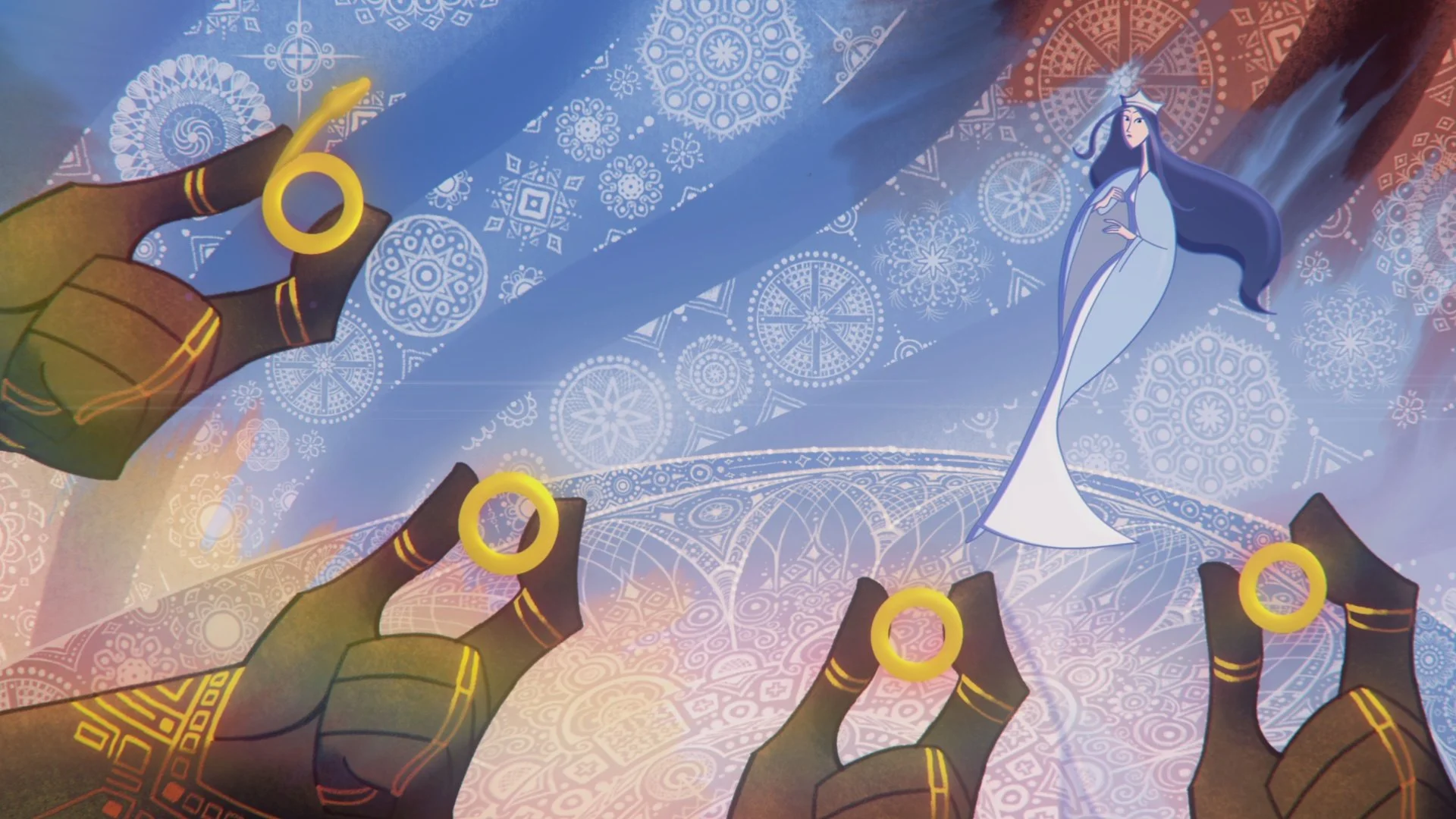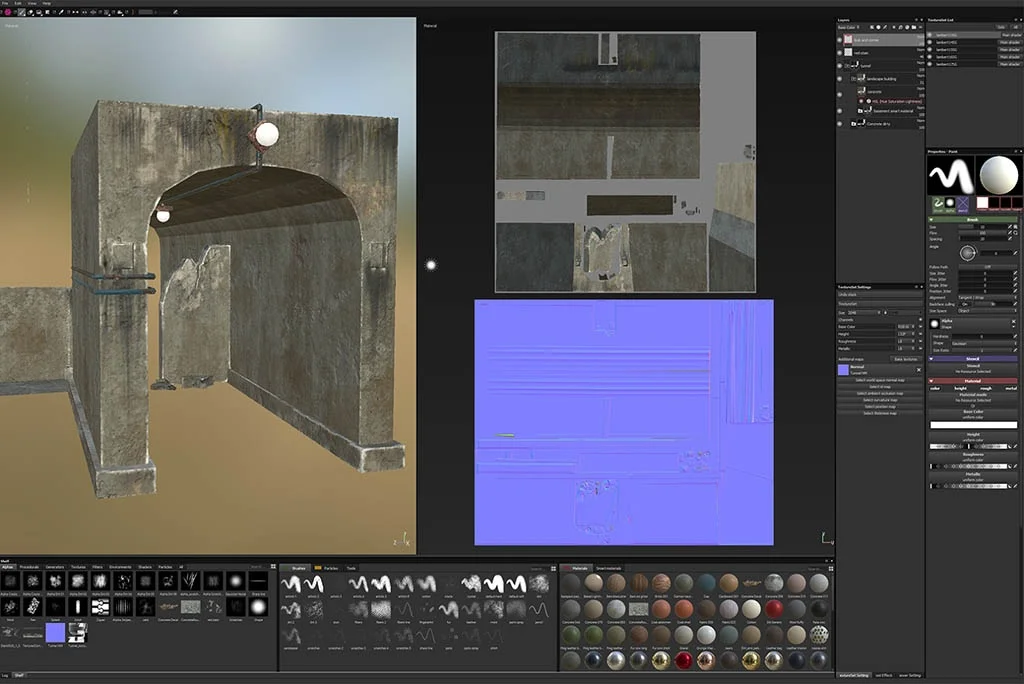
Cristina Kovacs is a passionate creator of digital art with a focus on character design and visual development. Her dream is to make a difference by connecting and inspiring people of all walks of life through creativity and zeal in the field of animation. Her senior capstone, The Mermaid of Venice, is a visual development pitch deck for a proposed 5-7 animated short film. Its story begins in 17th century Venice, when masquerade balls are at the height of their historical popularity—and humans are not the only guests in attendance.
Read MoreAs a young artist growing up in NYC in the 1990s and early 2000s, anime and sci-fi/fantasy were my life. Robotech/Macross, Rurouni Kenshin, Gundam, Star Wars, Crouching Tiger Hidden Dragon. These adventures (and many more like them) spirited me away from reality. Yet at the same time, these stories also helped me understand reality too as they featured gripping characters who often carried the fate of the entire cosmos on their backs.
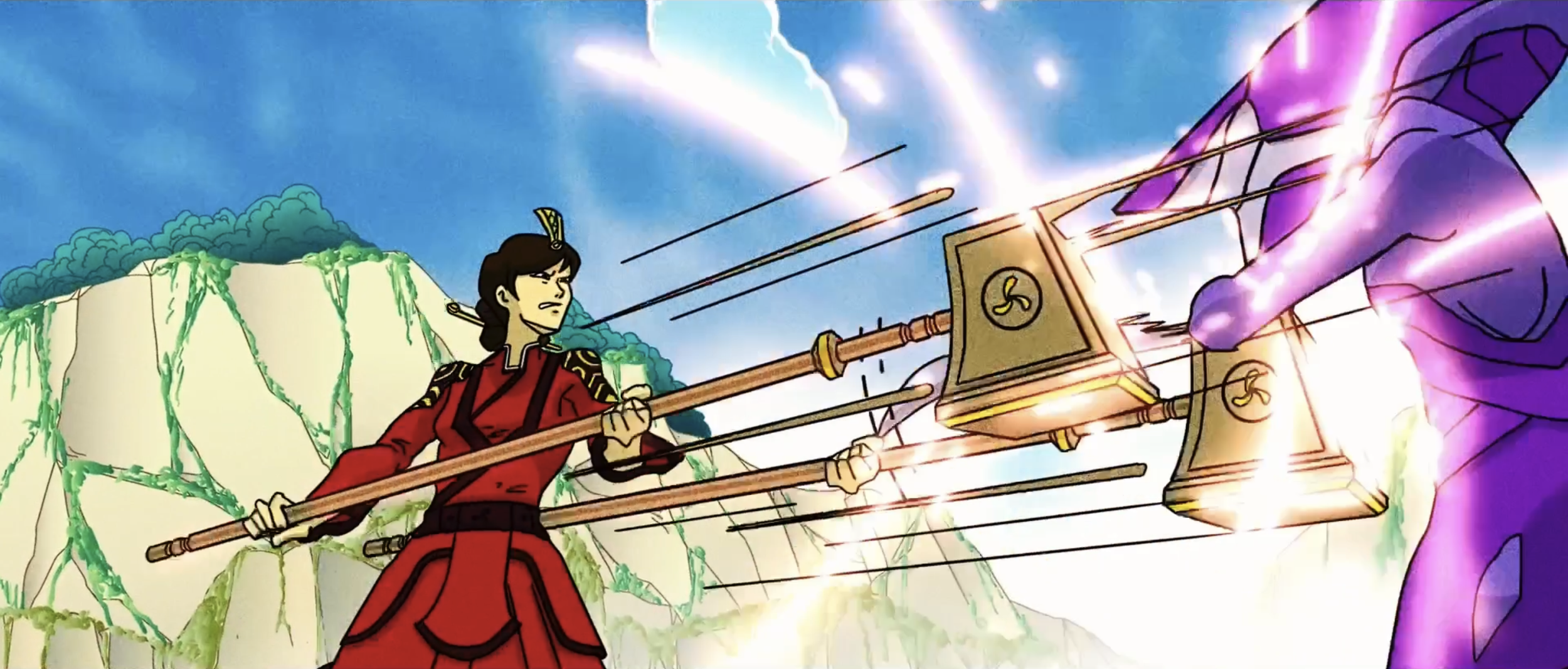
But it dawned on me pretty quickly as a Korean American that there was a gap in the types of stories I was consuming. The Chinese had their fantasy epics which blew my mind with their scale and heroism. The Japanese had incredible anime and samurai stories. And of course the Western world gave us space operas and superheroes. My own homeland Korea though? I couldn’t point to any large-scale epic adventure that had its origin in Korean culture.
Read MoreWhen I first encountered the part of L. M. Montgomery’s 1911 book The Story Girl that contained the tale of “The Wedding Veil of the Proud Princess,” I was struck by a sense of recognition. As a director and storyteller myself, it felt less like discovering a story and more like remembering one I had always known, a fairy tale so archetypal that it seemed impossible it was not already part of the shared cultural canon. Its setup of a beautiful princess who declares she will only marry the king who conquers all kings, and the payoff of this turning out to be Death himself, has all the hallmarks of a medieval fairy tale.
Read MoreIn many fantasy stories, magic is drawn from ancient relics or arcane symbols, but what if it came from something as simple, intimate, and culturally rich as a cup of tea? In Tea Leaves Last, a 2D animatic pilot made by Asians in Animation, that’s the recipe. The story follows Mya, a young woman from a small farming nation as she ventures out to bring back forgotten Tea magic to the world. This society revolves around the plant – it is used in place of water for everything from bathing to drinking to waterfalls and lakes of tea. But the choice of this drink has deeper meaning. As the world’s most widely consumed drink, tea originates from a region between Burma (Myanmar) and China, with which showrunner Saira Umar shares ethnic roots. Tea’s journey to global presence has shaped empires and incited revolutions from the Boston Tea Party to the Opium Wars. It is a drink of ritual, rebellion, and colonial entanglement, serving as a perfect foundation of an entire magical ecosystem.
Read MoreExperimental animation often employs metamorphosis and incorporates visual metaphors as strategies to explore concepts such as the cycle of historical trauma, thereby contributing to the transmission of collective memories related to colonialism, apartheid, and war. (Stewart 2024, 7). These transformations not only signify external historical ruptures but also mirror internal emotional upheavals. In this context, the body emerges as a crucial site of expression, metaphorically becoming a space through which the intensity of emotion can be measured (Kövecses 2000, 24). This provides a solid theoretical basis for using the body to express abstract traumatic emotions in experimental animation.
Read MoreOne of the concepts in a story involving characters is the character arc. In addition to being used to build the story structure, the arc also creates the conditions by which the audience might feel sympathy for the main character. When the main character begins at a certain emotional point, but by the end of the story experiences a change to a different point, that is the character arc (Myers 2022, 19). In his book Beyond the Hero's Journey, Anthony Mullins defines characters into two types: change and constant, and three types of arcs: optimistic, pessimistic, and ambivalent.
Read MoreStories typically follow a structure of beginning, middle, and end, where characters move from their known world into a challenge, and then either overcome or fail it, leading to change. Joseph Campbell’s monomyth (2008) highlights this structure's universality, but exploring alternatives to traditional narrative patterns can lead to unique storytelling approaches. The narrative of mystery, according to Knobloch-Westerwick et al shows that the balance between suspense and resolution enhances audience satisfaction. The Interpretive Character Unravelling Framework (ICUF) builds on these ideas by applying the mystery genre’s principles and concepts of surrealism to character development, engaging the audience in unravelling characters themselves through interpretation rather than direct exposition.
Read MoreWith animation’s unique ability to penetrate the internal world of a range of living organisms, it can make the invisible visible (Wells 1998, 122). It is undeniable that animation stands out as a powerful medium for exploring human complex emotions and psychological states, and as an animator myself, the most commonly employed and explored framework that I experience throughout my studies and creative practice is the use of metaphor to abstractly depicted the mind. However, unlike metaphors that have been extensively researched and discussed throughout the history of animation studies (see Wells 1998; Uhrig 2018), the concept of metonymy within animated representation, a similar literary device to metaphor, has yet to be extensively talked about.
Read MoreThe story of my animated film Plaything (still in production) and its themes of minstrelsy and racism is a long arduous journey that continues to surprise me even as I author this article. Once the film is completed, it will dive firmly and deeply into the darkest depths of American history and explore the disturbing roots of Blackface minstrelsy, slavery, and Jim Crow, which have nourished and supported multiple media form for nearly two centuries, from the macabre roots of the Southern Gothic sub-genre to cartoons and animated filmmaking.
Read MoreLike so many people, I was extremely taken aback by the recent pandemic. Not just surprised by the spread of the virus itself, but also how poorly the world had prepared. However, my husband Graham was less surprised, almost languid - and seemed to have a special plan for how to deal with being stuck indoors. “I want to make a film called Silicon Docks,” he announced. “And I want you to animate it for me!”
Read MoreI was always described as a child with her head in the clouds. Mine was a military family that moved from place to place every few years, traveling across the country. I was too young to stay connected to old friends each time we moved, so being continuously friendless wasn't unusual. One of my earliest memories was learning to adapt and make space for myself. I learned quickly that the most consistent friend I would ever have was myself.
Read MoreQuantum LOGOS (vision serpent) is an immersive reactive film that uses Mesoamerican culture as inspiration for design ideas that explore the basics of quantum mechanics. This project uses abstract animated imagery to metaphorically represent the quantum world. I use this approach because of the parallels that are evident between Mesoamerican art and philosophy and the quantum mechanics vision of the nature of reality.
Read MoreDuring the production of my animated film Anna, I began to contemplate questions about the intersection between empathy, animation and fantasy, and how they feed into the value of storytelling through film. The further into production I went, the more interesting and complex this became as I saw how fantasy and storytelling could play a powerful role in developing empathetic sensitivities in both filmmakers and viewers.
Read MoreHave you ever dreamt of being able to guess the contents of a book, at a glance, simply by flipping through the pages ? This would be a very useful superpower for any student, or teacher, to have. When I saw Wonder Woman’s Jaimie Powers using this skill on television at a young age, the fantasy of instant-reading stayed strong in my heart, leading me to finally develop a pile of Flipped Books as part of my own creative practice.
Read MoreBloomers is an animated film that had an unlikely gestation. It started as a commission from a contemporary music orchestra in Vienna (Klangforum Wien) as a response to Christian Felber’s economic manifesto The Economy for the Common Good, a sustainable alternative to greed-based capitalism published in 2010. The manifesto is to change the ultimate goal of business solely from making money, to a meaningful, fulfilling and dignified life for all the participants.
Read MoreIn this article I will explore the conceptual position a director occupies in the world they create or represent as a method for clarifying a film’s status as either fiction or documentary. As an animated documentary practitioner I am particularly interested in finding a balance between the seemingly limitless fantastic potential of animation and the duty of a documentary filmmaker to create authentic and ethical representations of people and the world.
Read MoreMy name is Danny Nichols and I have been drawing and painting all of my life, primarily as a comic book artist. Growing up in South London, I am fascinated with grime as well as beauty. My previous comics include an Inspector Morse parody Tales of an Alcoholic (Fig. 1) as well as a book about the British unemployment system called Creeps & Underdogs, for which the great Alan Moore (V For Vendetta, Watchmen) wrote a foreword. I have also produced a self-published picture book called Insomnia (Fig. 2) as well as doing bits and pieces for magazines and comics like Viz..
Read MoreAt irregular intervals throughout the production of my debut feature Doozy – a part-animated exploration of the 1960s voice casting of American actor Paul Lynde – I would meet animator Elroy Simmons (see Fig. 1) in an East End London pub, where he would hand over a wad of beautifully drawn frames, wrapped in newspaper, and we’d have a celebratory drink or two.
Read MoreNiggun is a science-fiction hand drawn animated film that mixes the theme of spiritual quest with a space odyssey. It takes place in a post apocalyptic future where earth is gone and Jerusalem has become a legend. The original idea for the film began with a small illustration I made of David Bowie’s Space Oddity, depicting major Tom floating in a tin can. The theme of being lost in space representing some kind of existential crisis made me look for a story behind that astronaut (Fig. 1). In my point of view, Jews were never meant for space travel.
Read MoreMy name is Mani Haider and I am an indie games developer. In this post, I would like to discuss the creative and technical process behind my latest game, Delirium, explaining how I became inspired to produce this sci-fi/horror game as my latest project. I was first inspired to work in games design in 2016, when I was working as a runner within the film industry and was exposed to the work of amazing concept artists working in the visual effects studio.
Read More