Building the Korean Fantasy Epic I Wished I Had Growing Up
As a young artist growing up in NYC in the 1990s and early 2000s, anime and sci-fi/fantasy were my life. Robotech/Macross, Rurouni Kenshin, Gundam, Star Wars, Crouching Tiger Hidden Dragon. These adventures (and many more like them) spirited me away from reality. Yet at the same time, these stories also helped me understand reality too as they featured gripping characters who often carried the fate of the entire cosmos on their backs.
But it dawned on me pretty quickly as a Korean American that there was a gap in the types of stories I was consuming. The Chinese had their fantasy epics which blew my mind with their scale and heroism. The Japanese had incredible anime and samurai stories. And of course the Western world gave us space operas and superheroes. My own homeland Korea though? I couldn’t point to any large-scale epic adventure that had its origin in Korean culture.
This was somewhat bizarre to me because Korean history is full of culture, geopolitics, larger-than-life characters and way more. There is a wealth of material that can stand proudly beside any nation’s epics. And yet, in the fantasy and animation worlds I grew up with, it just was not there.
One Last Monster: The Fire Within (Director’s Cut)
I believe that my film One Last Monster came out in part from that void.
The film takes place on a distant world called Adin which is loosely inspired by Joseon-era Korea (1392 AD to 1897 AD). Adin is haunted by history in that, much like real-life Korea, it has been attacked again and again by forces from beyond its borders. Its people are brave but dangerously ground down from constant interstellar conflict. In that exhausted state, they become vulnerable to a terrible temptation: the belief that survival might justify becoming the very thing they fear.
I wrote One Last Monster (Figs. 1-6) during a strange time in the world. Around 2015 and 2016, it felt like more countries were turning inward and becoming afraid of outsiders. I saw an unsettling parallel between that and Korea’s own isolationist past and that became the root of making Adin Korea-inspired. But the story also came from my own life as well. My mother had died from cancer and my Christian faith was shaken. Though I came out of the struggle eventually with a stronger faith, I was heartbroken trying to figure out why and how to trust in a higher power. In that state, I understood why a wounded world might want to close its gates forever.
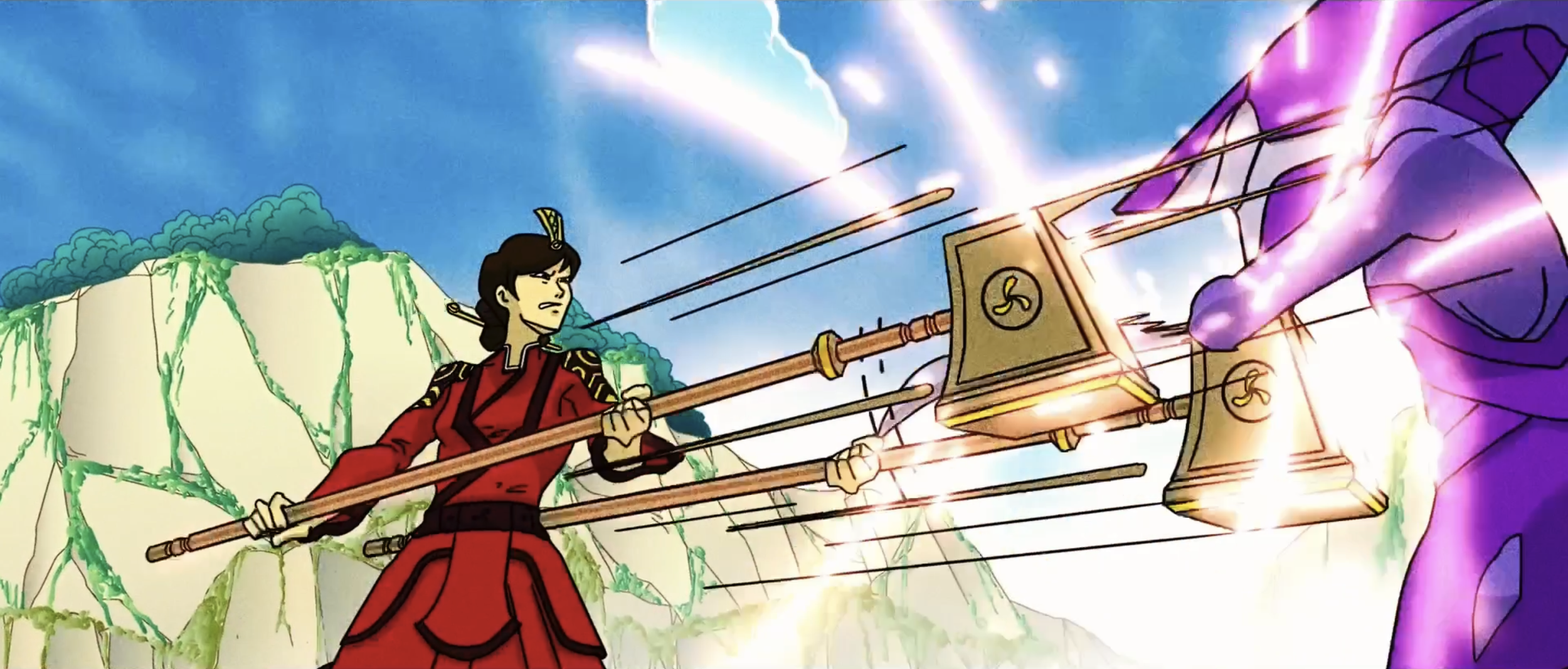
Fig. 1 - One Last Monster.
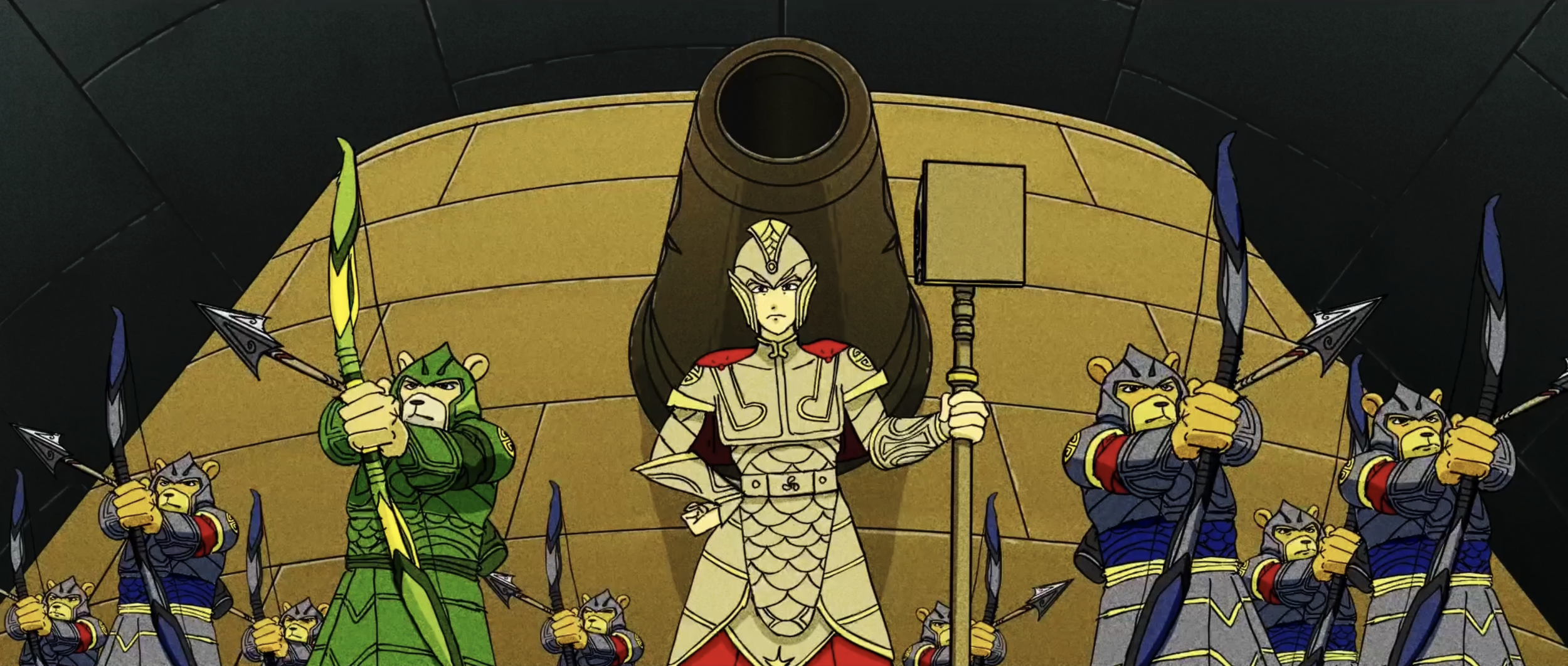
Fig. 2 - One Last Monster.
When the film begins, Empress Eura, the young ruler of Adin, has every reason to be afraid. Her husband, Emperor Taejo, has been killed by alien invaders. On top of that, Eura inherits a broken civilization and a responsibility she's not fully ready to carry but has to.
With some spoilers ahead, the centre of the story is a mysterious weapon called the flame which Emperor Taejo was developing before he was killed. The flame promises safety, but it is actually the same kind of weapon used by the invaders against Adin. Taejo had somehow learned what kind of power the aliens were using and decided to build Adin’s own version of it. He thought he was protecting his people, but really he was pulling Adin deeper into the same cycle of violence that had already wounded them.
Into all this, a mysterious (and towering) monster known as Didas arrives on Adin.
Didas is a giant alien survivor from another world. He looks like exactly the kind of monster Eura has been taught to fear, with gigantic horns and a towering body several hundred feet high. Didas appears at the gates of Eura’s city and tells her the flame must be destroyed. Naturally, she does not believe him. As she straight up tells him: “nothing good ever comes from the outside.”
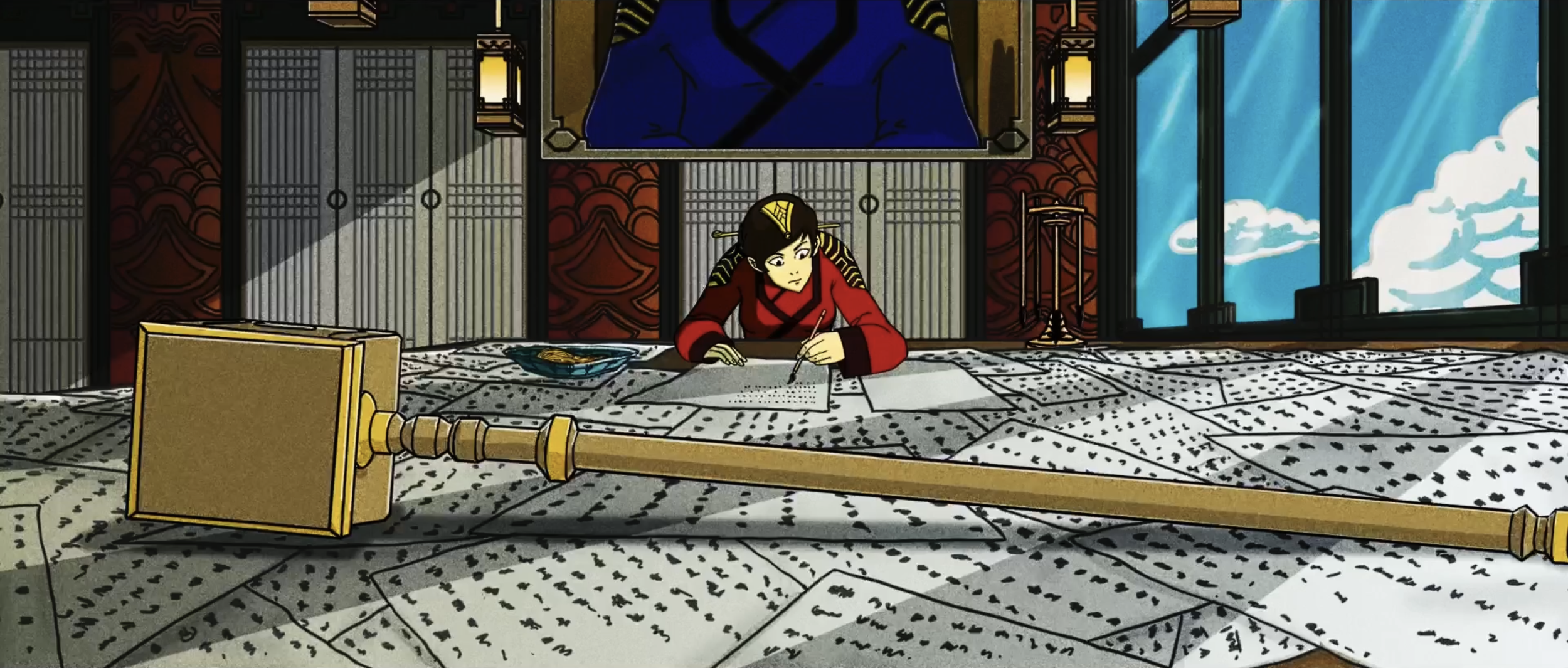
Fig. 3 - One Last Monster.
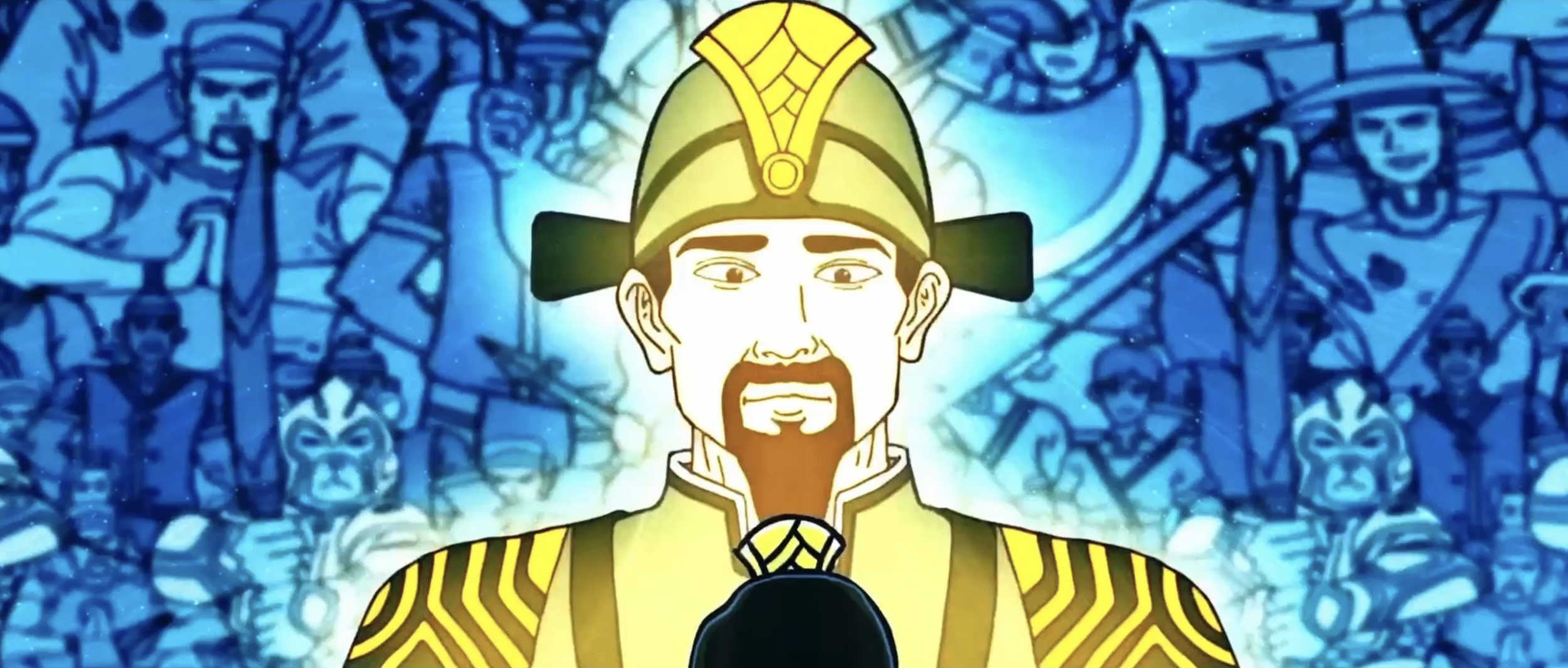
Fig. 4 - One Last Monster.
To me, that jab sits at the heart of the film’s themes. “Nothing good ever comes from the outside” is Eura’s prejudice against anything alien on full display. Hostility and suspicion start to feel like wisdom to a world that has been attacked one too many times from the outside universe.
But Didas is not actually a monster. Or at least, not the monster Eura thinks he is. Didas has also been destroyed by the same kind of flame. He once helped create a similar weapon on his own world, believing it would protect his species, only to watch it obliterate everything instead. Instead of being an apocalypse on two legs, Didas comes to Adin to stop Eura from repeating his own mistake.
That reversal is the heart of One Last Monster. The frightening outsider becomes the conscience of the story. The beautiful flame becomes the true monster. The weapon that promises peace becomes the instrument of endless war. And Eura's ultimate enemy is the fear inside herself that cannot imagine trust.
Pretty heavy stuff honestly, and so it was important to me to wrap this story in the excitement and accessibility of the stories and adventures that shaped me when I was younger. Joseon Korea-inspired architecture and clothing sit next to cosmic weapons and giant alien beings. Real life Korean turtle ships become living war turtles with cannons. A 80s and 90s anime influence sits beside Korean historical design. It all adds up to something that feels more like a mythic and maybe even dreamlike interpretation of Korea that still honors its historical roots.
As an artist, that hybrid approach to creating my film felt truthful and honest to me. I feel like I was raised between many worlds Korean and American, Christian and pop-cultural, anime and Hollywood, old history and futuristic spectacle. Adin became a place where those pieces could finally speak to each other. At times it is tragic, other times exciting and at other times absurd, but from a 40,000-foot view it somehow makes sense to me.
The actual making of the film was its own journey. One Last Monster was animated over the course of two years by me and another animator, my good friend Elmer Barcenes. It was definitely an indie effort, but there was nothing small about the workload. We each drew thousands of frames ourselves, and I was also doing everything from storyboarding to producing the entire show – the whole nine yards – and trying to keep the whole production moving forward.
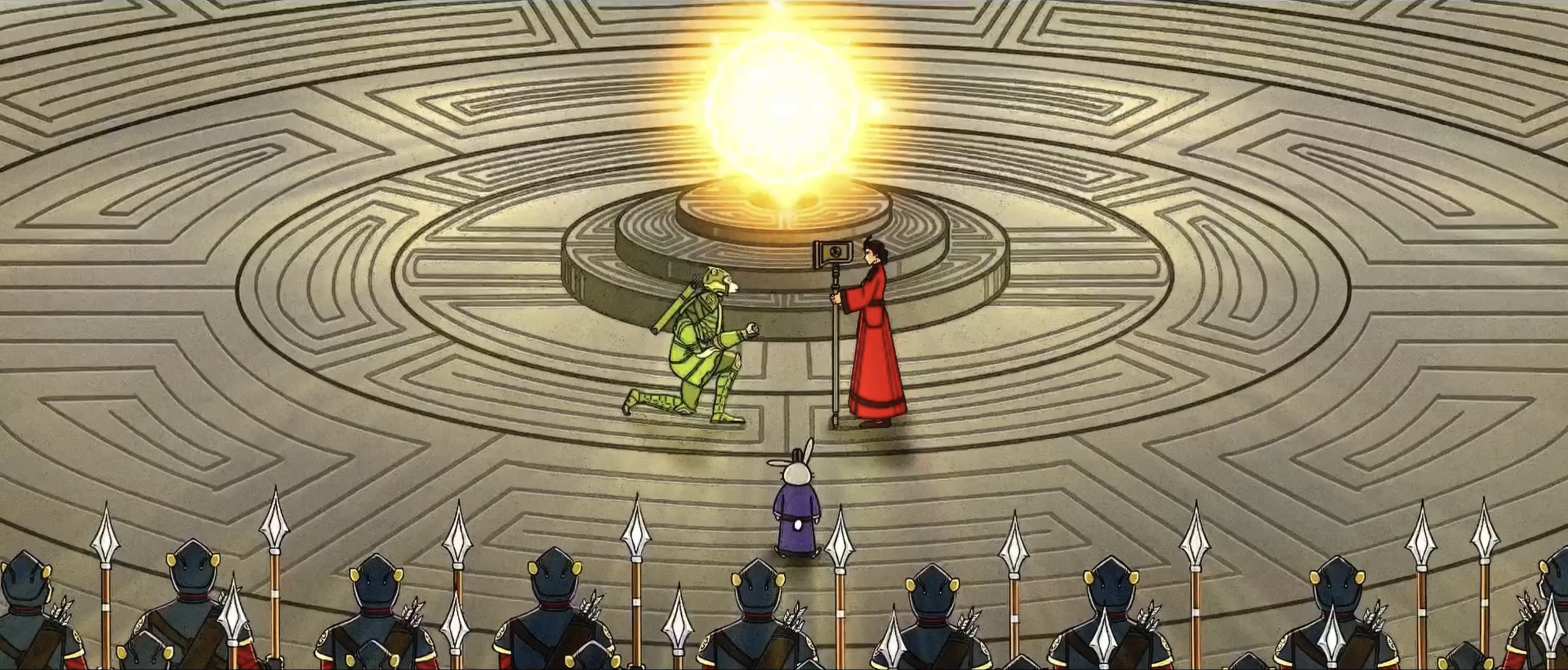
Fig. 5 - One Last Monster.
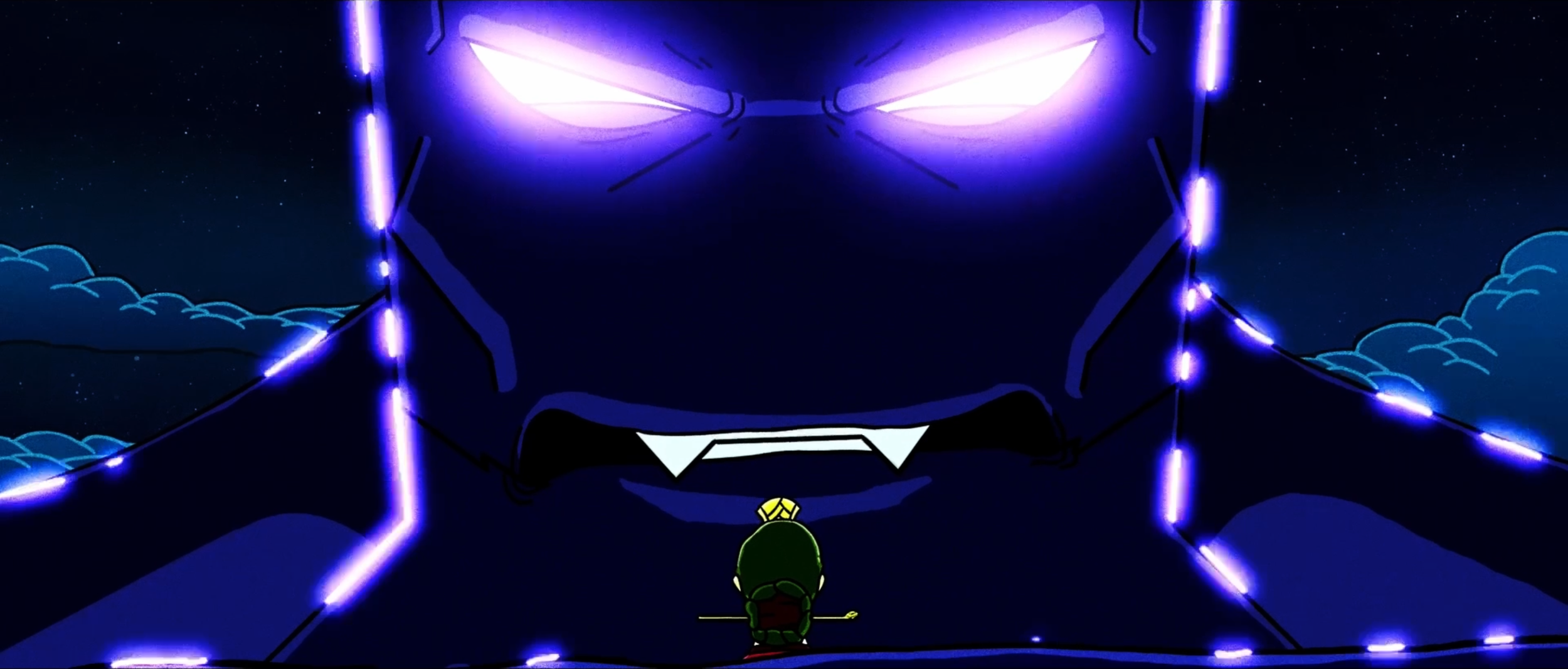
Fig. 6 - One Last Monster.
That process was exhausting, but it also forced me to make sure the story was as good as it could be because we knew we could not compete with, say, a polished studio production with millions of dollars and hundreds of crew backing it. Yet these limitations also I think protected the film’s unique character and allowed me to simply finish instead of becoming so perfectionist that I could not finish it.
After finishing One Last Monster, I gradually realised that Adin was not just the setting for one short film. It was the beginning of a larger world. I am now expanding it through YouTube lore videos, creator commentaries, and new story pieces that explore the world Adin. You can check it out at youtube.com/@onelastmonster.
There is a lot going on in the universe of One Last Monster, and I hope the film works as an exploration of the danger of believing the monster is always someone else while also being a fun, epic adventure. That balance between seriousness and entertainment is something I always strive for in my work. After all, to quote (and slightly modify) a famous bit of wisdom from Mary Poppins: a spoonful of sugar, plus anime, plus cosmic kaiju fantasy craziness, makes the medicine go down.
**Article published: May 15, 2026**
Biography
Gene Kim is a Korean American storyboard artist, animator, writer, and independent filmmaker based in New Jersey. He has worked for studios ncluding Pixar, Disney’s Blue Sky Studios, Netflix, HBO Max, Amazon Studios, Angel Studios, and AnimSchool. His independently animated short film One Last Monster has received over 100 international festival selections, nominations, and awards, including First Prize for Best Animated Short at the Oscar-qualifying FLICKERS’ Rhode Island International Film Festival, and has been featured in Forbes, The Korea Times, Foreign Policy, and other publications. Gene is currently expanding One Last Monster into a larger creator-owned fantasy universe through YouTube lore videos, creator commentaries, and story pieces. He lives in New Jersey with his wife, daughter, and their 13-pound Flemish Giant rabbit, Dunkin. Instagram: @onelastmonster.