Missing the Wildwood for the Trees: There’s More to (the Illusion of) Life than Labour
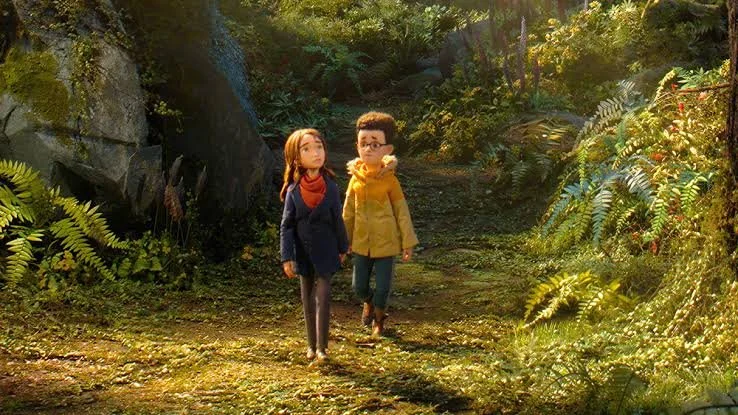
Fig. 1 - Wildwood (Travis Knight, 2026).
Clicking on almost any review, social media post, or promotional piece about stop-motion studio LAIKA’s newest feature Wildwood (Travis Knight, 2026) (Fig. 1) yields a detailed description of its mind-bogglingly laborious and lengthy production process. Moviegoers are invited to marvel at the film’s “astonishing figures:” 223 handcrafted puppets, 132 practical sets, 728 handmade trees, 142,030 replacement faces, 16 years spent in development. They are urged to perceive each individual frame of the “longest stop-motion animated film ever” as a “marvel of handcrafted worldbuilding.” They are promised “another of those cinematic spectacles you walk away from wondering how they did it and feeling incredibly glad that they did.”
This rhetorical emphasis on the arduousness of stop motion is not new or unexpected, especially when it comes to LAIKA. The studio has a long history of foregrounding animation labour in publicity materials, behind-the-scenes footage, interviews, mid-credits sequences, and, self-reflexively, in many of their narratives. Indeed, LAIKA’s self-aware fascination with the technology and process of stop-motion production is a key part of their brand. However, Wildwood marks a notable escalation in this discourse: amid all the talk about onerous process, meticulous craftsmanship, and technological sophistication, the film itself becomes almost an afterthought, an “incomprehensible” feat of movie magic (Fig. 2). The fantasy epic’s storytelling, formal approaches, and thematic preoccupations end up sidelined by its emergence as an emblem of lofty filmmaking aspirations, production prowess, and near-martyr levels of dedication to the craft. As The Wrap’s review puts it, Wildwood “is so ambitious and intricate that it’s hard to even fathom.” But when did an animated feature’s ambition become an excuse to not fathom it? And what might be lost when admiration for the process overshadows engagement with the finished film?
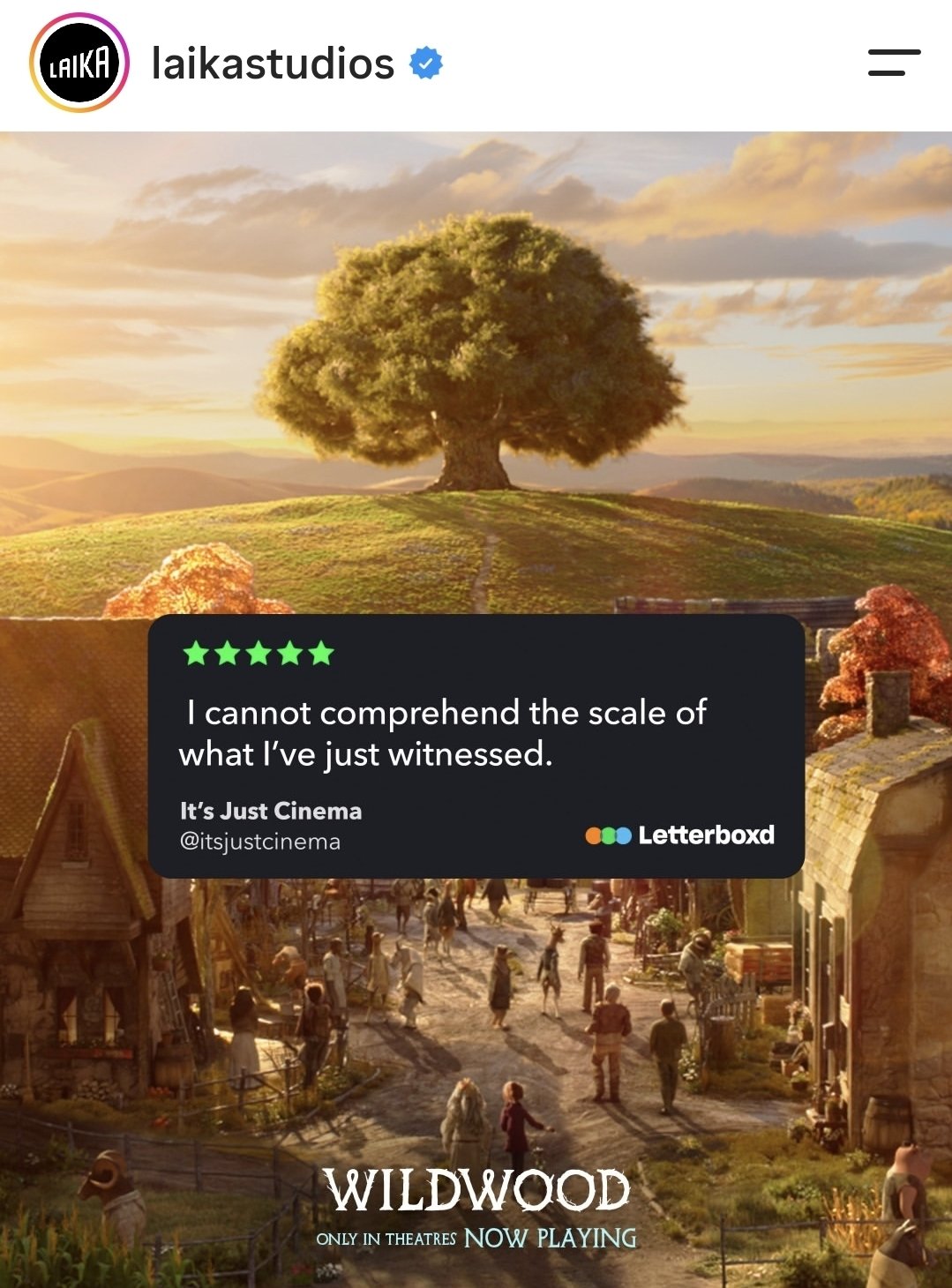
Fig. 2 - Letterboxd review, reposted by LAIKA’s official Instagram account.
For the animation fan, the allure of the handmade embodied by stop motion is as easy to comprehend as it is difficult to resist. Human craftsmanship is not only visible, but nearly palpable in every stitch of a tiny sweater and every twitch of a wire whisker, and LAIKA has tapped into the spectacular materiality of stop-motion puppetry ever since the release of Henry Selick’s 2009 feature Coraline (Mihailova 2021). And yet it is notable that, unlike Coraline, Wildwood is being celebrated for the circumstances of its creation rather than its merits as an artwork, with its lengthy and labour-intensive production serving as evidence of its artistic worth and, by extension, of the value of human artistry in the dawning age of AI slop. For instance, a glowing Forbes review spends five paragraphs introducing the film as an “argument for human-crafted art” before asking, somewhat belatedly, “what is Wildwood about?” Variety notes that the film’s runtime is “not altogether necessary,” yet concludes that the story is entrancing “not least because each newly revealed nook of these infinite wilds gives a crack team of claymation [sic] artists new tones, textures, creatures and mythological reference points to play with.” Finally, RogerEbert.com describes Wildwood as “a movie that thrums with so much creativity that its missteps can be forgiven by virtue of its overwhelming craft.”
Wildwood deserves praise for its sumptuous worldbuilding or its virtuosic animation. However, critics’ willingness to gloss over the film’s weaknesses (such as its uneven screenplay and pacing) is worth questioning, as forgiving missteps in the name of “craft” can be a slippery slope. While the film is indeed a remarkable showcase of skilled animation labour, the discourse around it has largely reduced craftsmanship to impressive production indicators. Measuring work hours and counting replacement puppet faces glorifies quantifiable effort without taking into consideration the value of craftsmanship as an artistic practice or the unique features of stop motion as an animation technique. It tells us nothing about the textures, movements, and material presence of LAIKA’s hundreds of puppets and how they shape the visual language and imaginative possibilities of the studio’s fantasy worlds. If 728 handmade trees fall in a forest and nobody is around to engage with their expressive potential, did they make a sound?
The tendency to venerate handmade art has understandably acquired new significance amid growing anxieties about generative AI, endowing labour-intensive, craft-based filmmaking processes like stop motion with a symbolic meaning. Stop motion’s slowness, demanding nature, and dependence on highly specialized skilled labour have become virtues through which the medium distinguishes itself from automated image-making. As Hollywood continues to flirt with generative AI tools despite the risks they pose for job security, authorship and artistic agency, skill acquisition, and the environment (among others), the abundant evidence of artistry in every frame of Wildwood is both reassuring and worth celebrating. However, elevating LAIKA’s commitment to craftsmanship to the status of a moral victory against AI, or a “quiet act or rebellion,” as Travis Knight himself put it, has led to a troubling association of artistic authenticity with demonstrable effort and with an almost masochistic resistance to efficiency.
Focusing on Wildwood’s commitment to excess, as demonstrated by its unusually lengthy production, extravagant budget, and technological complexity risks reducing the value of human touch in animation production to evidence of inordinate(ly difficult) labour performed in the name of craft. This “A for effort” mentality does a disservice to LAIKA and to stop motion more broadly by treating the storytelling, affective power, and aesthetic impact of animated imagery as secondary to the medium’s “laborious aesthetics,” to borrow Jordan Schonig’s (2025) apt formulation. The result is a reductive and somewhat contradictory metric for artistic achievement that would have us perusing timesheets rather than storyboards.
At the same time, the discourse around Wildwood betrays a certain degree of conflation between the conditions of artistic production and the aesthetic qualities of the resulting work. The implication that painstaking manual labour inherently produces a more imaginative, emotionally resonant, and visually stunning epic haunts many of the conversations around this film. But stop motion is neither innately superior to other forms of animation, nor an automatic guarantor of quality. LAIKA itself is aware of this, as evidenced by the studio’s well-documented reliance on digital visual effects work across its entire oeuvre. Indeed, for all its emphasis on manual craft (the credits proudly proclaim that “this film was handmade in Oregon”), Wildwood, like all LAIKA films before it, isn’t purely analogue. Wildwood’s stop-motion fantasy is enhanced by digital technologies, including visual effects by Wētā FX, a global leader in the field. Partnering with a visual effects vendor does not diminish LAIKA’s craft, but ignoring the role of computer technologies in the film in order to rhetorically set up a strict handmade/digital divide is neither a fair evaluation of the equally impressive labour of Wētā’s own artists, nor an accurate representation of LAIKA’s workflow.
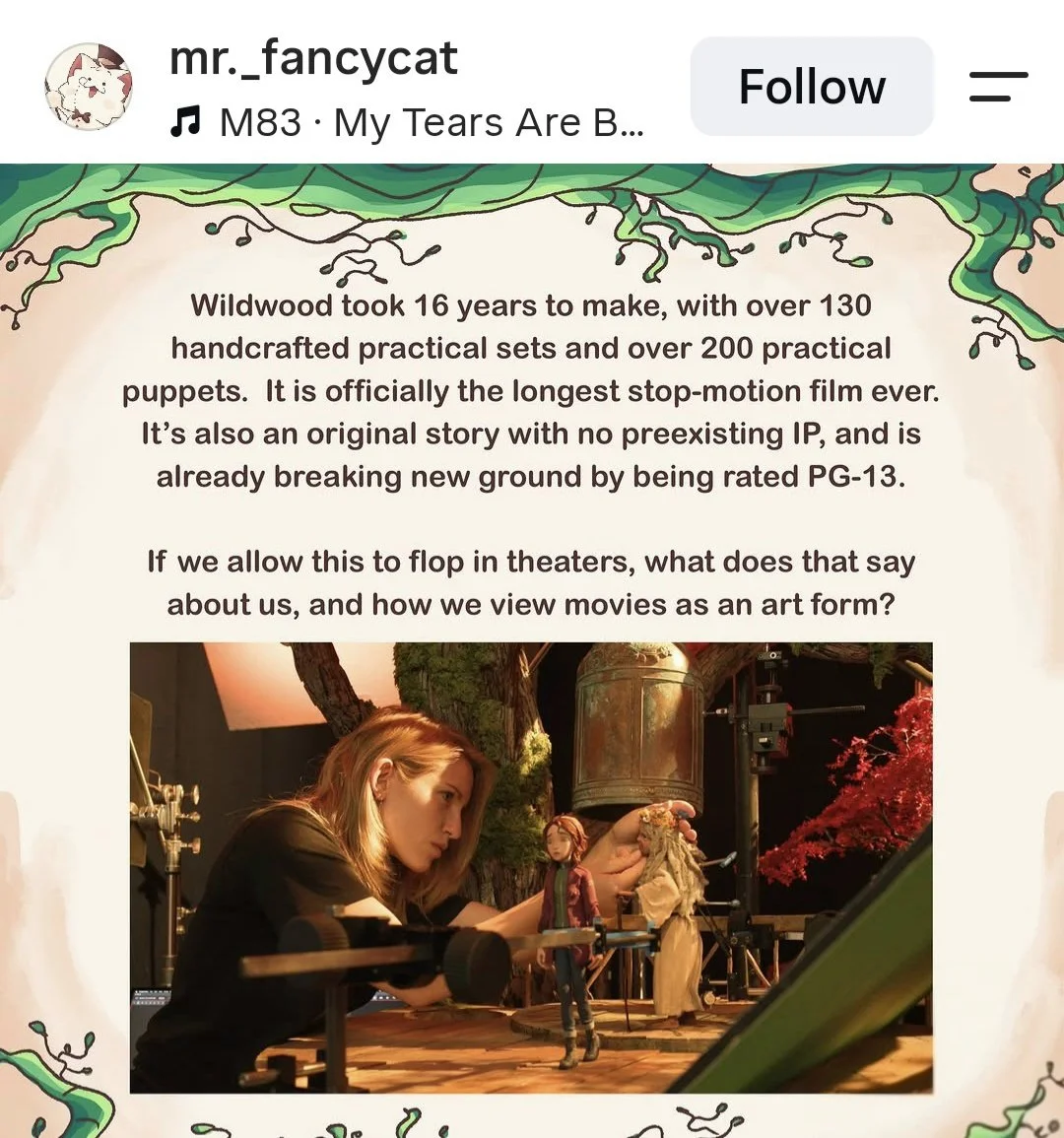
Fig. 3 - Fig. 2 Instagram user mr._fancycat urges their followers to support Wildwood.
This conflation between artistic judgment and appreciation for animation labour has also manifested in borderline moralistic calls, circulating across social media platforms, to support Wildwood’s theatrical release. In such posts, fans implore, cajole, and even occasionally attempt to shame or pressure others to see the film in theaters. “If we allow this to flop in theaters,” an Instagram user asks, “what does that say about us, and how we view movies as an art form?” (Fig. 3). While fan-led word of mouth campaigns are not unusual in our extremely online era, Wildwood’s case is notable because fans are largely grounding their advocacy in the perceived need to simultaneously reward the monumental effort the film represents and to send a political and economic message to the industry. The film’s artistic qualities, while frequently evoked, take a back seat to its production history and what it can be leveraged to signify. Per this logic, seeing Wildwood in the theater is essential for demonstrating commercial demand for original, handmade art and an implicit rejection of generative AI. Conversely, not voting with one’s wallet is an ethics violation, an act of betrayal against not only LAIKA, but stop motion and the concept of craft itself.
The impulse to support a beautiful creation like Wildwood is understandable, and the fans’ passion is a testament to LAIKA’s lasting impact on the field of contemporary animation. And yet, what does that say about us, if a film’s symbolic role matters to us more than the film itself? If we mistake the obligation to support a workflow for appreciation of that workflow’s creative potential? Solidarity with artists is much needed, but when it comes at the expense of critical engagement with the fruits of their labour, it rings hollow. A film is more than a shrine to its technique or a document of its own making. Wildwood is a love letter to Portland, from its (in)famous quirkiness to its breathtaking scenery. It is an exploration of grief, longing, despair, and the boundaries one is willing to cross for family. It is a sprawling, somewhat messy, epic narrative about displacement, violence, and hubris. Its 142,030 replacement faces matter not because their production can be accurately quantified, but because their meaning can’t.
**Article published: October 30, 2026**
References
Mihailova, Mihaela (ed). 2021. Coraline: A Closer Look at Studio LAIKA’s Stop-Motion Witchcraft. New York: Bloomsbury.
Schonig, Jordan. 2025. “Laborious Aesthetics: Visible and Invisible Labor in the Spider-Verse Franchise.” animation: an interdisciplinary journal 20, no. 1: 25-40.
Biography
Mihaela Mihailova is an Assistant Professor in the School of Cinema at San Francisco State University. She is the editor of Coraline: A Closer Look at Studio LAIKA’s Stop-Motion Witchcraft (Bloomsbury, 2021). She has published in Journal of Cinema and Media Studies, The Velvet Light Trap, Journal of Japanese and Korean Cinema, Convergence, Feminist Media Studies, animation: an interdisciplinary journal, Studies in Russian and Soviet Cinema, and [in]Transition. She is currently writing a monograph titled Delimited Animation: Generative AI in the Animation Industry.