
Evolution of American Animation
Upon watching an animated television programme or a feature film, we do not always think about how it came to be. I do not mean what was involved in the production process, or the direction, rather about why it looks the way it does. Indeed, the American animation industry, over the course of a hundred years, has continually changed and evolved from what it has been before in drastic ways. With indie authors becoming more and more prominent within the animated landscape, we might witness a further new tide in the industry regarding the kinds of stories being told and explorations into the medium’s creative freedom. Still, since I was a child U.S. animation has evoked many questions in my mind. How did the American animation industry evolve over the course of its existence? How have it changed to become what it is now?
The answer, however, is long and uncertain. Maybe even messy and indirect, because it is shaped by the events that occurred throughout the 20th century. Thus, I have focused in this piece on what I have learned so far, while watching a few more examples of media that helped me form a larger picture of what U.S. animation looked like and why. In this blog post, I will discuss how certain historical events and changes came to shape the animated film and television examples that most of us used to watch in our childhood, and still re-watch now, with a particular emphasis on the cartoon’s history of racial representation (see Lehman 2007; Sammond 2015).
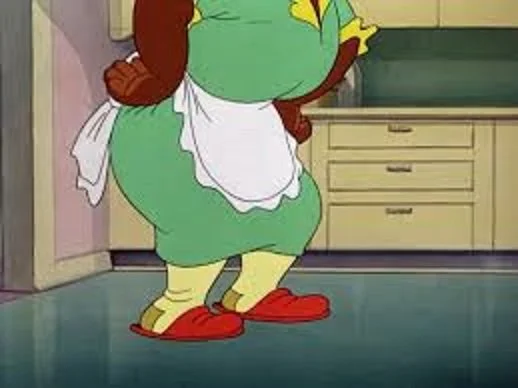
Fig. 1 - Tom’s original owner, Mammy Two Shoes.
In 1940-1950s America, there were several titles worth examining. For example, Tom & Jerry (Joseph Hanna & William Barbera, 1940-1967), the famous series about a cat and a mouse’s rivalry was, being a comedy at the first sight, the show marked by racial prejudice in the form of Mammy Two Shoes, Tom’s original owner (Fig. 1). The character was based on a U.S. historical mammy stereotype: enslaved black women who performed domestic work and child nursing. Throughout 1960s and up to 1990s, however, many Tom & Jerry episodes were redrawn and edited to change Mammy Two Shoes to a white woman, since according to animation director Gene Deitch “the character didn’t work in the modern context” (Deitch 2015; see also THR Staff 2014). However, the series was continually campaigned against, and criticized at the time by the National Association for the Advancement of Colored People (NAACP), an American civil rights association for African-Americans (Cohen 1997), this forced the Mammy Two Shoes character to be effectively “retired”.
Disney’s earlier Dumbo (Ben Sharpsteen, 1941), the classic animated musical about a small elephant able to fly on his ears, famously features the crow character that evokes a heavy, perhaps purposeful, association with the Jim Crow Laws, the racial segregation state laws passed in nineteenth and twentieth centuries in the Southern States. The band of crows, led by Dandy in the movie (allegedly his name was changed from ‘Jim’), is intended to depict the struggles of African-American communities in the U.S.; even as they were represented as a supportive cast for Dumbo and criticized as a racist and stereotypical depiction.
Made soon after, Disney’s live-action musical drama Song of the South (Harve Foster & Wilfred Jackson, 1946) was based on Uncle Remus’s tales, a fictional character from African-American folklore. Walt Disney himself wanted to create such a film to promote tolerance and acceptance of the Black identity (Korkis 2012). However, the film received backlash from the Black communities, causing the musical to be buried as a piece of history; some considered it a part of the Double V campaign – an American initiative that demonstrated victory over fascism in Europe and racism in the US (see Sperb 2013). Nonetheless, it was not the only film that focused on these troubling aspects of the contemporary society.
Brotherhood of Man (Robert Cannon, 1945)
UPA, United Productions of America, was a studio of comprising defected Disney employees that implemented a simplified, ‘limited’ animation style, contrary to the realistic and flowing of Disney (Bashara 2019). The studio, just like Disney, worked on the wartime cartoons for the government while also producing political, education, and labour-union commissioned content. For example the cartoon Brotherhood of Man (Robert Cannon, 1945) tackled racial prejudices and intolerance, though UPA later found a success with introducing the character of Mister Magoo in a short called Ragtime Bear (John Hubley, 1949), which defined their public image. UPA’s artistic motto was about making simple, but deep and captivating animated shorts. Unfortunately, the studio began to dwindle down in the 1960s, and was closed in 1970s, focusing instead on the distribution of the foreign movies in the U.S.
The Civil Rights movements changed the political landscape, shaping the industries and public discourse about Black communities and minorities. Disney, fearing a similar backlash to that of Song of the South, sought to implement a strategy of neutrality. It can be debated how and where Disney still displayed the racialised elements in their movies, even if are not explicitly shown but hidden beneath the fairy-tales and classic cartoons, and the extent to which the studio still reflected on the prevailing cultural attitudes, engaging identity, and differences between the characters of the movies, their motives, and ideals. This included the introduction of films featuring more global cultures that people were perhaps more unfamiliar with in the U.S., such as Aladdin (Ron Clements & John Musker, 1992), Pocahontas (Eric Goldberg & Mike Gabriel, 1995) and Mulan (Tony Bancroft & Barry Cook, 1998) among others, which set a new stage for the animated industry as a large, limitless canvas for brave, challenging ideas and images about the society, traditions of various people, history and humanity.
By 2009, Disney presented a movie that captured the hearts of the audience, leading to something of a closure of the long path that the animation industry had undertaken back in the first half of 20th century - The Princess and The Frog (Ron Clements & John Musker, 2009), set in 1920s in New Orleans. The story followed Tiana, a 19-year-old ambitious and independent African American waitress who got involved in a jazzy, comedic and sometimes scary events that lead to her finding the love of her life and achieving her dream – opening a restaurant by the name of “Tiana’s Palace”. It was a big step for Disney in the direction of pointing out their own prejudices that existed back then and, perhaps, going some way in making up for it after decades of struggle.
The portrayal of Black identities across a range of animated movies and television series has come a long way from an underrepresented and disregarded aspect of the society. This important change in the social discourse allowed many Black directors and actors, both small and award-winning, fearlessly explore and express their identity, educating the world about tolerance and acceptance of various cultures and customs of others.
**Article published: March 20, 2026**
References
Bashara, Dan. 2019. Cartoon Vision: UPA Animation and Postwar Aesthetics. Berkeley: University of California Press.
Cohen, Karl F. 1997. Forbidden Animation: Censored Cartoons and Blacklisted Animators in America. North Carolina: McFarland & Company.
Deitch, Gene. 2015. “Tom and Jerry...and Gene,” Tom and Jerry: The Gene Deitch Collection (DVD). Warner Home Video.
Korkis, Jim. 2012. Who's Afraid of the Song of the South? And Other Forbidden Disney Stories. Theme Park Press.
Lehman, Christopher P. 2007. The Colored Cartoon: Black Representation in American Animated Short Films, 1907–1954. Amherst: University of Massachusetts Press.
Sammond, Nicholas. 2015. The Birth of an Industry: Blackface Minstrelsy and the Rise of American Animation. Durham: Duke University Press.
Sperb, Jason. 2013. Disney's Most Notorious Film: Race, Convergence, and the Hidden Histories of Song of the South. Texas: University of Texas Press.
THR Staff. 2014. “‘Tom and Jerry’ Cartoons Get “Racial Prejudices” Disclaimer on iTunes.” The Hollywood Reporter (October 3, 2014): https://www.hollywoodreporter.com/tv/tv-news/tom-jerry-cartoons-get-racial-737969/.
Biography
Vladimirov Ihor is a student at the University of Paris-Est Creteil, a public multidisciplinary university of social sciences, law, arts, and technology. He is focused on writing and illustrating the historical, social and political backgrounds of the society. Earlier versions of this text were developed with the help of Dr Christopher Holliday.