
Culture’s Significance in Historical Context in Sister (2018)
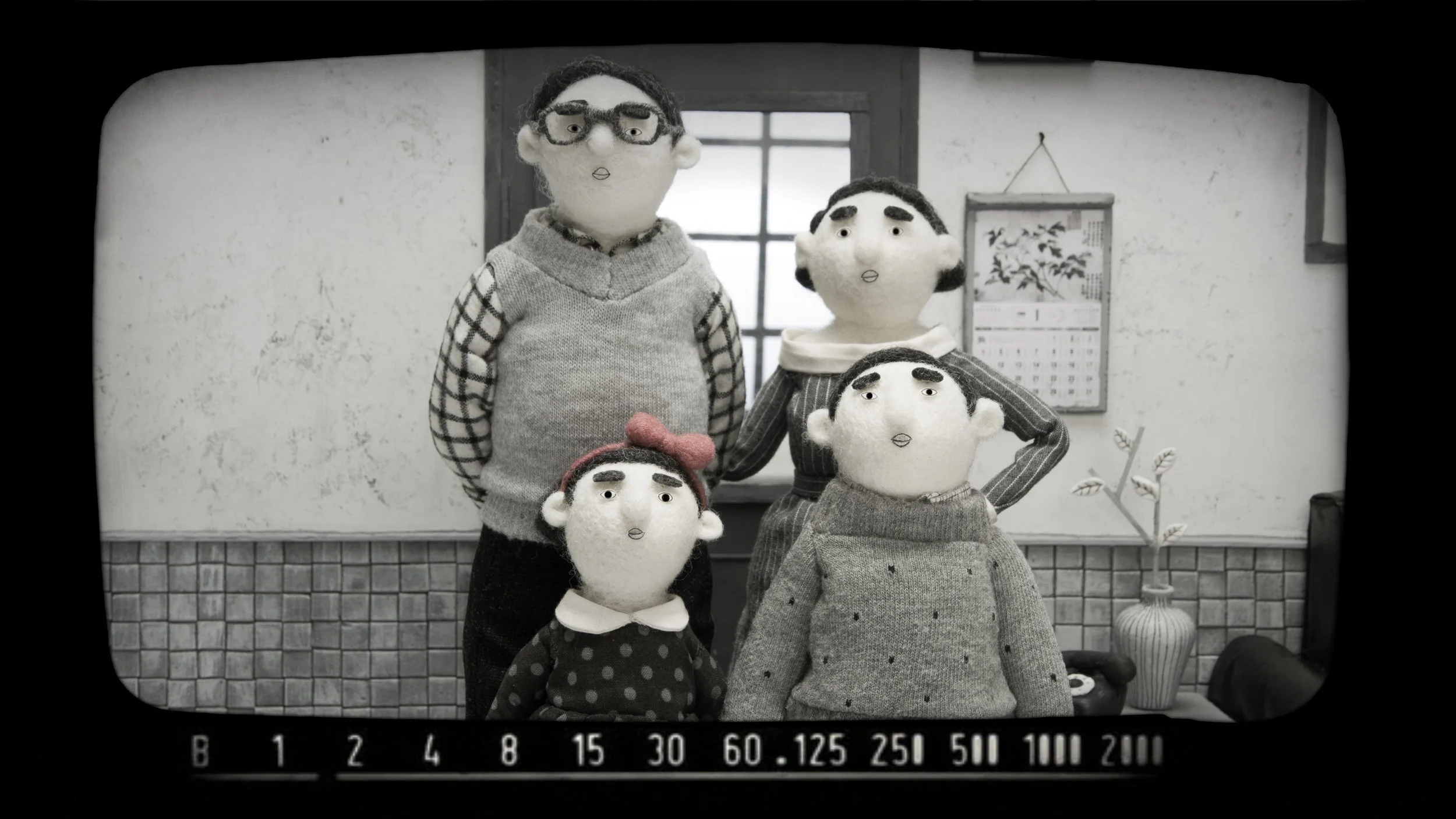
Fig. 1 - The stop-motion world of Sister (Siqi Song, 2018).
The historical context of the one-child policy, alongside personal anecdotes and experiences, make the stop motion film Sister (Siqi Song, 2018) emotionally impactful. The film’s unique story of presenting a life with his little sister to only take it away and show the life he experienced alone is symbolic of the life of being an older brother taken from him. Creator and director Siqi Song displays the life-altering effects of the one-child policy with details of her own personal experiences of and relationship to Chinese culture. Through historical commentary, she crafts a compelling experience that reflects the policy’s emotional impact on China and its population through the creative treatment of her culture.
An older brother talks about his annoying younger sister who always cries and takes his toys, claiming them with her baby teeth. They often fight when choosing what to watch, and when something “happens” to break during their fight, he takes the blame. Although they do not always get along, she helps him bury his first lost tooth as their mother said a new one will grow. They water the buried tooth together every day. However, these memories are not real; he only imagines a life he could have had with a younger sister, if not for China’s one-child policy. He remembers his fourth birthday - his parents are upset, and he finds out that his mother is pregnant with a baby girl. Their sadness radiates as they discuss behind a red fortune-covered door about the abortion. Living in reality, this time alone in the sequences previously with his sister, a lone goldfish occupies a fishbowl next to the photo of him and his parents.
The one-child policy was the driving narrative and emotional force for the film. As Song mentions in an interview with Animation Magazine, she was a younger sister herself and her parents had a hard time because of it (see also Murphy 2020). Indeed, as Lijing Jiang describes, “Parents giving birth to more than two children, on the other hand, had to offer 10% of their salaries as an excess-child penalty for fourteen years for each out-of-plan child” (2011). Growing up, and because she had an older brother, many of Song’s friends would ask what it was like to have a sibling, especially as they had often lost their siblings to the policy. These questions were posed as inspiration for Sister, which animates through stop-motion techniques the privilege of living a life with a sibling (Fig. 1). The historical context in which many people experienced this loss transcended just losing a sibling; it deeply traumatised and shaped misogynistic ideologies within Chinese society. Parents commonly aborted or abandoned girls, as females did not carry on the family name. Song mentions that where she grew up in China, it was hard to have a second child, and “the ‘little sister’ was always the one to get aborted or sent away” (qtd. in Zahed 2019). Abortions, contraceptives, and sterilization became a societal norm as “69% of married Chinese women between the age of 15 and 49 were using contraception” (Jiaang 2011) in 1982, according to China’s Ministry of Health. Pi-Chao Chen, a population researcher, reported that IUDS and sterilization “constituted 85% of all contraceptive use in China” (Jiang 2011).
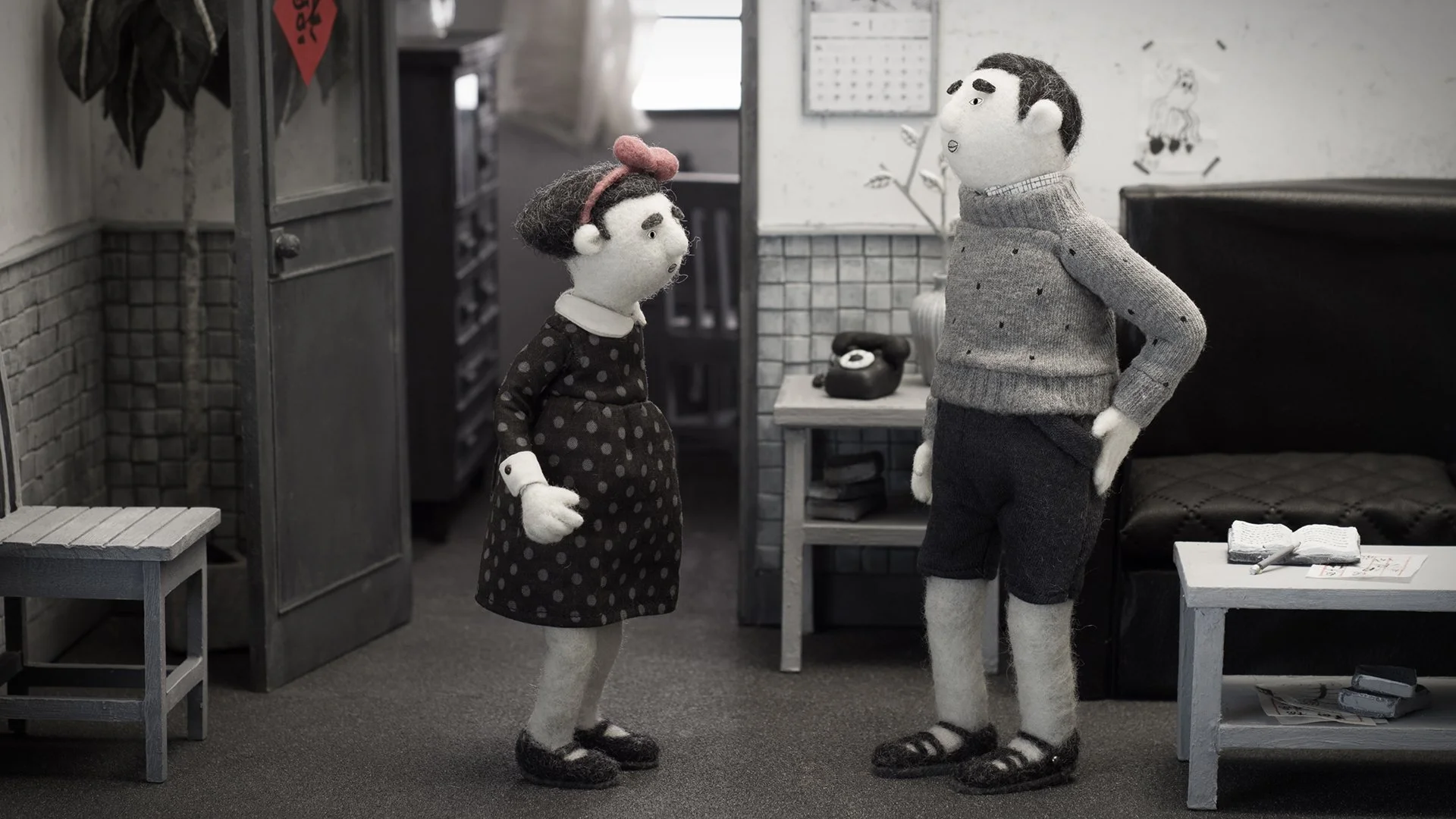
Fig. 2 - Sister’s stop-motion puppets.
Song originally wanted to use clay but chose to use wool as “it’s very soft and delicate […] it can create imagery that conveys the theme of the film: family, childhood and memories” (Zahed 2019). The wool puppets used in the film were in black and white because “it reminded [Song] of ink paintings” (Tangcay 2020) (Fig. 2). Chinese ink paintings, which were a memorable part of Song’s cultural upbringing, often focused on brushstrokes and dark ink. These Chinese ink-washing paintings become highlighted through the black and white colour palette of the film. The deliberate use of black and white pays homage to this historical art form while helping to convey the reality of loss and absence. For example, the use of red in Song’s film, such as the red fortunes placed on the outside door, the younger sister’s bow, and the goldfish’s head, is a nod to traditional Chinese symbolism. Red is considered an auspicious colour in Chinese culture, representing luck, joy, and prosperity. The red fortunes on doors are often used to ward off bad spirits and to draw in good luck. In Sister, the transition to the image of the parents behind the red fortune-covered door and the sadness that radiates from their body language shows that the heart the mother and the father breaks when they have no option but to abort the baby. However, in this particular scene, we see the action from the opposite side of the glass, which may suggest that good luck is inverted, as an inauspicious sign, as the parents discuss the loss of their child. By incorporating these cultural symbols into the film, there is a deeper layer of meaning: resilience and hope for good fortune amidst the difficulties created by the one-child policy. Sister becomes not only a personal reflection but also a broader exploration in the context and consequences of the one-child policy. Song curated details in the film that were significant to her identity and culture, offering a unique perspective on a policy that shaped the lives of millions. The personal anecdotes, combined with the powerful historical relationships, make the film not just an emotional experience but a reflection on the enduring impact of top-down national policy on individuals and society as a whole.
**Article published: December 12, 2025**
References
Jiang, Lijing. “China’s One-Child Policy | the Embryo Project Encyclopedia.” Asu.edu, 2011, embryo.asu.edu/pages/chinas-one-child-policy.
Murphy, Jackson. 2020. “INTERVIEW: Siqi Song on Her Stop-Motion “Sister.”” Animation Scoop (January 3, 2020). Available at: www.animationscoop.com/interview-siqi-song-on-her-stop-motion-sister/.
Tangcay, Jazz. 2020. “Oscar-Nominated Siqi Song on “Sister” and Being a Sibling.” Variety (February 4, 2020). Available at: variety.com/2020/artisans/awards/siqi-song-sister-oscar-1203493035/.
Zahed, Ramin. 2019. “A Special Sibling: Siqi Song’s Award-Winning “Sister.”” Animation Magazine (November 11, 2019). Available at: www.animationmagazine.net/2019/11/a-special-sibling-siqi-songs-award-winning-sister/.
Biography
Sarah Vu is a graduate from the University of Texas at Dallas, Harry W. Bass Jr. School of Arts, Humanities and Technology with a certification in applied experience design and research. Her focus was UX UI design and research, but she loves visual development for video games. Earlier versions of this text were developed with the help of Dr. Christine Veras and peers from the Animation Studies course.