
What Remains
Twenty five years ago to this day, in the ancient coastal city of Genoa, anti-riot units of the Italian police mounted a night-time raid against sleeping activists. Mostly young people, some of them journalists, who were spending the night camped inside a school complex—one named, perhaps fittingly, after a victorious WW1 general. Genoa was playing host to the G8. Protesters from all over the world had gathered there, as part of a ‘social forum’, to oppose the global system of governance which those periodic, heavily-sheltered meetings of the mighty had come to symbolise.
The night of violence that followed marked a flashpoint. The precise events have been the object of much debate, protracted legal action, documentaries, and contested memory. What seems clear in retrospect is that something peaked and died in Genoa. The no-global movement which had seen its inception in Seattle a few years earlier had reached a critical mass, or at least a mass critical enough to trigger a reactionary impulse within the apparatus of the state. History had not ended, after all. The liberal order, which less than ten years earlier had celebrated its triumph, suddenly shed its reasonable technocratic veneer (the fact that Berlusconi’s ruling coalition at the time went under the moniker of ‘house of liberties’ is either wonderfully ironic or cynical. I’m not sure).
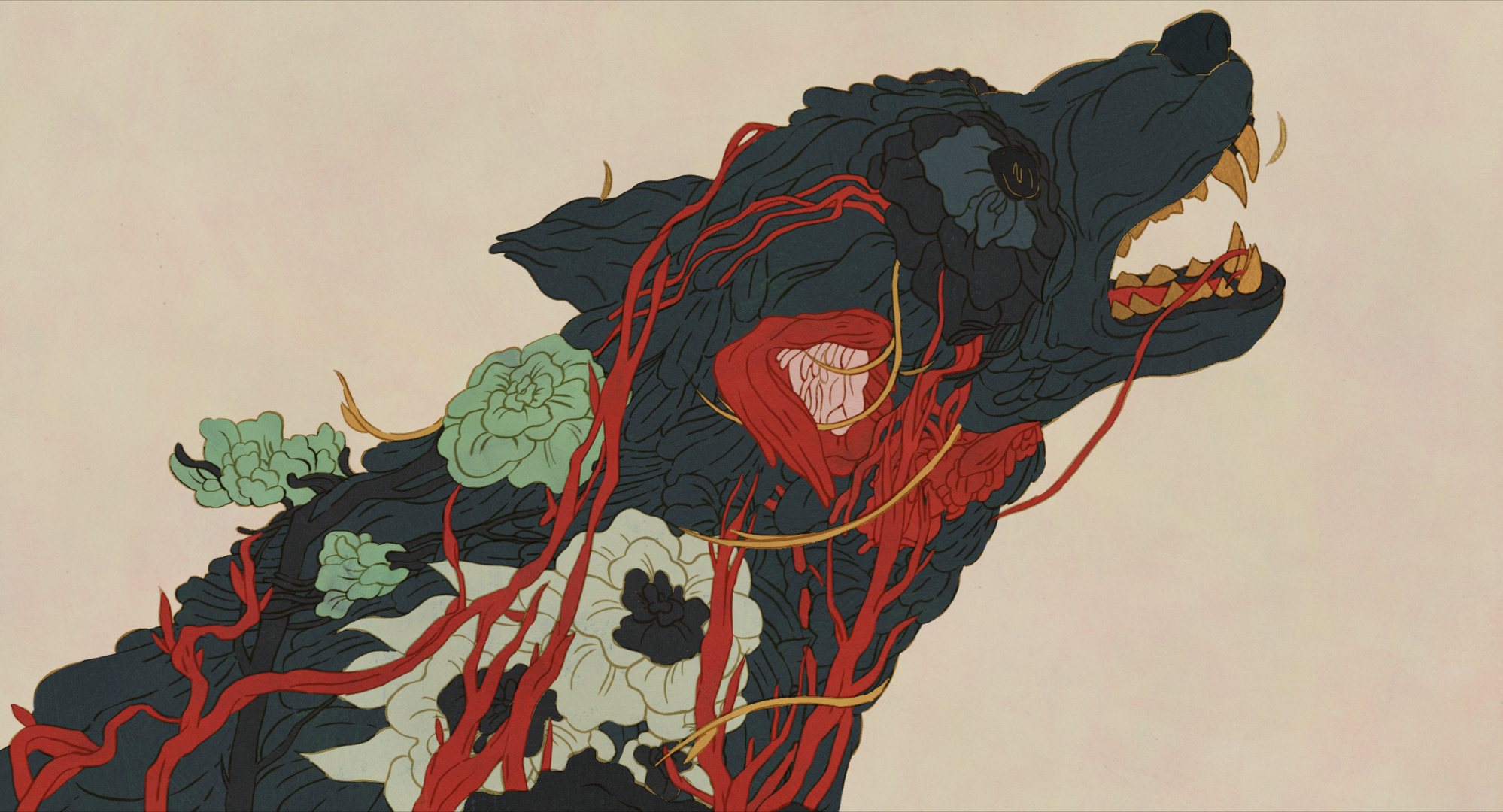
Fig. 1 - La mort n’existe pas (Death Does Not Exist) by Félix Dufour-Laperrière.
In a blog post published last February under the title “Animating Ambivalence,” Aurelie Petit wonders what remains after the moment of mobilization has passed? Rereading that sentence today, of all days, I cannot help but ask myself the same question. I was too young to be in Genoa, but not so young that I couldn’t conceive of being there. A few months later, 9/11 happened. The next year, the Florence Social Forum came and went, soon to be forgotten. The fault-line of conflict had moved on. New wars were breeding.
Petit’s post was about La mort n’existe pas (Fig. 1), a feature-length animated film by Québécois animator and documentarist Félix Dufour-Laperrière, which screened at the 2025 Ottawa International Animation Festival and took the Grand Prize. I saw the film at DOKLeipzig, a few months later. Petit’s problem with the film, and with the Ottawa curators writ large, has to do with the puzzling lack of specificity she perceived in them as political gestures. Cautiously and subtly, she prods the implications of the ‘odd absence of a political referent’ in both the film and in the pro-Palestinian initiatives hosted during the Canadian event.
My initial reaction to the film was harsher than hers. I found it juvenile, its faux-philosophical tone closer to teenage pretension than genuine critique or inquiry. Granted, most characters in the film are young: young, militant activists, about to carry out a violent, demonstrative attack against a wealthy elderly couple. At the last minute, Hélène, the protagonist, panics and flees. Her comrades die. One of them, Manon, reappears as a ghost, offering her a second chance. Hélène grapples with the (renewed) choice in front of her: to remain a prey, or become a predator, and possibly trigger change.
Millennials would have another chance at collective mobilization in the late 2000s, when the housing bubble first and the financial crash then drew into the open the contradictions of the system. More cracks in the veneer. But by that point, the mechanics of globalization had locked into place. The horizon of possibility had closed. Fifteen years and one global pandemic later, the latest wave of mobilization, the current one, feels as exasperated in its urgency as powerless in its inability to project an alternative.
Rewatching La mort n’existe pas as I prepare this post, I’m struck by how privatistic its horizon of discourse is. Hélène has a lover, one of her fellow comrades. His death, during the first iteration of the attack, is the catalyst of her personal crisis, the emblem of what she risks losing if she decides to go through with the violence: a chance for a ‘normal’ life, which is to say, children and property. By contrast, the true utopian potential of a collective revolution remains entirely abstract, reduced to a (vindictive) swapping of roles between ‘predator’ and ‘prey.’
Dieu est timide/God is Shy (Jocelyn Charles, 2025) - Trailer
Sociologist Alberto Genova notes that the legacy of violence sits somewhere in-between historical and biographical time. The events of Genoa 2001 have encoded, for a generation, the historical failure of a certain political imagination—the viability of another image of the world. Twenty five years later, the privatistic focus of a film like La mort n’existe pas is, I suspect, one facet of that failure. Another is its fixation on violence as a spark, as trigger for a cathartic chain reaction whose contours remain desperately out of the film’s (imaginative) grasp.
This matters. One needs only look at the popularity of ‘eat the rich’ narratives since Bong Joon Ho’s exploit Parasite in 2019 to see how furiously cinema is trying to reclaim that particular representational terrain. Trying and failing, precisely because the revanchist fantasies the zeitgeist keeps on churning out are trapped in a distortion field, whereby conflict is de-politicised and de-historicised, class reduced to consumption, and power trivialised as privilege. What Petit perceives as absence of a referent is, I believe, more correctly understood as a distortion of perspective: from the collective and historical to the private and performative. The film’s insistence on the intimate (one might even say, narcissistic) dimensions of loss and sacrifice betrays a broader inability to articulate a meaningfully collective horizon of hope. And again, this matters.
Petra y el sol (Malu Furche & Stefania Malacchini, 2025) - Trailer
Which is not say that my initial response to the film was entirely justified. Yes, the self-serious pontificating of Dufour-Laperrière’s characters skirts too close to manga-existentialism for my taste, but there is wisdom there too, and I’m not enough of a Marxist to dismiss it forthright only because it comes in the form of humanist maxims. When Hélène finally confronts her putative victim, she is reminded that everything fades, except for the small things. In the closing exchange of the film, Manon whispers to her that ultimately it’s what we choose to stay loyal to that matters. It’s not much, but it’s more than what vile, sensationalist fare à la Saltburn () has to offer.
I should also note here that the excellent curators from DOKLeipzig (Irina Rubina and Marie Ketzscher) have positioned the film amidst a darkly revealing constellation, in which the embodied materiality of death emerges as a recurring motif. I am thinking of animated short films like Dieu est timide (God is Shy) by Jocelyn Charles (2025) and Petra y el sol (Malu Furche & Stefania Malacchini, 2025), films in which individual yearning (for meaning, for love) is hemmed in by the physical realities that underpin both human existence and, well, animation as a medium. In the absence of collective hope, and faced with the cinema’s ongoing inability to restart the engine of political imagination, this return to the body as the ‘origin site’ of all meaning seems like a sensible strategy, representationally and curatorially. For the time being, at least.
**Article published: July 24, 2026**
Biography
PM Cicchetti is a film critic, educator and scholar based between Bologna and Edinburgh. He is a regular contributor to a number of film magazines dotted across the web, and has held lecturing posts at various universities in Scotland since 2012. As a critic, he writes mostly about animation, creative documentaries and experimental cinema. His academic areas of interest include cultural history and semiotics: his doctoral thesis studied the legacy of Puritan discourse and Western mythologies in American cinema during the early years of the Obama presidency.