“This Film (Won't) Be Made With AI” at the 2026 Ottawa International Animation Festival
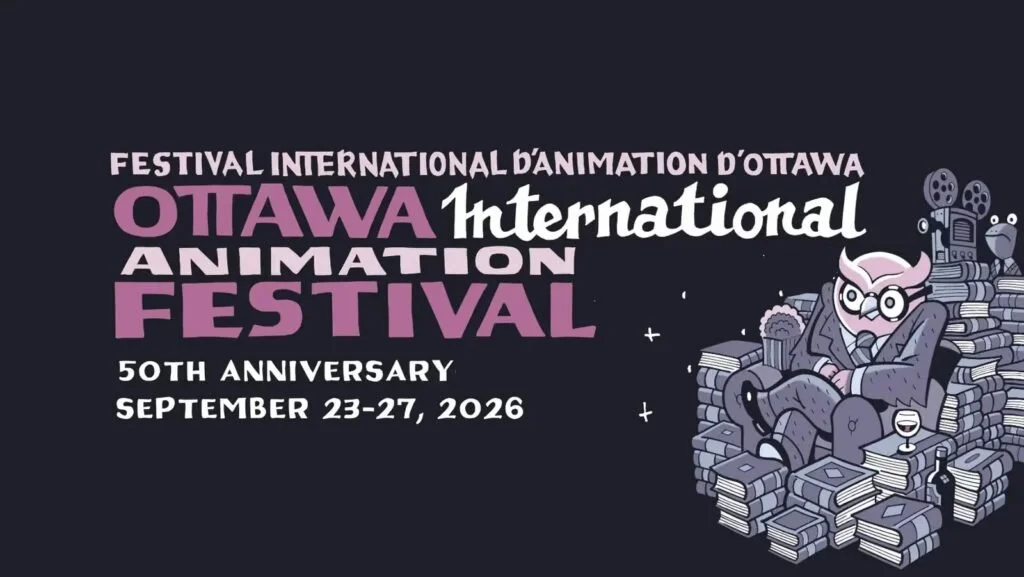
Fig. 1 - Ottawa International Animation Festival 2026.
Attending the 2026 Ottawa International Animation Festival (OAIF) felt, at times, like witnessing two different futures of animation being discussed simultaneously. In the festival screenings, opening (and closing) ceremony remarks, conversations between filmmakers, and reactions from audiences, the integration of Generative AI in animation was described as a threat to the medium's future: an antagonist to the values of artistic labour that have historically defined it. Yet only a few streets away at The Animation Conference (TAC), OIAF’s parallel professional event, AI was discussed by studio executives and industry leaders as an unavoidable component of production pipelines. It does not mean that there ever was a direct face-to-face confrontation between pro- and anti-AI actors (as seen in Annecy earlier that year) but rather that animation professionals attempt to imagine their respective future through two co-existing competing frameworks. If that contradiction was rarely acknowledged directly – the two parallel events happened in their own silos with different ticketing systems and few participating in both – that friction inevitably shaped many of the conversations taking place across the festival.
Festivals occupy a particular place within animation culture because they are among the few spaces where professional communities in both commercial and independent animation gather for a week at a time to collectively define the kinds of work that matter. Conflicts over what gets featured and selected are inevitably tied to capital in its many forms: recognition at a festival might lead to funding opportunities, employment, institutional support and prestige. Questions about which films are celebrated and rewarded inevitably become questions about which visions of animation are valued and which futures are desirable, as in economically, culturally and relationally sustainable. This dynamic has always existed, but it felt especially visible this year in Ottawa as discussions surrounding generative AI unfolded against rising uncertainties about the industry’s future.
The OAIF’s opening and closing remarks, alongside informal conversations throughout the week, made that clear. Animators circulated “This Film Was Made Without AI” stickers (from attending animator and content creator Ori Peer), animation software company Moho advertised its services as “No gen AI, perpetual license, developed by artists,” and festival audiences cheered whenever organizers adopted a critical position toward AI, including describing it as fundamentally incompatible with animation itself or the “anti-animator”.
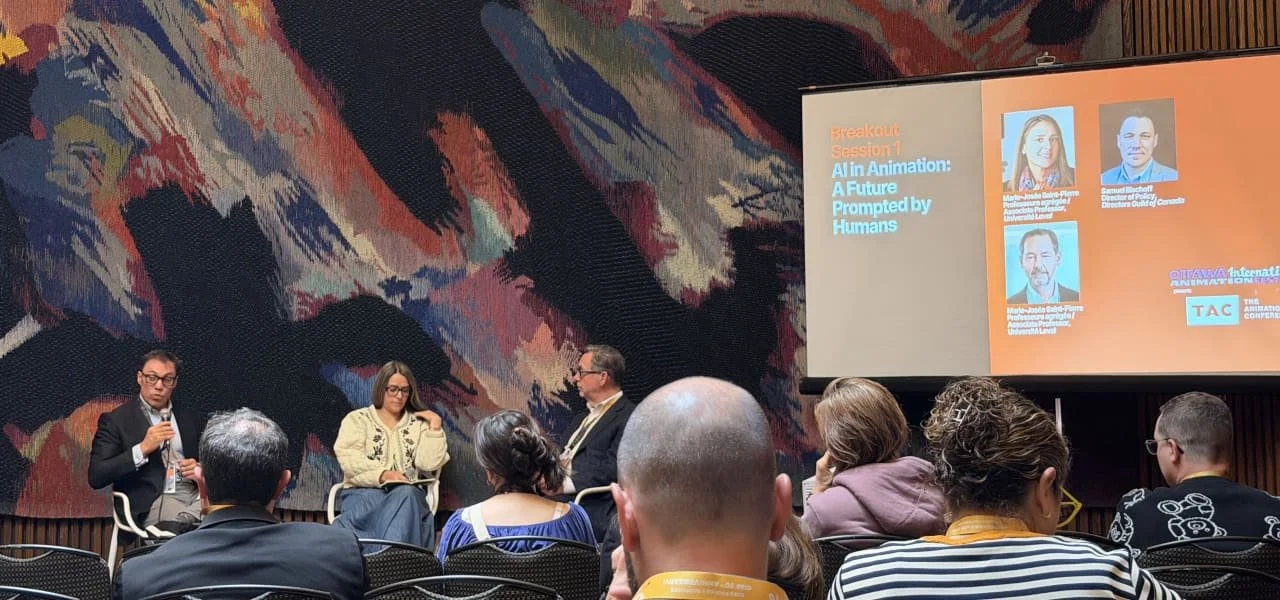
Fig. 2 - “AI in Animation” panel at TAC (https://www.cartoonbrew.com/artificial-intelligence/oiaf-the-animation-conference-artificial-intelligence-267040.html).
But this position coexisted with a very different discourse during TAC. Across multiple panels, including one specifically themed “AI in Animation” featuring Canadians entertainment lawyer Mark Edwards, professor and animator Dr. Marie-Josée Saint Pierre, and Directors Guild of Canada policy director Samuel Bischoff, generative AI was described as a practical reality already affecting production and training (Fig. 2). A panel on the new creative economy emphasized the importance of preparing students for an industry in which generative AI tools will become commonplace. Discussions around copyright concerns certainly emerged, but they often did so within a broader framework that assumed AI’s continued presence, not its necessary rejection as narrativized by its next-door festival.
This tension revealed a broader disconnect between executives and workers (as it often does) that admittedly surfaced during TAC beyond topics on AI. Several panels addressed the emergence of the creator economy as though it were a future challenge that institutions had to prepare for, instead of something that already existed. For the last ten (twenty?) years, online creators have built audiences independently through social media platforms; animation projects have developed in dialogue with online communities; new forms of intellectual property have circulated outside traditional institutional channels thanks to monetization platforms. The result was a curious temporal mismatch in which (here, Canadian) institutions seemed to prepare for transformations that animation creators have navigated for years by developing their own digital expertise and literacy, and so without always been invited to be part of the discussion.
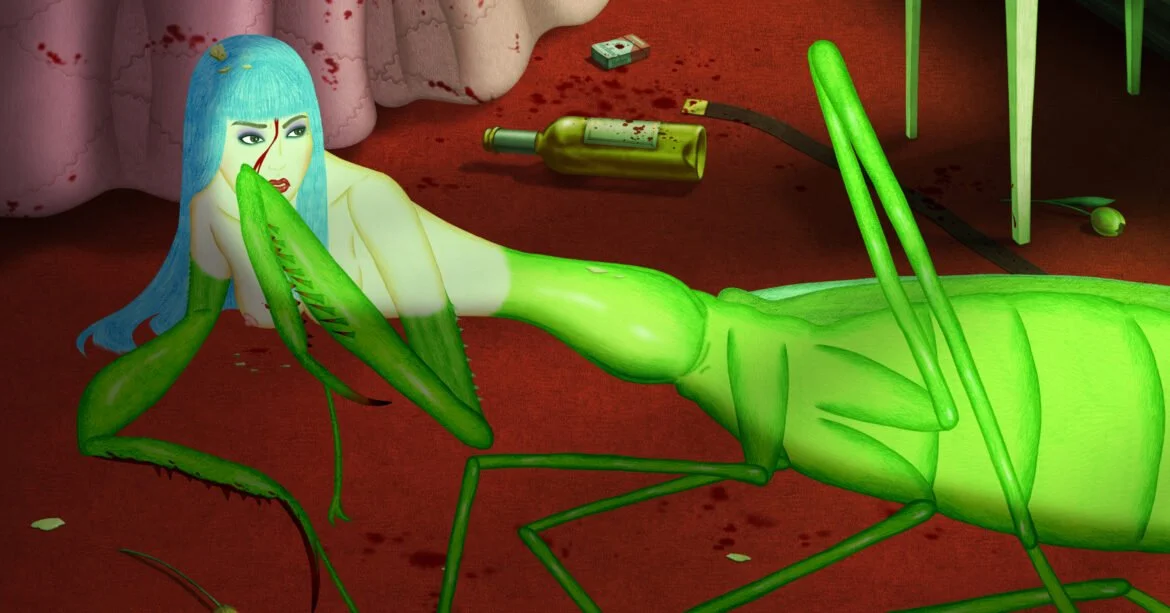
Fig. 3 - Praying Mantis (Joe Hsieh, 2025).
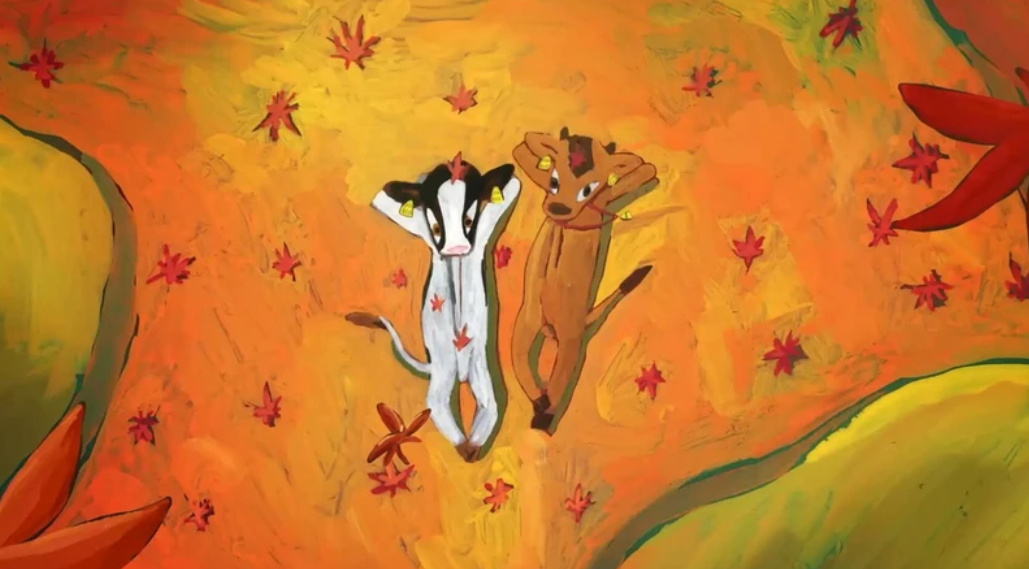
Fig. 4 - Eri (Honami Yano, 2026).
That disconnect between institutional conversations and the realities of contemporary creative practices became especially apparent when turning from the panels to the films themselves. Although AI dominated discussions, the strongest works in competition often invested in techniques far from generative technologies. Praying Mantis (Joe Hsieh, 2025), winner of the Grand Prize for Short Animation, is a genre horror animated film that threads 2D animation and traditional storytelling to portray a beautiful story about motherhood and women’s societal roles and expectations (Fig. 3). Likewise, Eri (Honami Yano, 2026), winner of the Best Short award, stands out as a remarkable example of contemporary independent Japanese animation, combining paint animation and queer (non-reciprocal) storytelling (Fig. 4). Other films selected reaffirmed the value of labour-intensive approaches such as Paper Trail (Don Hertzfeldt, 2026) that transforms pen strokes into an emotional telling of the course of one human life à la Boyhood (Richard Linklater, 2014). Local Squalls (Skip Battaglia, 2026) and Roll Over and Play Dead (Gina Kamentsky, 2026) were a reminder of the richness of experimental traditions that often occupy a precarious place within US animation culture. When the Sea Was Calm (Mamuka Tkeshelashvili, 2026) gave us one of the festival’s most emotional viewing experiences, using stop-motion cut-outs and puppets animation to explore the violence of war on everyday civilians (Fig. 5). Admittedly, none of these films (and the many others not mentioned here) seemed to show concerns for industrial efficiency.

Fig. 5 - When the Sea Was Calm (Mamuka Tkeshelashvili, 2026).
At the same time, OAIF’s programming continues to challenge assumptions about what animation should be. The last film shown in the official selection, Jelly Baddies (Ivan Li, 2026), pushed its audiences into extreme discomfort through excessive CGI imagery of deformed Teletubbies killing each other in the backdrop of a nondescript revolution, using a confrontational audiovisual approach (fast editing, strobing light, lengthy narrative) that has become the recognizable style of its Canadian director (Fig. 6). While many expressed a dislike for the film both afterwards and during the director’s Q&A, we must think beyond its director’s never-ending visual provocation precisely because the audience’s specific reaction to the film might signal something else. If Jelly Baddies can be theorized as an example of the festival using its institutional platform to legitimize a form of animation that provokes and challenges established expectations over what gets recognized in animation, then the question of AI raises a related problem: what happens when that same mechanism of recognition is applied to work produced through generative AI? What does the inclusion of films whose style and techniques are rejected by the bigger numbers signal about the values that those festivals are endorsing? More importantly, what does it mean when that endorsement takes the form of awards and access to the cultural capital that festivals distribute? These questions point to festivals’ role in determining which forms of animation are granted legitimacy, and consequently, which directions the animation industry is encouraged to pursue.
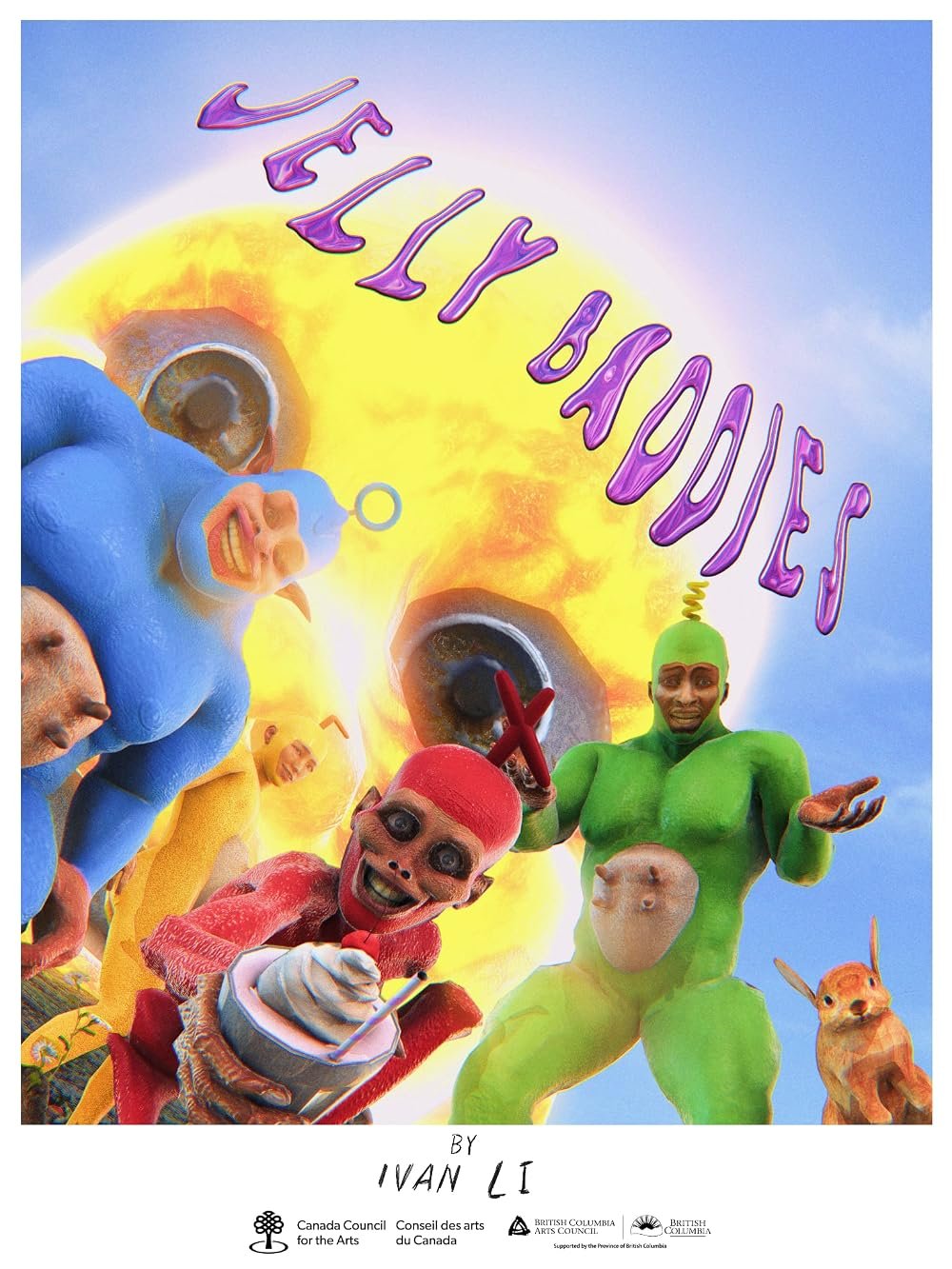
Fig. 6 - Jelly Baddies (Ivan Li, 2026).
By the end of the festival, I had, like many other attendees, brought home my “This Film Was Made Without AI” sticker, which contrasted with the TAC’s insistence that animation films will, indeed, very much be made with AI. If OAIF revealed that animation is currently attempting to negotiate both futures at once – two positions that rarely met in the same conversation – they ultimately addressed the same question over the redistribution of creative value in the era of AI. During its 50th anniversary, OAIF reminded us that festivals remain one of the few places in the animation industry where this negotiation becomes visible in real time.
**Article published: October 23, 2026**
Biography
Aurélie Petit is a Montreal-based interdisciplinary researcher of animation and technology, with a focus on gender and sexuality. She is currently working across the Innovation Lab at the National Film Board of Canada and the IANF Quebec Research Chair (INRS) where she is a Postdoctoral Researcher on the (Re)Generative AI for Culture project. She holds a PhD in Film Studies from Concordia University, Montreal. As a researcher, she is interested in how animated media interact with platform infrastructures, shaping systems of governance, curation, and monetization. During the last years, she has held research positions with the Canada Research Chair in Digital Regulation at Work and in Life (Montreal), the AI + Society Initiative (Ottawa), and the Social Media Collective at Microsoft Research (New England). She is the Guest Editor for the Porn Studies journal's upcoming special issue on "Artificial Intelligence, Pornography, and Sex Work.”