"I remember when that was a drawing." A Conversation with Concept Artist John Bell.
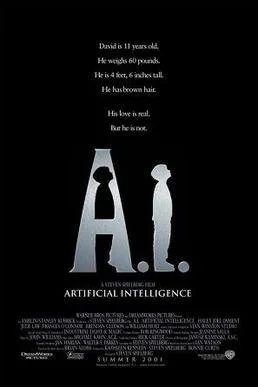
Fig. 1 - AI: Artificial Intelligence (Steven Spielberg, 2001).
June 2026 marks the 25th anniversary of the film AI: Artificial Intelligence, written and directed by Steven Spielberg. This month also sees the release of the latest Steven Spielberg science fiction film, Disclosure Day. For Fantasy/Animation, writer James Clarke (@jameswriter72) speaks with concept artist John Bell about his memories of working on AI: Artificial Intelligence (Fig. 1) and also on Jurassic Park (Steven Spielberg, 1993) and Back to the Future Part II (Robert Zemeckis, 1989).
John, how did you get into the orbit of AI’s development phase ?
“I met (production designer) Rick Carter through industrial Light and Magic. In 1986, I had done some [concept] drawings for Back to the Future Part II, before there was a script; and production at ILM said ‘Just come up with some designs of things. We know they go thirty years into future. They have hoverboards. Just come up with ideas.’ So, I banged out a bunch of different sketches and they sat in a folder for a long time and Bob Zemeckis was starting to do Roger Rabbit and so the project (Part II) didn't come back into ILM until 1988. By that point, Rick Carter, had seen the images that I had done back in ‘86. And when he came up to ILM he said, ‘I'd like to borrow John for a few weeks to come down to the art department in Los Angeles and work with the art department on the design for the future in 2015 specifically. So, ILM agreed and I went down. It was supposed to be just a few weeks, it turned out to be like 4 or 5 months. Rick and I really hit it off. We have a really good work, and non-work, friendship.
Both Back to the Future Part II and Part III finished and then I went back to ILM and worked on The Rocketeer. And then in the summer of 1991, I took a break from work. I went up to Montana and I get a phone call from Rick Carter. I don't know how he found me up in Montana because I didn't tell him I was going up there. I didn't really tell anybody else I was going out there. So, I went out there and Rick says, ‘Well, they're making a movie of Michael Crichton’s Jurassic Park. I said, ‘What's a Jurassic Park?’ He said ‘It’s a Michael Crichton book about dinosaurs: they're recreated with DNA and they escape from this theme park.’ Rick liked my work from Back to Future Part II and so he hired me on as his art director on Jurassic Park. We had that relationship, and the friendship grew even more. Then I worked on Contact with him after that. And then, after that, he got involved with AI and he contacted me to work on AI (Fig. 2). So that's the long story off how I got involved. Very fortunate.”
Did you have a sense that this was a particular project with a particular kind of significance to it because of the Kubrick background to it.
“Yeah, absolutely, because I was a Kubrick fan. And so, being a fan of his, and then enjoying my time working with Spielberg on Jurassic, that just made for a great combination of elements to draw me in: Kubrick, Spielberg and Rick Carter. Rick and Steven believed in me. So, it was just like a perfect storm of elements that came together that got me involved in the project.”
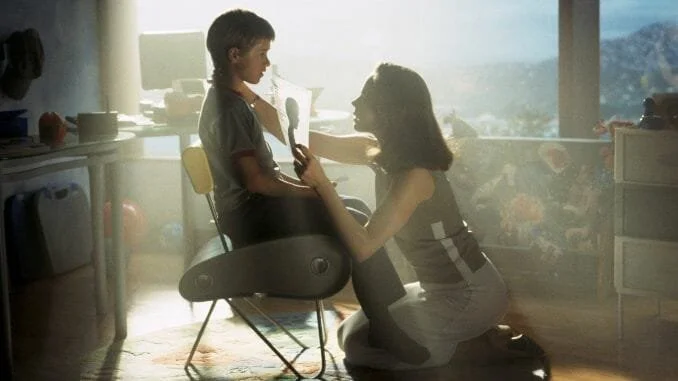
Fig. 2 - AI: Artificial Intelligence.
How long were you on board AI for?
“I was really working as a freelancer at this time, and so I was maybe on there just for half a year at the most. I was living in the San Francisco Bay Area and so I would fly down on weeks during the week to the production offices down in LA And then I’d fly home on the weekends.”
Were you reporting directly to Rick rather than working directly with Steven Spielberg?
“I would say so, but if I was doing storyboards, I would get more time with Steven. But if I was doing designs of assets for the story, then it was mostly with Rick and then occasionally with Steven.”
And did it balance out more in favour of the asset work rather than the storyboarding?
“It did, because it was a big art department. There were a lot of people in there at that time. A lot of great concept artists were coming up, bubbling up through the system and Rick really latched onto them. There were quite a few concept artists that I remember in the art department. There must have been six or seven of us. And then a couple of storyboard artists. Chris Barker (aka: Fangorn) was the main storyboard guy that had worked directly with Kubrick before Spielberg even got involved. And, so, he had ironed out so much of it storyboard-wise and design-wise. And then Peter Ramsey was another great storyboard artist that worked on AI. He’s a director now; he directed Into the Spiderverse. So, he was a storyboard artist on this thing as well. There was a lot of horsepower on this thing.”
Were you working from scripted material or treatments or was everything kind of coming more from conversations?
“Mostly scripts, we'd usually work with a script. There were a collection of things, but, you know, you began the script, but then Rick might point out a specific area, like, ‘I want you to focus on that bike hounds. Or John, I want you to focus on, Dr. Know. He had me focus on a few different things. and he was always generous with his time and with his belief in me to take on some of these parts of the picture.”
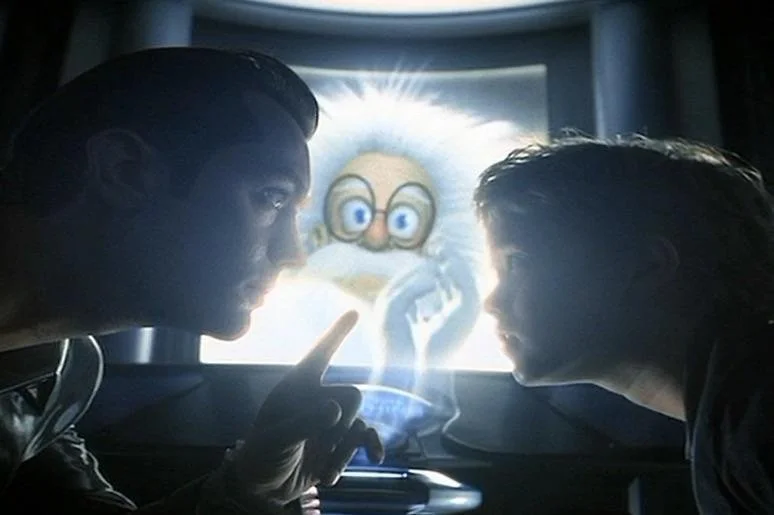
Fig. 3 - Dr. Know (voiced by Robin Williams) in AI: Artificial Intelligence.
John, as you say, you worked on the Dr. Know (Fig. 3) sequence.
“I didn't design him. I can't remember who specifically designed him. For Dr. Know, my work was more about the room that he was in. It was more about the layout of the space.”
You were talking about the motorcycles that the gang ride that you, you brought with the bike hounds.
“You know, on these film projects, there's not a lot of time, since we're not designing for the real world. There's not a lot of time to really go into tight detail and give iteration after iteration after iteration. You really have to hit the mark at least 80 to 85% right off the bat. Because there's not going to be a lot of time for you to redo things. The clock’s ticking and things are moving, things are being built. There's a lot of moving parts. So, you have to really hit it pretty close to being right on the mark you know. Dead centre.”
In terms of the materials that you're using to do your work on that particular project, are you working very much in kind of analogue, non-digital kind of space at that point 25 years ago?
“I kind of came on late to the whole Photoshop thing. To this day, I still enjoy doing marker and pencil sketches and drawing in sketchbooks. So, even my process today, if I'm working on a film or a video game project is, I'm starting with pen and paper, and then I'll scan it into Photoshop and then do all the colour work in Photoshop because then I can really change things around. For the most part, that's my process. Do the drawing, pen and paper, scan it in, do the colour work, and then, if they want to massage things and change things, it’s easy. A lot of the artists coming onto AI they were much more well versed in Photoshop. They were starting right in Photoshop from scratch. My favourite pencil was a carpenter pencil. My friend Nilo Rodis, who hired me to work at ILM, told me to use a carpenter pencil because it doesn't allow you to get really tight with details. It keeps you loose.”
With AI, did you have an involvement in doing some visual work for Rouge City?
“A little bit. Rick liked some really rough pastels lighting studies that I’d done for another project and Rick said, ‘I want you to do some of those for Rouge City. Don't get into any details. Just give some lighting ideas and colour ideas for that section of the film and see what comes out of it.’ Most of my stuff (for AI) had to do around the bike hounds, and the set pieces in the Flesh Fair like the main gate going into the Flesh Fair.”
Were you working in pastels for the Flesh Fair art that you created?
“That was all done with marker and pencil. Only the Rouge City work was done with pastels. Most of the stuff that I did work on was in the Flesh Fair area and the moon-rising with the balloon; that was mine. I'm sure the script probably said something like ‘There's a moment where the moon is rising, but it's an artificial moon; it’s a helium balloon.’ And so, I was just riffing off of that, and thinking ‘What could that be? If these guys are in this balloon, with the basket underneath it, what does the basket look like? If they've got weapons? What are those and what do they look like?’ Just detailing that out. But the concept of the hot air balloon looking like the moon, I'm sure it was just one line in the script. I had done some rough storyboards for the very end of AI, when they're flying the amphibicopter, I’d done some storyboards for that scene. a couple pages from that scene. But they look so preliminary, I would imagine that Chris Baker probably had already solved the answer for those shots.”
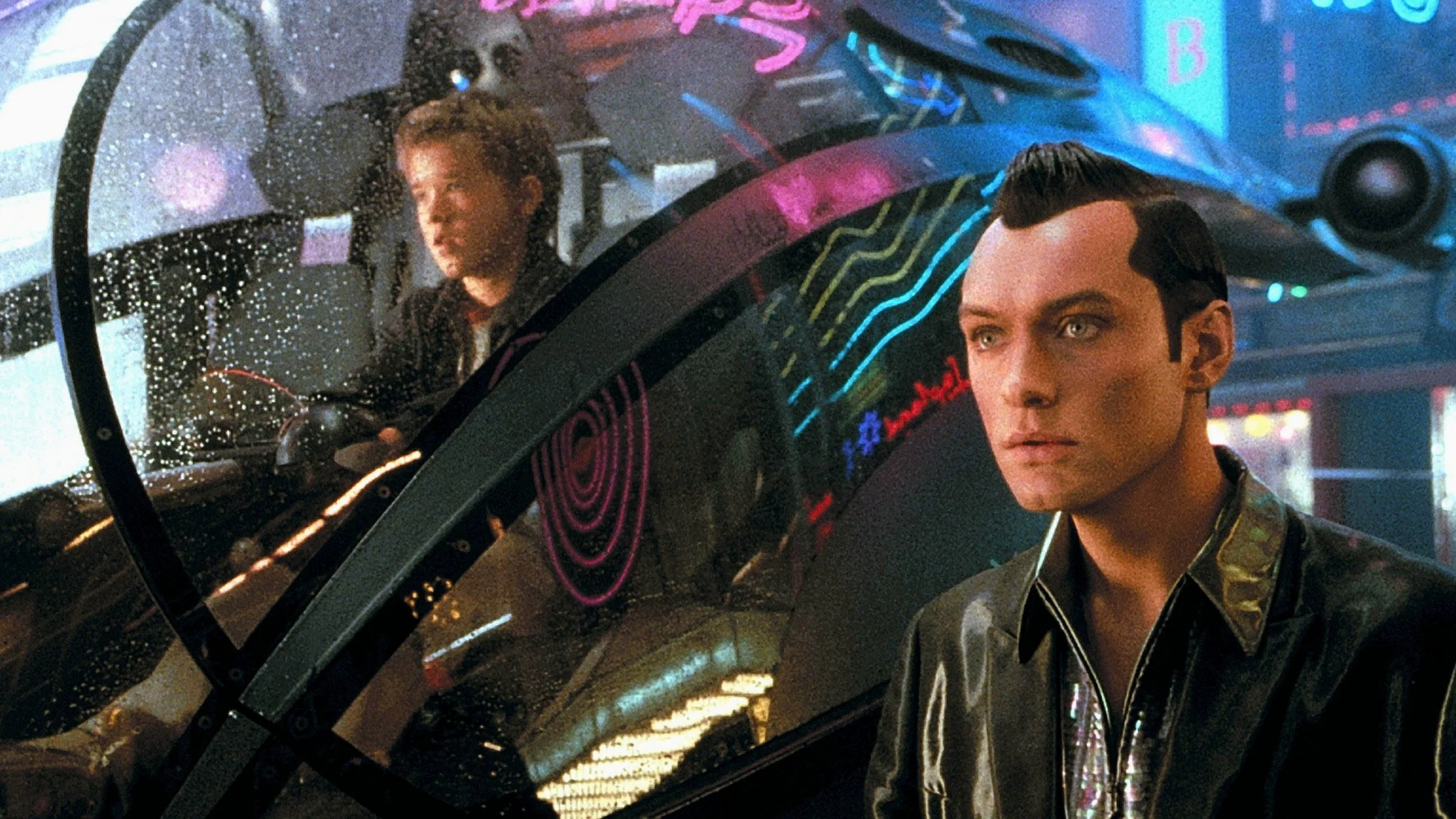
Fig. 4 - AI: Artificial Intelligence.
John, what was the dynamic like of working in the art department?
“We're all posting our work up on the walls, right? And so, if Steven comes by and Rick comes by and he’ll go ‘Well, I like this one. This one's not gonna work.’ And then if I put something up even before Rick saw it, one of the other designers would see it and go ‘Oh, I have an idea off of that.’ So they do their version. And then it's kind of a competition as to which one gets picked. You feel lucky if one gets selected because then it goes to the model shop and it's getting built and, before you know it, it's on the stage and it's being filmed and then you're sitting in the theatre and you go: ‘I remember when that was a drawing.’
Who are the artists that influence your work ?
“It's artists from the turn of the twentieth century: Antonio Sant’Elia was an Italian designer, futurist. Hugh Ferriss was an illustrator from the 30s, creating black and white charcoal drawings that I've always admired for the mood. The way he captured things. I like car designers. I like architecture design. Seeing things in nature will always be inspiring. There's always something that, even if I don't see a need for it immediately for a project, I might be able to use that image or something along that image, as inspiration later on for a film project. If that makes sense. Music is another inspiration. Always having music on in the background consciously or subconsciously puts you in the space. So, I'd always have music going on in the background, and at the time, like on AI (Fig. 4) I was deeply immersed in trance and ambient music, like The Orb, KLF, Aphex Twin, Paul Oakenfield. And so that was always in the background, and it always put me in a good space.”
John, in terms of artwork that you’re working on now, who are your influences ?
“I really like Henry Moore sculptures. I really like Charles de Luth paintings. There’s always some level of inspiration out there.”
If you're working with a director and they've got a distinctive visual style, whether it's Robert Zemeckis or Steven Spielberg or George Lucas, for example, is that something you're very conscious of or do you just kind of say “Well, this is the particular story I've got to feed into?”
“You're looking at the script and so anything you come up with has to serve that script. Regardless or not, if you think you have a better idea for that story, if it doesn't move the story long in the director's eye, then you're not doing your job. So, you really have to connect with the tone of the script that the director is looking for. Like I had done, to go back to Jurassic Park, Rick Carter, when he asked me to get involved, he said, ‘just read the script and whatever you want to do, whatever take you have on the script, I wanna see that.’ And so the initial things that I was doing [for Jurassic Park], they were much darker in tone. You know, they were a little more adult and less child friendly. And so I had to scrap those ideas. I'd shown to Rick and he goes, ‘You know, that's going to be too violent, we can't show that. This is going to be kids that are going to want to see this moving. We can't show that.’ So, it's really, the ability to try to tap into the tone of the film that the director is looking for. That's what makes that the job fun is that you don't know what the next project's going to be. Could be sci-fi, could be fantasy, it could be a period film, it could be a drama, it could be a comedy. And so, all those things are going to challenge you in different ways because you're going to have to support that genre, that story with the things that you create for the story.”
John, how would you describe your time working as a concept artist ?
“I feel very fortunate that I got into it when I did. You know, I just had one or two people believe in me. And it set me on this course. It's so great to hear that people are still admiring these films and that they have impacted their own lives after 20-plus years, 30-plus years. It’s remarkable how they hold a warm place in people’s memories.”
**Article published: June 26, 2026**
Biographies
John Bell’s website: https://www.johnbell.studio/. James Clarke is writer and educator. He is on Instagram at: @jameswriter72.