Characterization of Animated Characters in Inside Out (Pete Doctor, 2015) based on Michael Chekov’s Psychophysical Method.
When we watch a movie, what exactly do we feel? The answer to this question is different from person to person. It is very obvious to someone who has studied sociology to analyse the movie using their own thoughts and embodied knowledge. Similarly, as a student in the Department of Theatre and Performance Studies, when I watch a movie, I always try to interpret it through a theatrical lens and to understand the method followed by the characters. Animated movies are no exception in this case.
Pixar’s Inside Out (Pete Doctor, 2015) is an animated movie that received a huge response after its release in 2015 (Fig. 1). While worthy of praise, in this blog I would like to particularly mention the psychophysical method used by Michael Chekov in the ‘acting’ of the characters as a way to understand its computer-animated characters, drawing on the ideas of psychological gesture, the imaginary body and center, and radiating. Inside Out portrays the inner feelings of individuals with external and physical forms, which is Chekov's psychophysical method’s keynote idea. We know that animated characters have no history or life like humans, yet they can nonetheless demonstrate the value of psychological methods as a mode of analysis. In Chekov’s book To the Actor: On the Technique of Acting (1953), he identifies the psychophysical method, arguing that the actor should not be influenced by his own inner feelings, but he should use his imagination to evoke inner emotions through body posture. In the case of Inside Out, the animators worked exactly like this method; they created a process that controls and expresses psychological truths in the physical structure and movement of the characters.
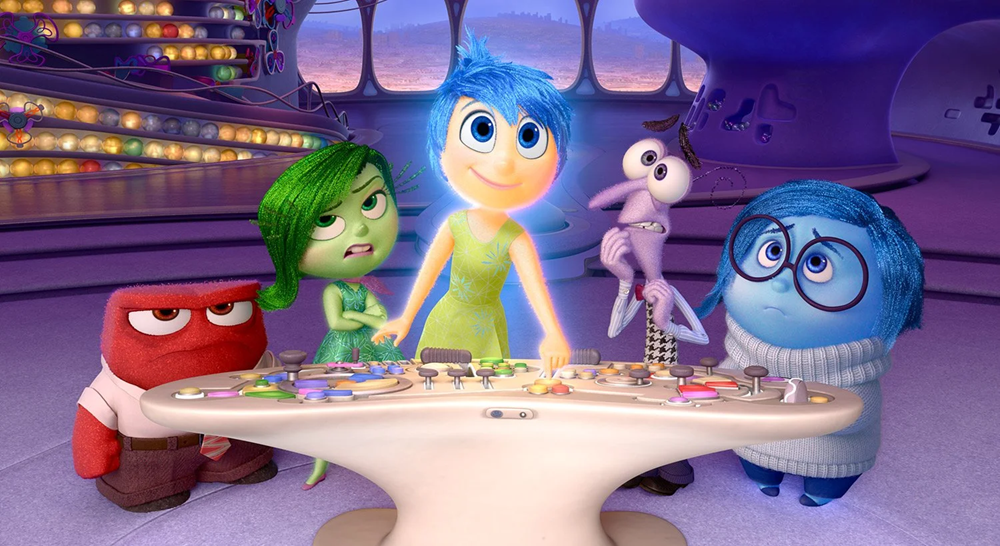
Fig. 1 - Inside Out (Pete Docter, 2015).
The reason I am working on this topic is that most of us think that such wonderful and realistic expressions of animated characters are possible only because of technology. Yet behind this spontaneous and realistic expression of movement, the eternal principles or methods of acting are used in addition to the use of computer animation. It is because of the combination of technology and method that we see such spontaneous performances of animated characters on the screen.
We all know that theatre is basically a live performance. Most of the time, the audience sits far apart from the actors, and as a result, the actors have to present themselves with larger body gestures, body movements, and strong voices to portray the characters and reach out to the audience. I have noticed the same thing in Inside Out, but in a slightly different way. Characters in animation are not alive; their body shape has to be shown in a broad size to fully convey their feelings to the audience (Fig. 2). Chekhov mentions five acting techniques in To the Actor. Out of these five techniques, I have noticed the presence of three techniques in the film, particularly prominent in Inside Out, which can be used to analyze the performance and gestures of the.
1. Psychological Gesture (PG)
Most actors believe that the “psychological gesture” is an extraordinary and powerful technique created by Chekhov, and as a student of the theatre department, I am not outside of this thought. Chekhov argues that the super objective of the character is expressed through only a physical gesture. In Chekhov’s foundational To the Actor, this concept is explored deeply in “Chapter 5: The Psychological Gesture." I can present the matter more simply with an example. Suppose I am playing the role of a person who has been stabbed. I have been stabbed with a knife on the left side of my chest. During rehearsal, I have been trained to lie down on the ground and hold the left side of my chest with both hands, and pull the knife out with my hand. I rehearsed this movement every day with exaggerated gestures. Later, when I am performing in front of the audience on stage, if I do not do those movements, that mental anguish will be revealed in my performance, which would make my character alive in front of the audience.
The characters in Inside Out are each an emotion or feeling that exists in people. Due to this, the main thing about each character is their psychological gesture. In the case of actors on the theatre stage, the scenario is different; we know that in every performance of animation and the creation of movement in and between the frames, the animators have to completely rely on postures and specific poses, and the audience can understand who the character is by looking at that posture or movement. Donald Crafton (1979) caught this nicely. He explained this topic as “Hand of the Artist.” He developed this theory based on silent animation and the direct interaction of the artist with the characters that appear on the screen. There, without using any dialogue, only the tension of the lines and body posture were the central means of acting.
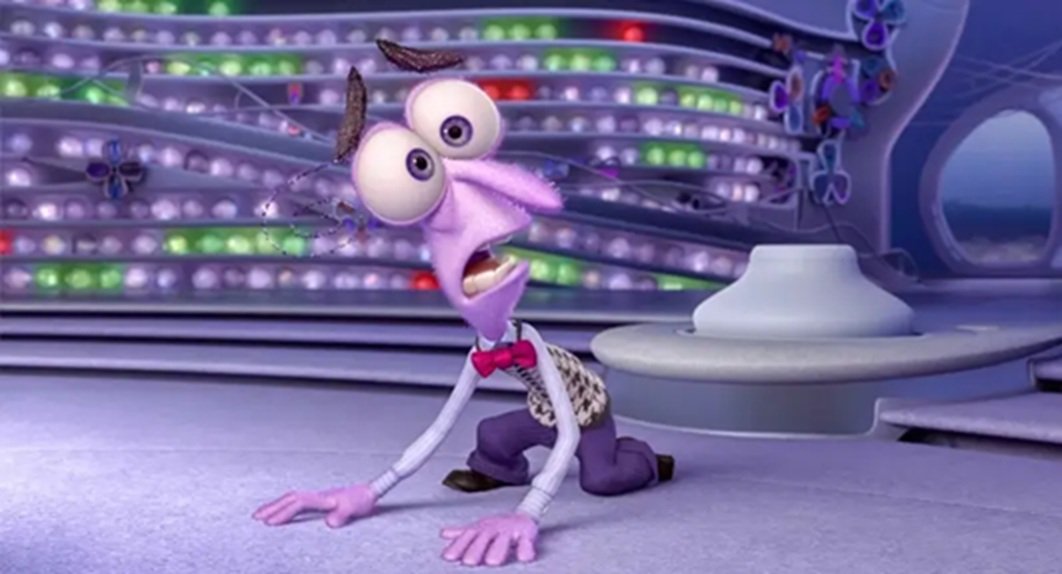
Fig. 2 - Fear from Inside Out.
Now, in the modern 3D animation era, even though the real hand is not visible, the animators’ psychological foresight and creativity are evident in every frame. Due to this, when an unrealistic character like "Fear" rolls up his body, the touch of the animators' digital hand works behind it (Fig. 2). This transforms the emotional state in Chekhovian theory into a visible physical form or a psychological gesture. One of the main characters of Inside Out is Fear, and if we look at his physical structure in the movie, we can see that his psychological gesture is to curl himself up. It seems that he is always in fear and panic because of this specific posture, and even if Fear is not given dialogue, the audience will easily notice who the character is by looking at his physical gestures. That is, it is possible to explain his inner feelings through this physical gesture alone, which is part of the range of Chekhovian techniques.
2. The imaginary body and center
Chekhov identified that the very first criterion to become a character is that an actor has to forget his real body and create a separate imaginary body in his mind. This created imaginary body will have a specific point within it from which all the inner strength, will, and physical movements of the character will be created, different from the existing body. If we jump into Inside Out, we can notice these strategies clearly as the animators have created the characters according to psychophysical logic. We see the character Joy as very happy and positive, walking slowly. The film presents Joy’s imaginary body as a bright star. If we zoom in on the character, we can see that the point of her imaginary body is just above her chest and face, due to which a bouncy feeling can be observed in Joy.
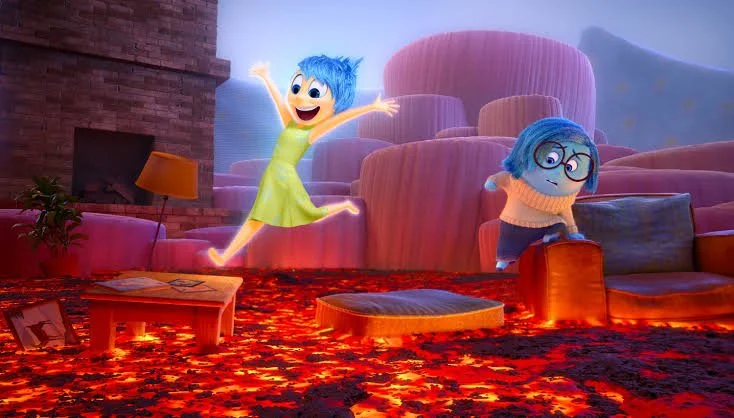
Fig. 3 - PIxar’s Inside Out.
In contrast to Joy, we see Sadness. When we look at Sadness, it seems as if she has been created in the shape of a teardrop. She seems to have the center of gravity of her imaginary body pulled down to the very bottom of her feet. She moves with a heavy laziness. It is quite clear that the animators have used the techniques taken from Chekhov's acting method to bridge the gap between the emotional psychology of humans and the visible physical reality (Fig. 3). So that these feelings become not just cartoons but live and believable, like us. I think the aim of Pixar's animators was not only to show emotions, but they also wanted to give the characters such a psychological and physical depth that the audience can feel the characters from the inside as soon as they see them. The animators have used Chekov's concept of "imaginary body" very diligently; if you look at each character, you can see that their mental state has been very well understood due to their physical structure. Due to the use of these techniques by the animators, the movement of the characters on the screen is not just a cartoonish joke, but it can be said that the characters have touched the subconscious mind of the audience due to the use of these techniques.
The connection to Chekov’s theory is extremely important in analysing Inside Out, because Pixar’s film bridges the gap between classical theatre acting and modern digital animation performance. This proves that the studio’s characterisation is not only dependent on technology, but also has an important role in the psychological and physical principles and techniques of acting or performance.
3. Radiating
Chekhov, in this stage, said that skilled actors on stage have an ability to radiate. They can spread their inner energy to the environment around them using their mental power and body, and the co-actors also have to practice absorbing this energy, which is called absorbing the energy emerging from the co-actors. Usually, it is not possible to see with the naked eye on the theatre stage, but it can be felt by seeing the tension of the actors. In animation, however, the case is again a little different. Animation has a unique aura, like an aesthetic freedom, and it is possible to portray this invisible radiating energy on the screen.
With Inside Out, the animators have portrayed this radiating issue by understanding the role that can be played in light and color can play in the construction of its characters. Let’s assume that when Joy is in front of the control panel inside protagonist Riley’s head, she not only acts happy, but at that moment, a kind of light spreads from her body. That is, a kind of warm, bright glow radiates from her character – a bright light that illuminates every corner of the headquarters. The modern lighting character design that Pixar’s animators have used in character creation is basically a wonderful subconscious application of Michael’s radiating theory. I mentioned at the start of this blog that in the case of theatre, this radiating thing has to be felt by watching tense expressions or acting. But Pixar's animators have overcome the limitations of theatre with their own aesthetics. Here, the animators have truly created a visual glow of light. We see them floating in the air like small beads. Due to this, the invisible mental radiation that Chekhov spoke about in the theatre of the actor, Pixar’s animators have used technical skills to make that embodied thought visible on the screen in a real light (Fig. 4). Therefore, it is quite clear that the above analysis does not just show the lighting and technical skills of a movie, but rather proves that the classical theory of theatre is not limited to theatre alone; it gains a new cinematic and visual form when combined with modern digital animation.
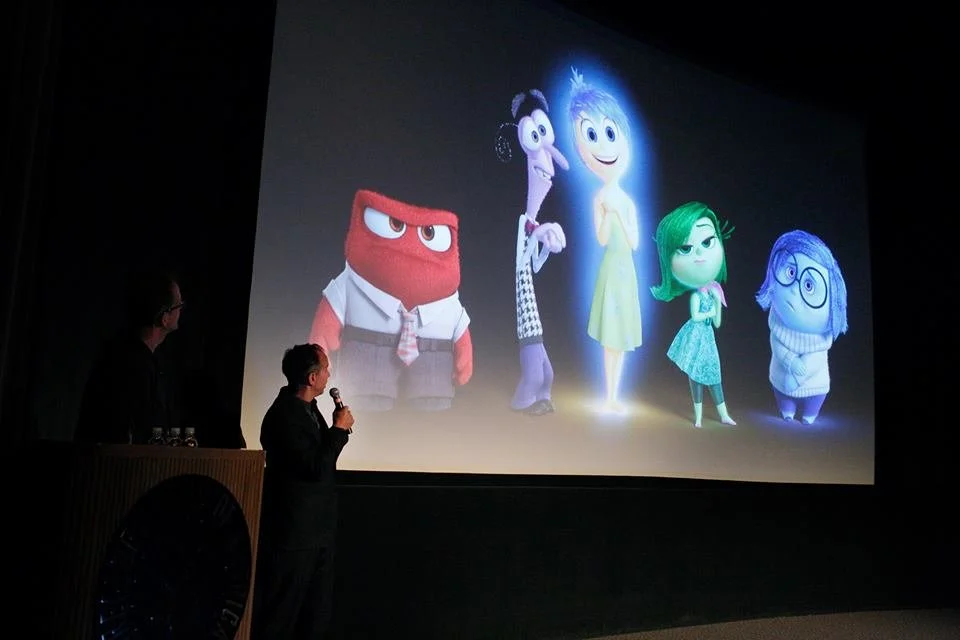
Fig. 4 - The characters of Inside Out.
Therefore, it would not be wrong to say that analysing the characters in Inside Out in the light of Chekhov's theatre method has added a new dimension to the world of theatre and modern animation. My research proves that it is possible to bridge the gap between theatre and modern animation.
From the above discussion, performance theory and the acting techniques of Chekhov can be used to analyze specific elements of Inside Out and the gestures, actions, and behaviors of the anthropomorphic emotions contained within Riley’s mind. Furthermore, this blog suggests that Theatre and Animation are two disciplines that are actually soundly connected. If we want to look at animation from the perspective of practice, then it will seem to us as just a technical craft. On the other side, if we discuss this animation according to performance theory to analyse the character’s movement and acting method, then we can understand that an animator has taken himself from the level of an outright technician to the status of a highly skilled actor. As this blog has illustrated, Pixar’s approach to animation and their portrayal of human emotions illustrates an opportunity to use performance theories as a way of understanding how the film draws from psychological gesture, the imaginary body, and the radiation of emotions in ways that suggest Chekov’s acting technique is not limited to theatre.
**Article published: July 10, 2026**
References
Chekov, Michael. 1953. To the Actor: On the Technique of Acting. New York: Harper & Row.
Crafton, Donald. 1979. “Animation iconography: The “hand of the artist””. Quarterly Review of Film Studies 4, no. 4: 409–428.
Crafton, Donald. 2012. Shadow of a Mouse: Performance, Belief and World-Making in Animation. Berkeley: University of California Press.
Biography
MST. Rajuana Sultana Kona is a Researcher and graduate of Theatre and Performance Studies at Jatiya Kabi Kazi Nazrul Islam University, Trishal, Mymensingh, Bangladesh. Currently, she is pursuing her master's in the same department. Her research always tries to find different ways of thinking. E-mail: kona31273@gmail.com, Linkedin: https://www.linkedin.com/in/mst-rajuana-sultana-kona-59658b3b7.