Animation and the Ancient World
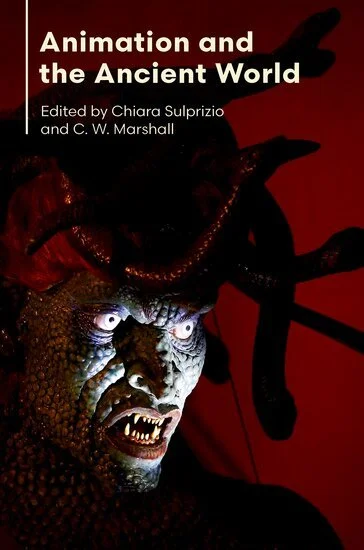
I am pleased and proud to announce the publication this month of Animation and the Ancient World, a collection of sixteen essays edited by myself and C.W. Marshall and published by Oxford University Press. This volume surveys how the myths, histories, and philosophies of ancient Greece and Rome have been remixed and revitalized in all sorts of wonderful ways by modern-day animators.
At first glance, it may seem surprising that there is a whole volume to fill on this topic. We are all familiar with Disney’s Hercules (Ron Clements & John Musker, 1997), and some of us who are anime fans are likely aware of the mythological themes that underlie Sailor Moon (Naoko Takeuchi, 1992-) or the adventures of the time-traveling Roman bath architect in Thermae Romae (Mari Yamazaki, 2024-) but beyond that how much is there to discuss? As it turns out there is an abundance of animated material from all over the globe that takes its direct inspiration from classical antiquity, or draws on themes, images, and narratives that were originally developed by ancient authors and artists.
Our introduction, “Moving Shadows in the Dark,” situates the study of animation within the larger field of classical reception and provides some historical context for the appearance of ancient Greco-Roman motifs in animated productions over the past century, utilizing the work of Ray Harryhausen and a selection of Warner Brothers cartoons as individual case studies. We then organize the chapters that follow into three broad categories that, we hope, will invite readers to compare the contributions of individual scholars and appreciate the diversity of approaches to the material.
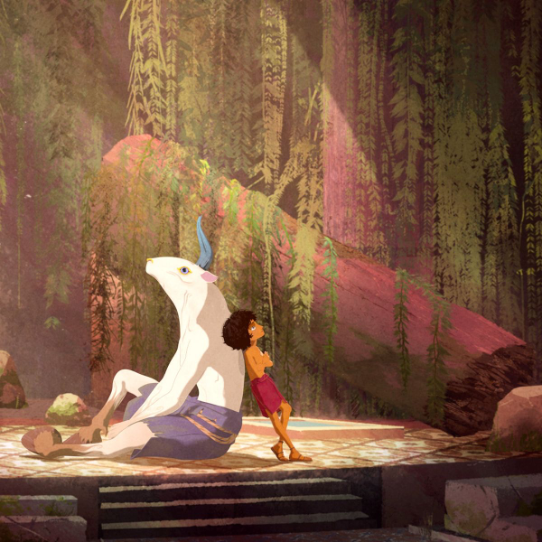
Fig. 1 - Icarus and the Minotaur as a sympathetic pair of friends in Icare (2022). Image courtesy of Carlo Vogele.
The first section, “Heroes,” examines familiar mythological figures like Hercules and Odysseus and their lasting popularity in animated film and television. Maciej Paprocki looks at how the unique medium of animation influences the characterization of the gods in Disney’s Hercules franchise, while C. W. Marshall reflects on how the serialized structure of the 1960s cartoon series The Mighty Hercules (Joe Oriolo, 1963-1966) streamlines the depiction of the ancient hero in moral terms. Krishni Burns turns her attention to Odysseus and to how his representation in shows for young viewers, such as Arthur (Kathy Waugh & Marc Brown, 1996-2002) and DuckTales (Jymn Magon, Tedd Anasti & Patsy Cameron, 1987), render the hero a protagonist to be emulated. Craig Hardiman considers the cross-cultural legacy of Ulysses 31 and argues for its universalizing impact on later depictions of the ancient world in anime. My chapter ends this section by reflecting on the transformation of Icarus into a positive figure who embodies the creative drive of the animators who portray him in various independent and experimental films, while his flight becomes a metaphor for the fragility of artistic success (Fig. 1).
The second section, “Worlds,” explores how animation fosters the re-creation of fantastical ancient landscapes, which give rise to new stories based on the Greco-Roman past. Amy Norgard researches the deployment of Cloud Cuckoo Land, a classically-inspired utopia, and its particular appeal to adolescent audiences in The Lego Movie (Phil Lord & Christopher Miller, 2014), Adventure Time (Pendleton Ward, 2010-2018), and Gravity Falls (Alex Hirsch, 2012-2016). Frances Foster analyzes the legend of King Midas as it is portrayed in the 1963 Polish short film Król Midas directed by Lucjan Dembiński and juxtaposes it with what the archaeological and iconographic record has to say about this historical figure (Fig. 2). Stephen Fodroczi considers the ancient motif of katabasis (or descent to the underworld) and its incorporation into contemporary anime features like Spirited Away (Hayao Miyazaki, 2001) and Weathering with You (Makoto Shinkai, 2019), which both creatively weave this motif into their traditional Japanese folkloric backdrops. Gabriele Roccella and Julie Newman examine gladiatorial games in the anime series One Piece (Junki Takegami, Hirohiko Kamisaka, Shōji Yonemura & Tomohiro Nakayama, 1999-), and argue that its critical depiction of gladiatorial combat as a Western phenomenon is set against traditional Eastern values. The last chapter in this section, by Amanda Potter, shows how Watership Down (Martin Rosen, 1978) may be read as a manifesto of eco-criticism that relies on classical themes, particularly from Greek tragedy and epic, to sharpen its poignant message.
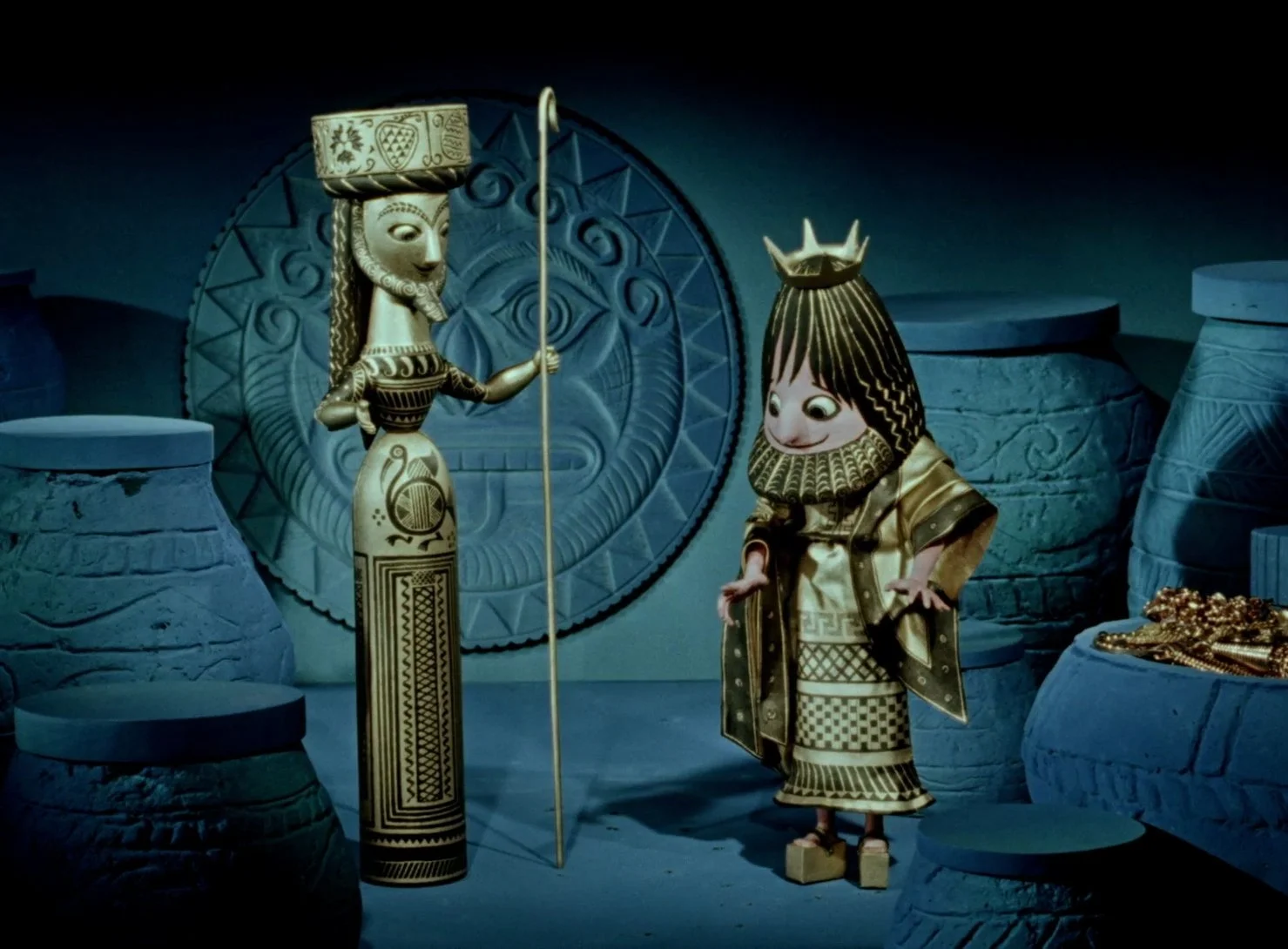
Fig. 2 - King Midas and the Golden Figure. Król Midas (1963). © Se-Ma-For.
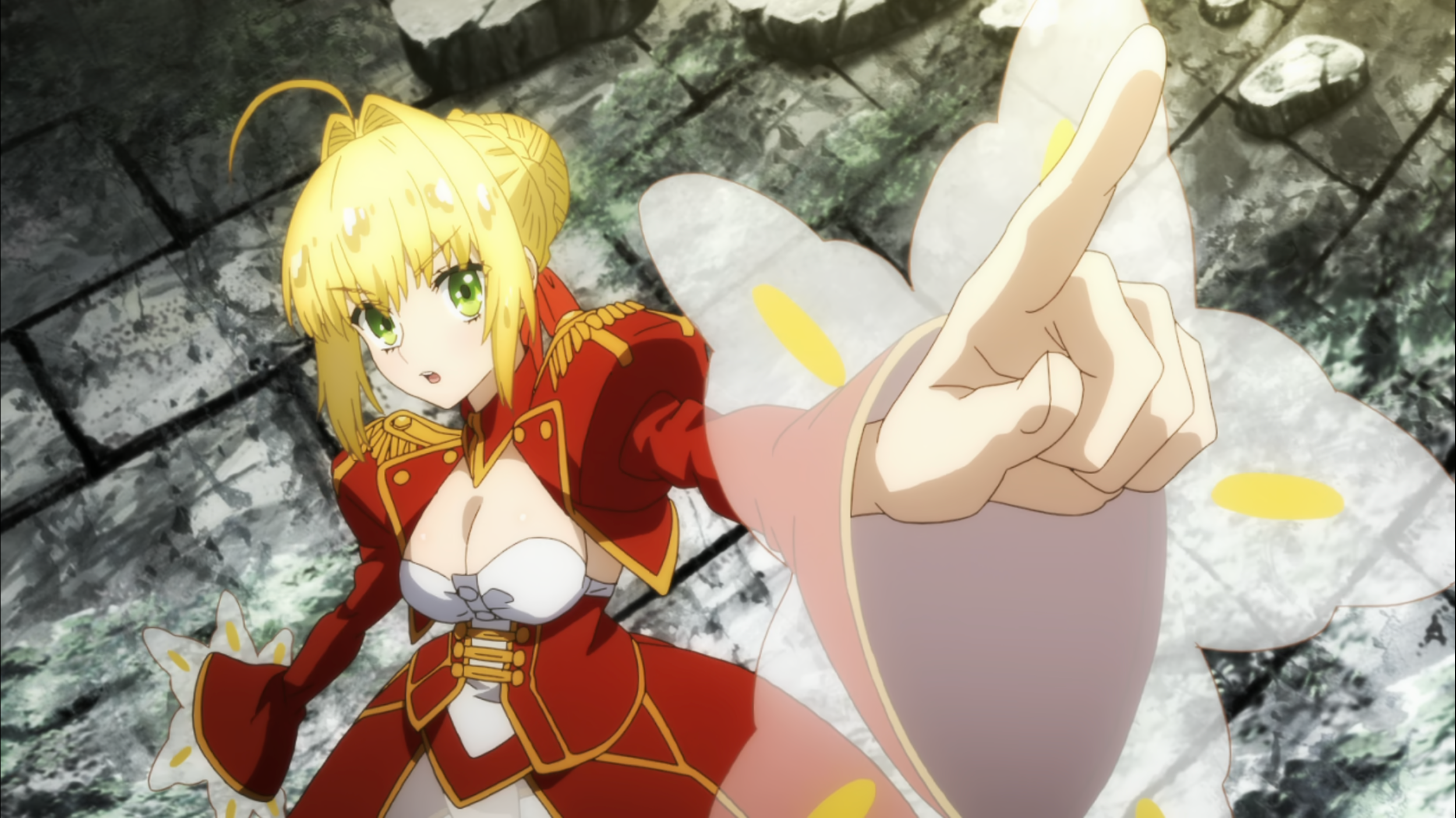
Fig. 3 - Nero Claudius challenging the final villain in Fate/EXTRA Last Encore (ep. 2.3, "Olympia Plaudere"). © Aniplex.
“Histories,” the final section, moves into the realm of reality and investigates how animation is employed as a way to reconceive the Greco-Roman past in memorable and sometimes controversial ways. Ekaterina But demonstrates how ancient scientists and philosophers are represented in Soviet animation of the 1970s in a manner that advances a discourse of technological progress, though one that bumps up against the political limits on intellectual freedom. Sierra Schiano tracks the evolution of Extra Olympia Kuklos (Mari Yamazaki, 2020) from manga to anime series (Ryō Fujii, 2020), and highlights how the portrayal of the Olympic games in each medium moves from critique to cultural appropriation. Rodrigo Illarraga and Florencia Castro Possi view the anime series Saint Seiya (Takao Koyama & Yoshiyuki Suga, 1986-1989) and its league of knights through the lens of Xenophon’s philosophy of pious leadership, while Phillip Höhre looks at Alexander the Great’s metamorphosis into a supernatural villain in the Yu-Gi-Oh! (Hiroyuki Kakudō, 1998) series and in its toyetic spinoffs, as well as his appeal as an antagonist for youth audiences. Nicole Becklinger and Jeremy Swist conclude the volume with a consideration of Alexander the Great, the mythic heroine Atalanta, and the Emperor Nero in the Fate anime series (Yūji Yamaguchi, 2006), and explores how it adapts these “classical” heroes to recognizable Japanese character tropes that foster familiarity for an international audience (Fig. 3).
Many of the animated productions discussed in the volume can be viewed on Animated Antiquity (www.animatedantiquity.com), an online archive of animated representations of Greece and Rome that I have compiled steadily over the past seven years. That project served as the impetus for putting together the edited volume, as we were keen to invite scholars to bring a range of methodologies and theoretical approaches to bear on these productions. It was our aim that this volume would not only bring more scholarly attention to the existence of these films and series, but also produce novel and illuminating readings of them. We hope that Animation and the Ancient World will be an inspiring resource for scholars in the fields of Classics and beyond, and will provide a solid foundation for future scholarship in this burgeoning area.
**Article published: June 5, 2026**
Biography
Chiara Sulprizio is a Principal Senior Lecturer in the Department of Classical and Mediterranean Studies at Vanderbilt University. Her scholarly work examines the reception of the Classical past in modern comics, graphic novels, and animation, and she is the creator of the web archive “Animated Antiquity: Cartoon Representations of Ancient Greece and Rome” (www.animatedantiquity.com). Her volume, Animation and the Ancient World, co-edited with C.W. Marshall, is out on June 4 with Oxford University Press (https://global.oup.com/academic/product/animation-and-the-ancient-world-9780197800799?lang=en&cc=us#). She is also interested in ancient attitudes and ideas about gender and sexuality, especially as they are depicted in comedy, satire and other humor-based literary genres. These interests are explored extensively in her book, Gender and Sexuality in Juvenal’s Rome: Satire 2 and Satire 6 (Oklahoma University Press, 2020).