Episode 178 - Spider-Man (Sam Raimi, 2002) and Spider-Man 2 (Sam Raimi, 2004) with James C. Taylor
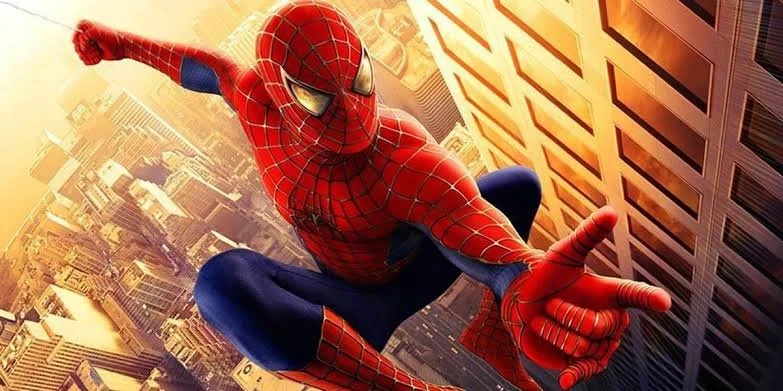
Spider-Man (Sam Raimi, 2002).
The Fantasy/Animation podcast takes listeners on a journey through the intersection between fantasy cinema and the medium of animation. Available via Apple Podcasts, Spotify and many of your favourite podcast hosting platforms!
Spider-Man (Sam Raimi, 2002) and its 2004 sequel provide the focus of this latest episode of the Fantasy/Animation podcast, in which Chris and Alex are joined for their very first superhero double-bill by Dr James C. Taylor, Teaching Fellow in Film and Television Studies at the University of Warwick. James’ research interests include Hollywood cinema, digital images, adaptation theory, transmediality, film seriality, media franchising, comics studies and horror, and his first monograph, The Superhero Blockbuster: Adaptation, Style, and Meaning (University Press of Mississippi, 2025) develops a theoretically-informed approach that closely analyses superhero blockbusters adapted from comic books. He has also published on Batman, the Incredible Hulk, Wonder Woman and Spider-Man. Listen as the trio discuss comic books and the early-2000s superhero boom within Hollywood cinema; Spider-Man’s adaptation to the big-screen and the influence of Sam Raimi’s trilogy on the modern superhero blockbuster; the arresting style and form of superhero cinema as powered by the spectacle of digital acrobatics and pro-filmic bodies; the representation of New York and the creative possibilities of the virtual camera; Raimi’s authorship that balances tropes of horror and the Gothic with romance and melodrama; and how the first two Spider-Man films offer spectators a space of dual and doubled identities, digital augmentation, and explosive action.
**Fantasy/Animation theme tune composed by Francisca Araujo**
**As featured on Feedspot’s 25 Best London Education Podcasts**
**As featured on MillionPodcast’s Best 10 UK Animation Podcasts and Best 60 Movie Podcasts in the UK**
Suggested Readings
Gilmore, James N. and Matthias Stork, eds. 2014. Superhero Synergies: Comic Book Characters Go Digital. Lanham: Rowman & Littlefield.
Gordon, Ian, Mark Jancovich and Matthew P. McAllister, eds. 2007. Film and Comic Books. Jackson: University Press of Mississippi.
Gunning, Tom. 2007. “Moving Away from the Index: Cinema and the Impression of Reality,” Differences: A Journal of Feminist Cultural Studies, 18, no. 1: 29–52.
Holland, Jeanne. 2012. “It’s Complicated: Spider-Man 2’s Reinscription of “Good” and “Evil” in Post-9/11 America,” The Journal of American Culture 35, no. 4 (December): 289–303.
Koh, Wilson. 2009. “Everything Old Is Good Again: Myth and Nostalgia in Spider-Man,” Continuum: Journal of Media & Cultural Studies 23, no. 5: 735–747.
Leaver, Tama. 2012. “Artificial Mourning: The Spider-Man Trilogy and September 11th.” In Web-Spinning Heroics: Critical Essays on the History and Meaning of Spider-Man, edited by Robert Moses Peaslee and Robert G. Weiner, 154–164. Jefferson, NC: McFarland & Company.
Purse, Lisa. 2007. “Digital Heroes in Contemporary Hollywood: Exertion, Identification, and the Virtual Action Body,” Film Criticism 32, no. 1 (Fall 2007): 5–25.
Taylor, James C. 2019. ‘Can a Digitally Constructed Spider-Man do Whatever a Hand-Drawn Spider-Man Can?: CGI as Adaptation Strategy,” in Barry Keith Grant and Scott Henderson, eds. Comics and Pop Culture: Adaptation from Panel to Frame, 232–245. Austin: University of Texas Press.
Taylor, James C. 2021. “Reading the Marvel Cinematic Universe: The Avengers’ Intertextual Aesthetic,” Journal of Cinema and Media Studies 60, no. 3 (2021): 129–156.